How to Travel Almost for Free:
Workaway, House Sitting & the Exchange Life
Five years. 46 countries. 121,300 km. And the question we get asked more than any other is not « where’s your favourite place? » — it’s « how can you afford to do this? » The honest answer: a big part of our journey costs almost nothing. Here’s how.
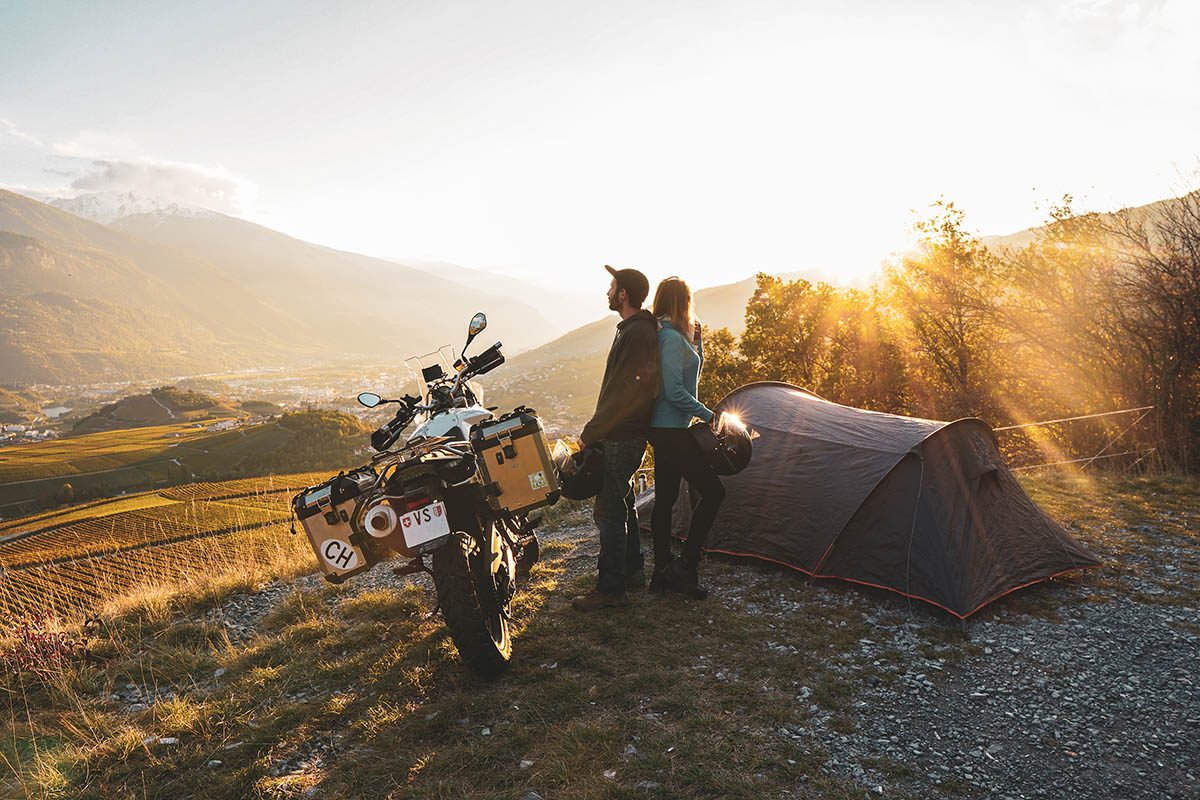
We are not wealthy. We did not sell a startup. We left Switzerland on August 1st, 2021 with a modest amount of savings, a motorcycle named Falkor, and a simple idea: instead of paying for accommodation wherever we went, we would try to exchange our time and skills for a place to stay. Over the last five years, that idea turned out to be one of the most transformative decisions we ever made — not just financially, but in terms of the experiences it unlocked.
This is not a guide to « travelling for free » in the clickbait sense. It is an honest account of how the exchange economy works in practice, what platforms make it possible, what we give in return, and why — five years in — we would not change a thing about this approach.
The Day We Discovered That Asking Costs Nothing
It started even before we found Workaway. We had left Geneva the day before — tearful farewell, tin cans dragging behind Falkor, Nathalia desperately trying not to be sick after the party — and camped wild by the Rhône after 57 km. The very next morning, riding along the canal near a little village called Chanaz in Savoie, we spotted a camping resort across the water with incredible overwater bungalows.
« We laughed about it at first. Then we looked at each other and thought: why not just ask? The worst they can say is no. » — Nathalia, Chanaz, August 2021
So we crossed the bridge, rode up to the reception, and pitched an idea: we would create a promotional video for the camping in exchange for a few nights’ accommodation. Julia, the communications manager, said yes on the spot. No money changed hands. We got three nights in a tent on the edge of a lake, filmed the whole place with our drone, and handed over the footage before we left. That was the first exchange of our journey — and it set the tone for everything that followed.
The lesson was immediate and permanent: the exchange economy starts with simply daring to ask. If they say no, you are exactly where you were before. If they say yes, a door opens that you did not know existed.
Discovering Workaway: The Platform That Changed Everything
A few weeks later, we arrived in Sète, settled into a café with WiFi, and opened a website someone had mentioned on a forum: Workaway. We scrolled through it for an hour with growing disbelief. There were hundreds of hosts within a few hundred kilometres — farms, guesthouses, artistic projects, families, NGOs — all offering free accommodation and meals in exchange for a few hours of help per day.
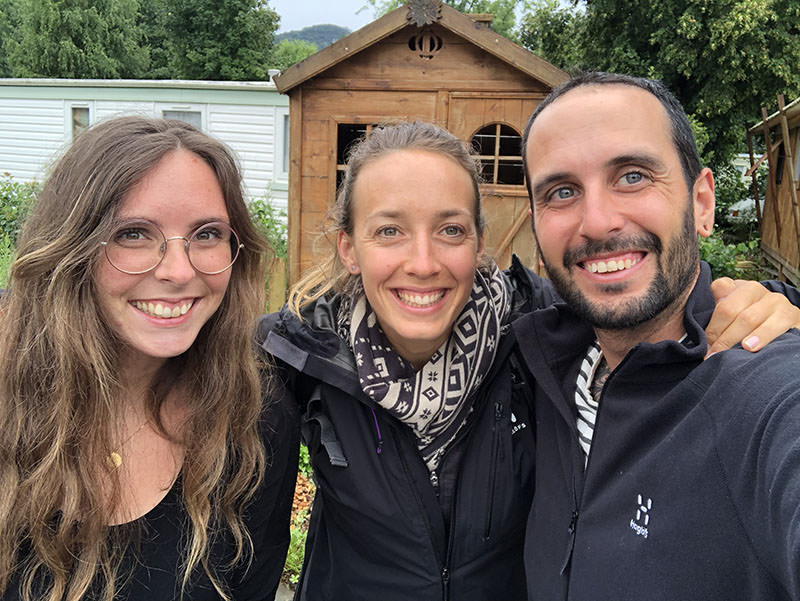
We immediately had two candidates: a Buddhist monastery in the Pyrenees, and a family called Alie and Matt who ran a rural property called La Taillede. We called them. Twenty minutes later, we had a place to stay for two months.
La Taillede — Corsavy, France
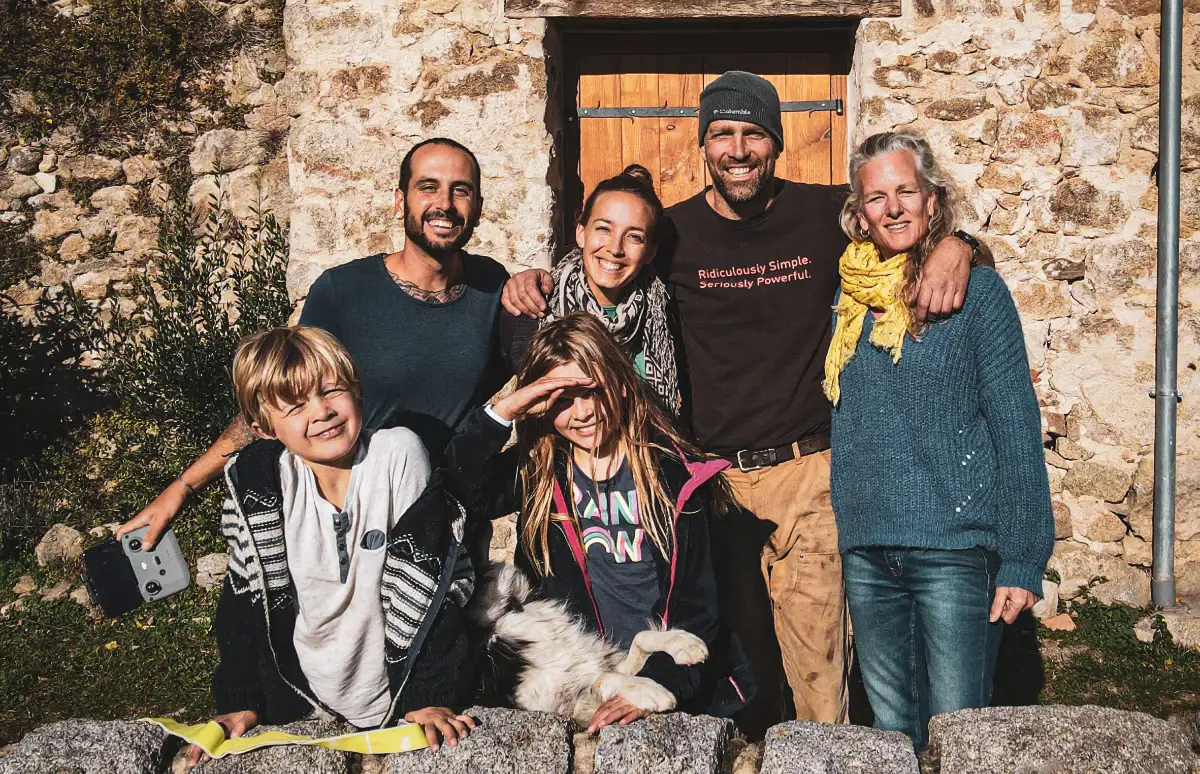
Alie, Matt, and their children Olea and Simi welcomed us into their family for over two months. We slept in a caravan on their land, shared every meal, attended local festivals, helped with the gîtes, looked after the animals, cut wood, did marketing work and content creation. In return: a home, a family, and friendships that have lasted five years. La Taillede is a small-scale permaculture property with accommodation for travellers and families — worth discovering if you’re passing through. We made a promotional video for them and an episode about life there.
Workaway connects independent travellers with hosts worldwide who offer free accommodation (and often meals) in exchange for a few hours of help per day. Tasks vary enormously: gardening, building, childcare, teaching English, content creation, cooking, marketing. The platform costs around €49/year for a couple — and our very first stay at La Taillede alone saved us more than 15 times that amount.
Morocco: Building Bricks, Gardening in the Desert, and Three Weeks at the Edge of the Sahara
By the time we reached Morocco, the exchange model had become second nature. We found three Workaway stays in quick succession — and each one gave us access to a version of Morocco that no hotel or riad could have.
The first was near Fès, with Omar, where we became gardeners, handymen, and occasional tour guides for visiting travellers. The episode we made there still makes us smile — Vins with a wheelbarrow and absolutely no idea what he is doing.
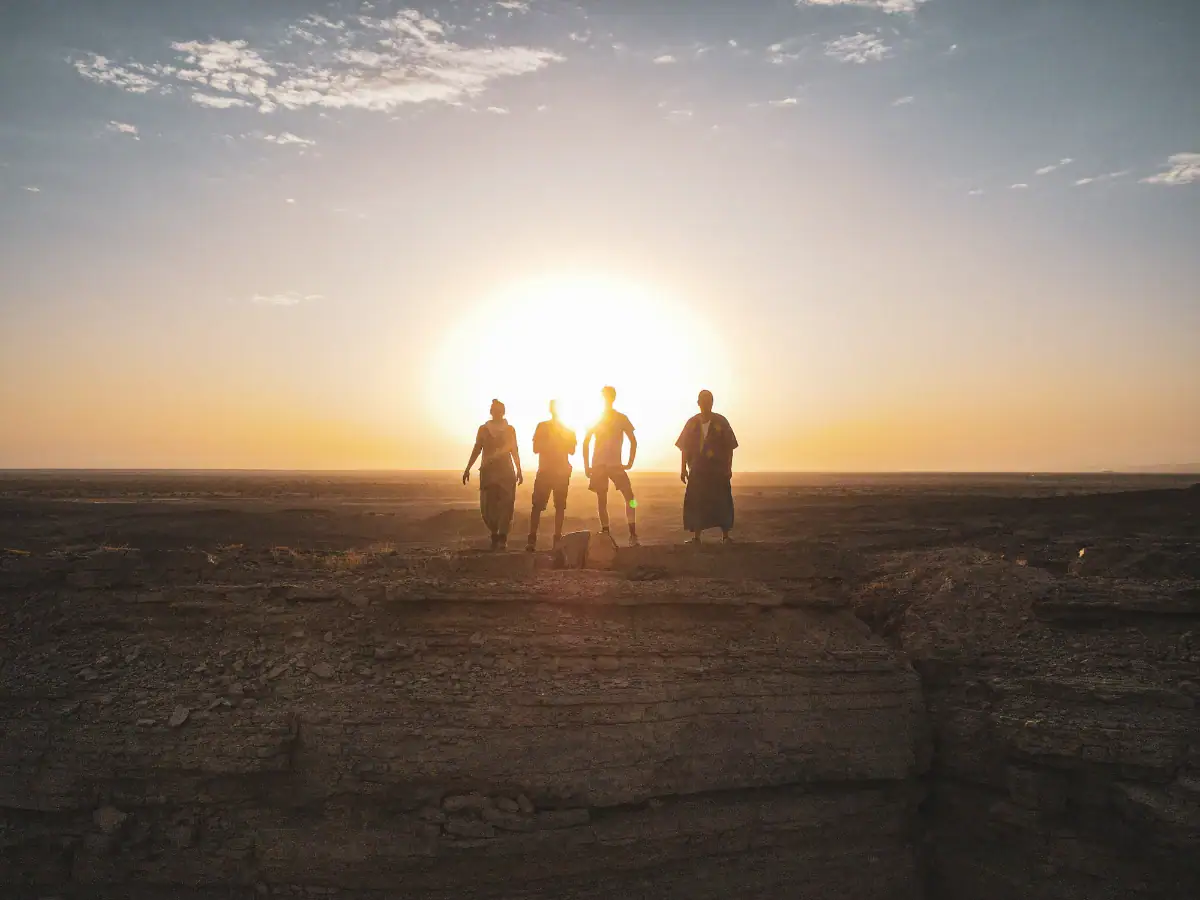
The second was Ksar El Boya, near Erfoud at the edge of the Sahara. What was supposed to be two or three days turned into nearly three weeks. We were guests of Redouane and his family, and alongside other international volunteers, we made bricks by hand in the desert, helped restore a traditional Moroccan ksar, and ate every meal together under a sky full of stars. The episode captures it all. This is the kind of experience that costs thousands of euros on a commercial « volunteer tourism » programme — and that we lived for the price of our time and effort.
Sailing the Atlantic: How Volunteering Puts You Inside Experiences Money Can’t Buy
This is the concept that keeps surprising people, and it is the one we believe in most: the exchange economy gives you access to experiences that would be completely out of reach if you tried to pay for them in the conventional way.
The clearest example from our own journey: sailing. Buying a boat costs tens of thousands of euros. Learning to sail through a certified school costs thousands more. We had done neither. But in 2015, through a crew network, we joined the Amphitrite — a 43-foot Wauquiez — as volunteer crew for a transatlantic crossing from the Canaries to Martinique. We helped with watches, cooking, maintenance and navigation. In return: 6,000 km of open ocean, the most physically and emotionally intense experience of our lives, and a sailing education we could never have afforded.

The same logic applies to the sailing volunteer stay in Greece during Year 2, where we joined a family on a Workaway basis to help crew their vessel through the Greek islands — learning as we went, anchoring in coves that no charter tourist ever reaches, and doing it all for the cost of our time.
TrustedHouseSitters: The Platform That Gave Us a Home in Thailand
Workaway is about contributing skills. TrustedHouseSitters is something different: you look after someone’s home and animals while they travel, and in return you have a free place to live — no work required, just reliable, caring presence. The two platforms are complementary, and together they have covered a third of our journey.
Our first TrustedHouseSitters experience was in Taipei, during Year 4. A 25-day house and pet sit in one of Asia’s most expensive cities — at zero cost for accommodation. We had found the platform almost by accident, and within a week of signing up we had our first confirmed sit.
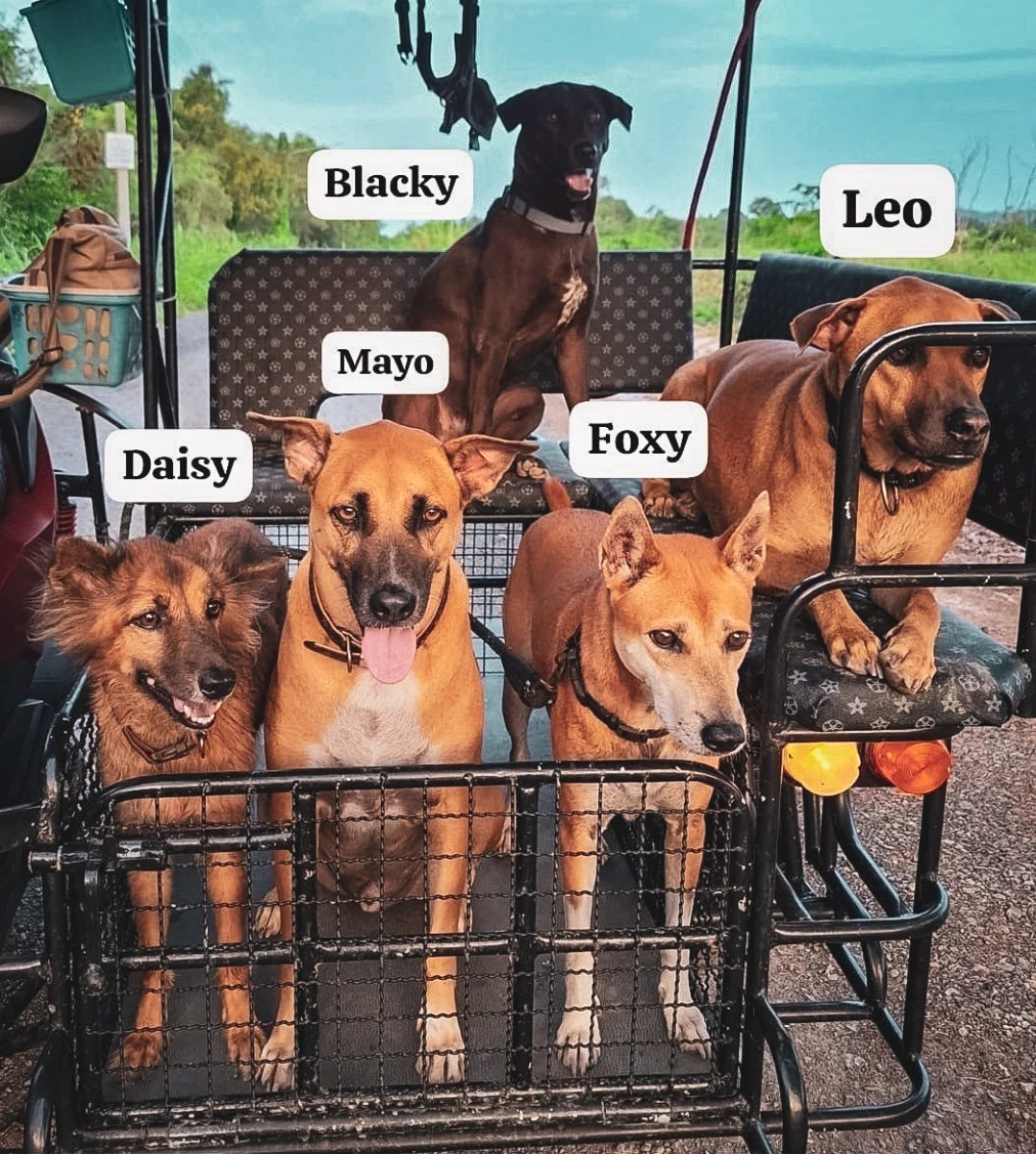
But the sit that truly defined what this model can offer came in Year 5. Through TrustedHouseSitters, we connected with Sigrid, a German woman living in the coastal village of Nairai, near Rayong in eastern Thailand. Her husband had fallen ill and she needed to return to Germany urgently — she needed someone to look after her home and five dogs. We stepped in with one week’s handover, and then she was gone.
Sigrid’s House & Five Dogs — Nairai, Rayong, Thailand
Mayo, Leo, Blacky, Foxy and Daisy. A large house with a garden and a private pool, two minutes from the beach. Daily walks at sunrise, cooking proper meals, ordering equipment online, building new brand partnerships — things that feel impossibly normal after five years of constant movement. Three months and a half in one place, in a home we could never have rented conventionally in Thailand without spending a serious sum. The Saleng scooter in the garage replaced Falkor as our daily transport. We loved every single day of it. This is what house sitting unlocks: a life, not just a stay.
TrustedHouseSitters connects homeowners who need someone to look after their home and pets while they travel, with sitters who want free accommodation in exchange for responsible care. No money changes hands between sitter and homeowner — the platform fee covers both sides. Background checks, verified reviews and a 24/7 support line make it one of the safest platforms in this space.
The Real Cost of 630 Free Nights
We track every night of this journey on Polarsteps. After five years on the road, here is what the numbers actually say about accommodation.
Our Accommodation Exchange — 5 Years
630 free nights × €18 = €11,340 saved in accommodation alone — before counting meals, which many exchanges also include.
Add in wild camping (another big chunk of nights at €0) and local hospitality, and the real saving is considerably higher.
To put that figure in context: €11,340 is roughly what a couple would spend on 13 months of average budget travel accommodation in Europe. We did not spend it. We spent it in time, skills, care and presence instead — and in return got experiences, connections and stories that no amount of money could have bought.
Every Exchange We Have Done: The Full List
These are all 29 documented exchanges from our five years on the road — Workaway stays, TrustedHouseSitters sits, sailing crew positions, couchsurfing nights and direct host invitations.
| # | Host / Experience | Country | Platform | Days |
|---|---|---|---|---|
| 1 | Chanaz — Camping promo video | 🇫🇷 France | Direct ask | 3 |
| 2 | L’Évasion au Naturel | 🇫🇷 France | Direct | 7 |
| 3 | Méaudre, Vercors | 🇫🇷 France | Direct | 3 |
| 4 | La Taillede — Alie & Matt’s family | 🇫🇷 France | Workaway | 62 |
| 5 | Merida — 360° promo visit | 🇪🇸 Spain | Direct | 3 |
| 6 | Chez Francis | 🇵🇹 Portugal | Direct | 96 |
| 7 | Casa dos Amigos | 🇵🇹 Portugal | Workaway | 21 |
| 8 | Ain Taoujdate — Omar’s garden | 🇲🇦 Morocco | Workaway | 7 |
| 9 | Ksar El Boya — Redouane & family, brickmaking | 🇲🇦 Morocco | Workaway | 15 |
| 10 | Hotel Imilchil | 🇲🇦 Morocco | Direct | 2 |
| 11 | Essaouira — Chez Tessa | 🇲🇦 Morocco | Workaway | 23 |
| 12 | Au Bout du Champ | 🇲🇦 Morocco | Workaway | 7 |
| 13 | Chez Sérafine — Majorque | 🇪🇸 Spain | Workaway | 34 |
| 14 | Wallidia Festival | 🇲🇦 Morocco | Direct | 15 |
| 15 | Papa de Yolanda | 🇦🇹 Austria | Direct | 11 |
| 16 | Ivan & Lilly | 🇭🇷 Croatia | Workaway | 7 |
| 17 | Family Roy & Sandra — sailing the Greek islands | 🇬🇷 Greece | Workaway | 23 |
| 18 | Evienia, Crete — long stay | 🇬🇷 Greece | Workaway | 63 |
| 19 | Can, Kas — Türkiye | 🇹🇷 Türkiye | Workaway | 8 |
| 20 | Hatay, chez Merlin | 🇹🇷 Türkiye | Workaway | 7 |
| 21 | Keelung for a Walk — Taiwan | 🇹🇼 Taiwan | Workaway | 14 |
| 22 | Taipei — house & pet sitting | 🇹🇼 Taiwan | TrustedHouseSitters | 25 |
| 23 | Permamigo Hong Kong | 🇭🇰 Hong Kong | Couchers | 2 |
| 24 | Chez Estelle (1) — Historical Tibet | 🇨🇳 China | Direct | 11 |
| 25 | Moto & bûcheronnage avec Noé | 🇨🇳 China | Direct | 3 |
| 26 | Vendanges chez Estelle — Tibet | 🇨🇳 China | Direct | 6 |
| 27 | GG dog sitting — Bangkok | 🇹🇭 Thailand | TrustedHouseSitters | 6 |
| 28 | Jungle house & dog sitting | 🇹🇭 Thailand | TrustedHouseSitters | 18 |
| 29 | Sigrid’s house & 5 dogs — Nairai, Rayong | 🇹🇭 Thailand | TrustedHouseSitters | +114 |
Everything You’ve Asked Us About the Exchange Life
The single biggest lever is eliminating accommodation costs. Food can be managed with cooking and local markets. Transport is a one-time purchase (in our case, Falkor). But accommodation, on a conventional trip, costs €30–80 per night for a couple. Eliminate that with Workaway or TrustedHouseSitters and the maths change entirely. Add wild camping and you can sustain long-term travel on a budget that would surprise most people.
Honestly, some savings help — especially for the first few months before you find your rhythm. But « not much » is achievable. We left with enough to cover a year if everything went wrong. Thanks to the exchange economy, everything did not go wrong, and that cushion lasted much longer than planned. Start with one Workaway exchange to understand how it works, and build from there. Many people start this lifestyle with as little as €3,000–5,000 for a couple.
Beyond the accommodation and meals: language immersion, local networks, skills you would never develop as a tourist, friendships that last years, and a genuine sense of belonging to a place. Our two months at La Taillede gave us a French mountain family. Our three weeks in the Moroccan desert gave us a completely different understanding of what a home can be. The annual cost of Workaway is roughly one night in a European hotel. The value is not comparable.
In five years and 29 exchanges across 15+ countries, we have not had a single bad experience. Both Workaway and TrustedHouseSitters have review systems that work well: you read a host’s reviews before committing, hosts read yours. Bad actors get filtered out quickly by the community. We take the same precautions we would when meeting anyone new: video call before accepting, check reviews carefully, trust your instincts. We have found an overwhelming majority of exchanges to be warm, generous and safe.
Voluntourism packages often charge participants thousands of euros to do work that local people could do better themselves. Workaway is the opposite: you bring skills or time that are genuinely useful to a specific host, and they house you in return. The host decides what they need; you decide if it matches your abilities. No intermediary takes a large cut. The relationship is direct, human, and fair.
Yes, and in fact travelling as a couple on Workaway is an advantage: between two people, you bring a wider range of skills. Some stays suit one person more than the other — Nathalia is better at childcare and cooking; Vins handles technical and content tasks — but most hosts appreciate having two people simply for the reliability and energy. Workaway charges one membership fee for couples, which makes it even more cost-effective.
Workaway is a skills exchange: you contribute a few hours of work per day in return for accommodation. TrustedHouseSitters is specifically about looking after someone’s home and animals while they travel: no « work » per se, just responsible, caring presence. You live in their home as they would, walk the dogs, water the plants, and keep everything ticking over. In return, you have a free place to live — often a beautiful home in a place you would never be able to afford conventionally.
Not at all. The exchange economy attracts architects, engineers, teachers, writers, chefs, photographers, retirees and recent graduates. What it requires is not a particular lifestyle but a particular mindset: openness, flexibility, and a willingness to contribute genuinely. The hosts we have stayed with include a former investment banker in Portugal, a Swiss-German expat in Thailand, a French family in the Pyrenees, and a Greek sailing family. They are not « hippies » — they are people who have found that exchange creates better relationships than money does.
Ready to try the exchange life?
Two platforms, two models, one principle: your time and care are worth more than you think. Start with one exchange. See what opens up.