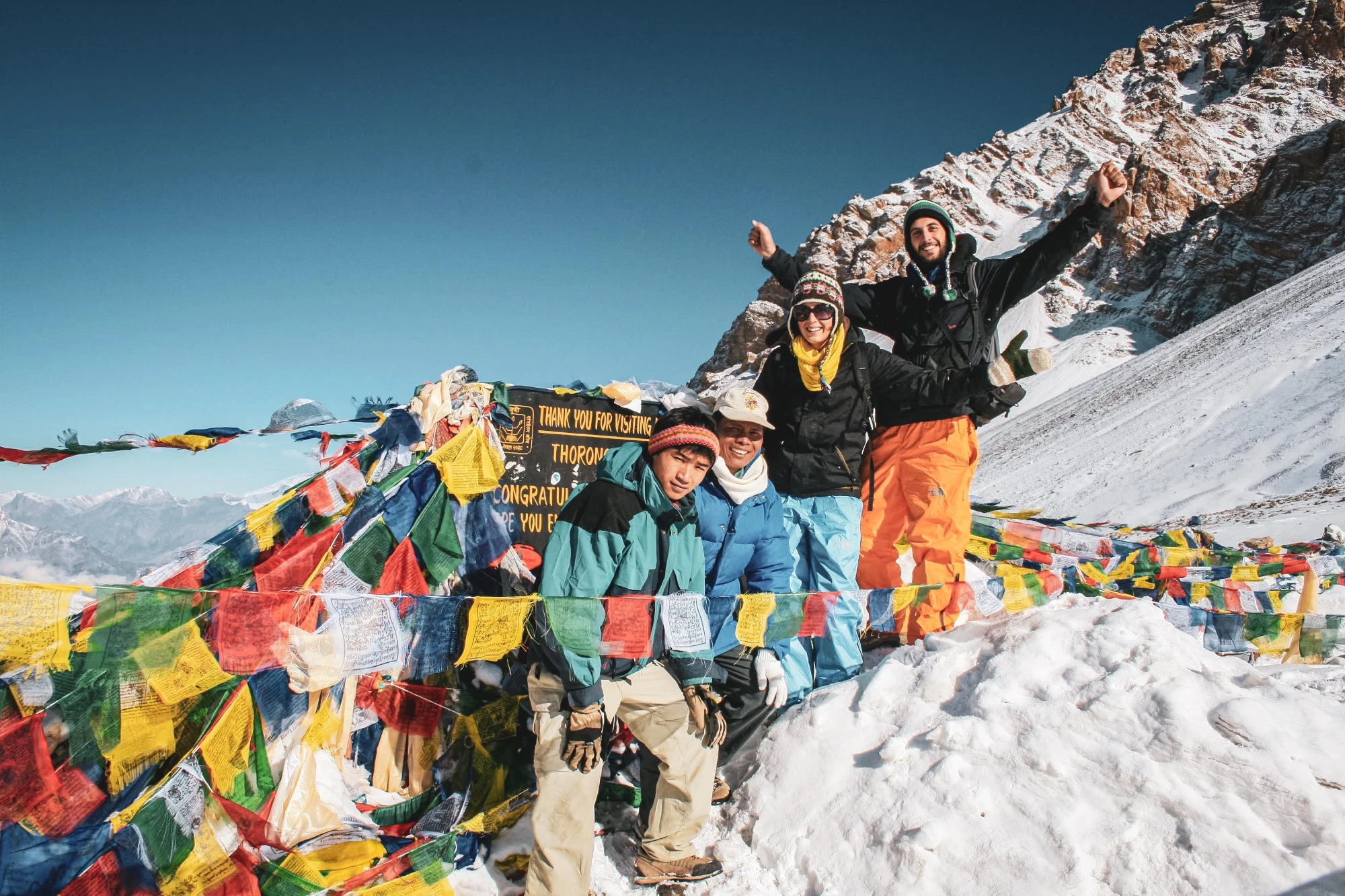
East of Everything:
The Year That Changed Us Forever
From a tarot card drawn in Morocco, to the death tunnel of Tajikistan, this is the year we rode out of Europe and into a whole other world. 16 countries. 108 steps. One motorcycle. The Silk Road as a guide. New friends and many dreams accomplished.
Three years is when you stop counting and start living.
There’s a moment, somewhere between the first year’s adrenaline rush and the second year’s hard-earned wisdom, when nomadic life stops being a story you tell people and becomes simply… who you are. Year three was that moment for us. We stopped asking « how long can we keep this up? » and started understanding that this is our life, with all its bruises, all its beauty, and all its bewildering surprises.
If Year One was the leap of faith, and Year Two was the initiation, then Year Three was the revelation. We left Romania guided by an imaginary compass drawn from a tarot card and also by the distant growling of bears, crossed into a war zone by accident, watched a motorcycle burn to ashes in Bulgaria, sailed the Aegean on a stranger’s yacht, wintered in Crete, fell hopelessly in love with Turkey, drank champagne on a pirate ship in Georgia, crossed three deserts we’d dreamed about since childhood, and rode through a 5 kilometers tunnel of asphyxiating darkness, on our third anniversary, as a kind of rite of passage.
This is the story of the year we rode out of Europe and into something we can’t quite name yet. It was the hardest year. It was the most beautiful year. And it’s the one that will live in us forever.
We never decided where to go.
We let the universe choose for us.
Our journey started the way it continues: by surrendering control to chance. On August 1, 2021, we placed a wine bottle on a world map surrounded by friends and families in Dardagny, Switzerland, spun it, and let it point our way. The bottle pointed: West. And so we left. At the end of Year One, in Morocco, facing a new decision, where to go for Year Two? We did it again, this time with a deck of botanical tarot cards drawn somewhere between the Atlas mountains of Morocco and the open road. The rule was simple: if the plant on the card was native to Africa, we’d ride south. If it was Asian, we’d turn East, toward the sun, toward the unknown, toward what would eventually become this third year, this fourth year, and everything still ahead of us in Thailand four-and-a-half years later.
And so from a single card drawn in the desert, we set our trajectory through the Balkans, the Caucasus, the Silk Road deserts, all the way to Thailand after 4.5 years and 115,000 kilometres.
Romania: Mountains, Bears & One Very Wrong Turn
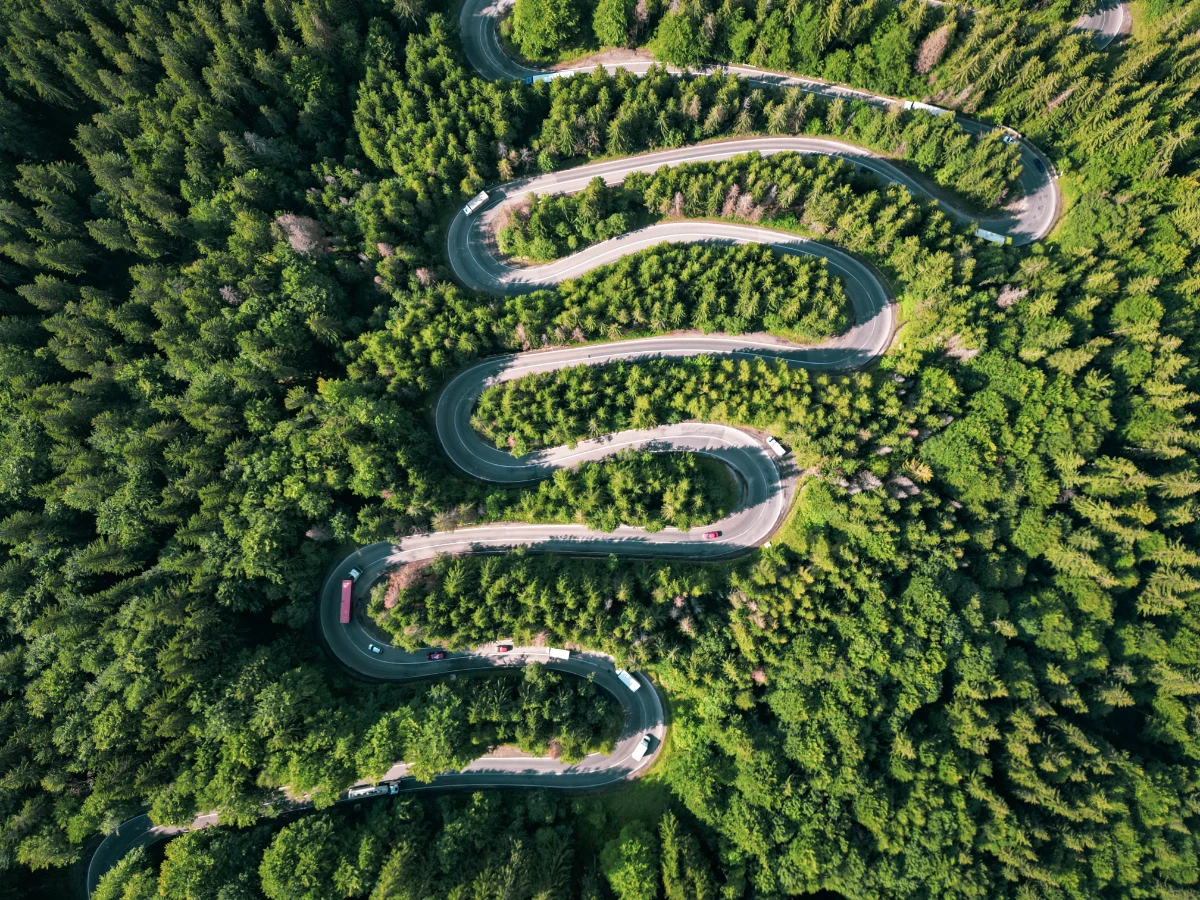
We began Year Three exactly where Year Two had left us, in Cozănești, Romania, and we were in absolutely no hurry to leave. Romania has this grip on you. The roads are almost scandalously good for motorcycle travel: empty, sinuous, long, unpredictable. The DN1A is the kind of road that makes you laugh out loud inside your helmet, corner after corner, elevation after elevation, no barriers, no traffic, just tarmac and mountain air and that particular sensation of a perfectly loaded bike finding its line.
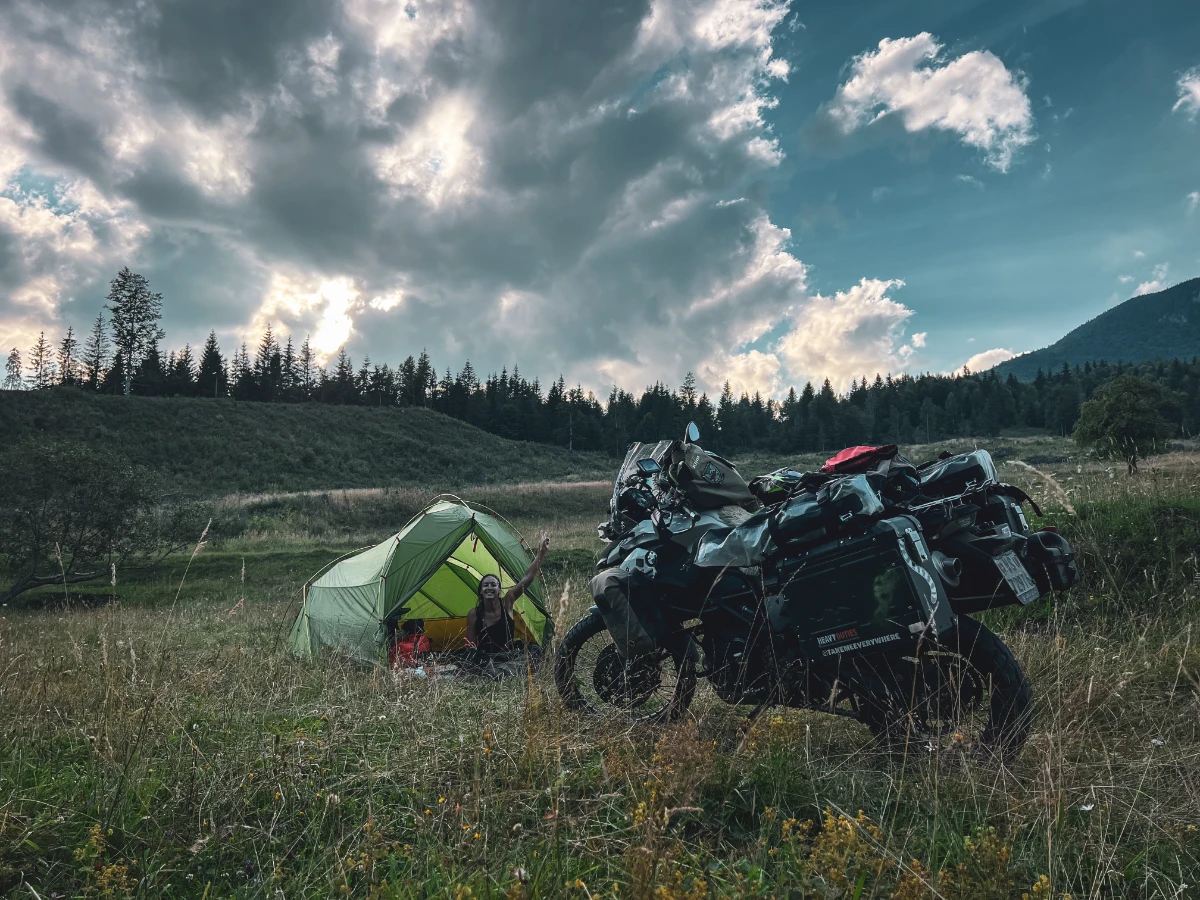
We bivouacked in the Carpathians, always aware that a Romanian bear might consider us an interesting midnight snack. The forests here are home to one of Europe’s largest bear populations, and setting up camp in the pine shadows at dusk carries a certain electricity that no campsite with electric hookups can reproduce. They never came. But the silence of those forests, the cold morning air curling over the treeline, the steam from a tea mug lulled by the stream, that’s a kind of richness that no travel budget can quantify.
Dogs, Borders & the Night We Slept in a War Zone
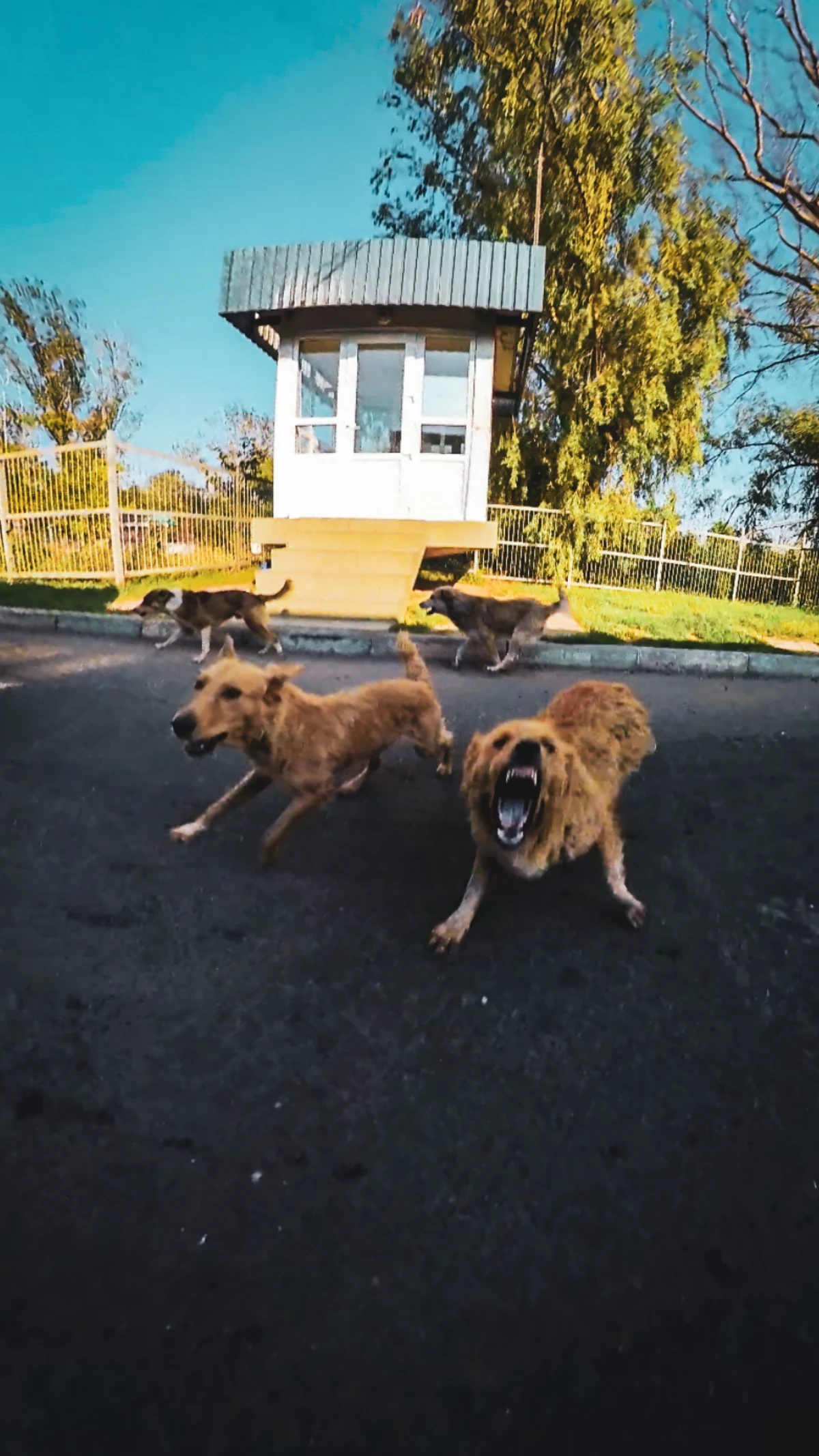
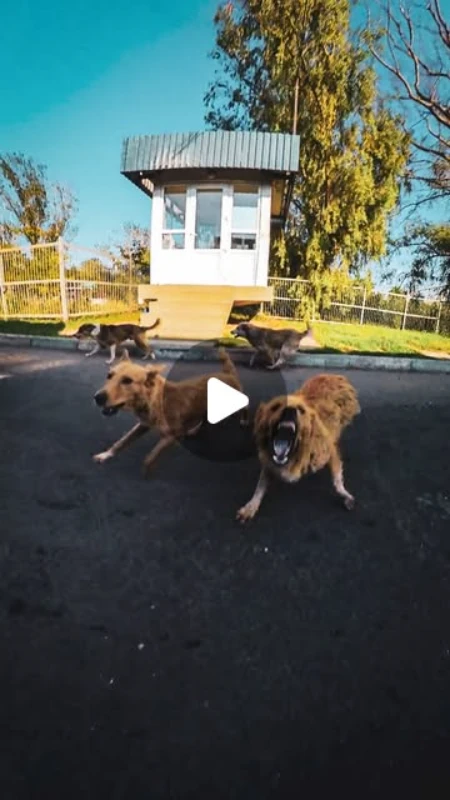
We had a Workaway lined up in Moldova, a promising exchange that we’d been looking forward to for weeks. What we didn’t have was any preparation for the chaos that would greet us at the border crossing. Seven dogs, not lost ones curious about our wheels, but a coordinated, territorial, furious pack, launched themselves at Falkor and at us the moment we slowed to approach the checkpoint. They weren’t there to bark or to chase. They were there to bite. One lunged at my left leg, another at Nathalia’s right leg. I gunned the throttle hard enough to feel the rear wheel slip on the road as we shot toward the border gate.
We arrived at the Romanian checkpoint with our hearts hammering, only to find guards who were, diplomatically speaking, less welcoming than the dogs themselves. Getting through took patience, straight faces, and a firm refusal to pay any « additional fees ». Eventually we crossed… Then the dogs, with a persistence that still amazes me, had circled the checkpoint perimeter and were waiting on the other side. In Moldova. Waiting for us specifically. They came again. I accelerated hard… and missed the fork.
Turning back meant the dogs. So we went forward. We found a hotel in a town called Reni, on the Danube, in the Odessa region. The streets were empty in an unsettling way, not quiet, but evacuated-feeling. Long-haul trucks were parked in endless lines, engines off, as if waiting for something. The hotel was full of men, no families, no tourists. I went alone to buy food, walking through streets where inhabitants stared at my sand-and-black riding gear, military colours in a military zone. The atmosphere was thick.
That night, we finally looked up where we were and what was happening there. Odessa. The region had been struck two days earlier. We were, very simply, in the wrong place at the wrong time, the product of not taking five minutes to check before rushing headlong into an unknown border crossing. We barely slept. At first light, we rode along the Danube, found a small ferry crossing, and, through yet another run-in with aggressive dogs leaping from under the parked trucks, made it back onto Romanian soil. Shaken. Wiser. Alive. And deeply grateful that this story ends with a ferry ride rather than something else entirely.
Bulgaria: Cyrillic, Campfires & A Gang That Became Family
After the stress of the Moldovan/Ukrainian detour, Bulgaria felt like a deep exhale. It was also our first real encounter with the Cyrillic alphabet, an entirely new visual language that we took as a personal challenge. We tried to read every sign, every menu, every village name, slowly and often incorrectly, until the script started to resolve itself into something legible. There’s a peculiar satisfaction in watching a foreign alphabet go from meaningless symbols to recognisable words over the course of the weeks. It makes you realise how much of travel is about rewiring your brain, not just changing your postcode.
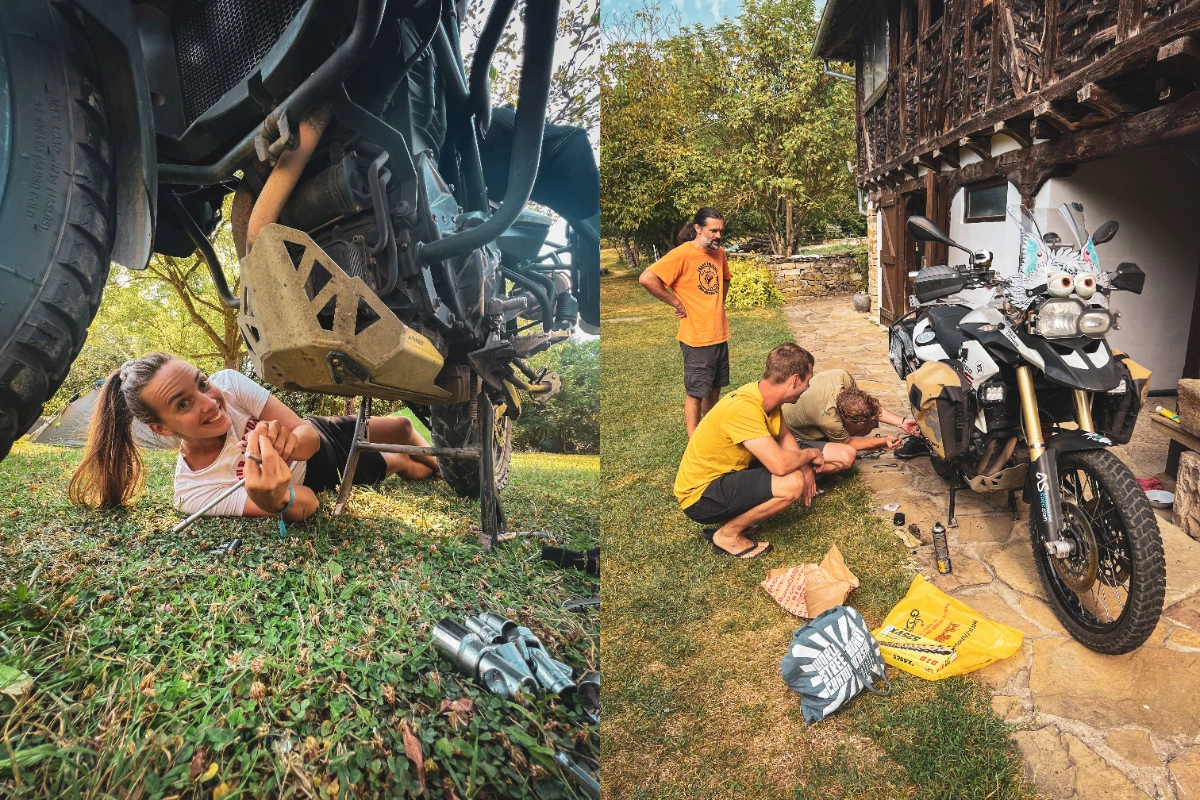
In Varna, a connection via BunkaBiker, a kind of Couchsurfing built specifically for motorcycle travellers, opened our first door into local culture. But the real pivot point of our time in Bulgaria was The MotoCamp. We’d planned to stay one night. We stayed ten. Every single morning, over breakfast, one of us would say « we should really leave today. » And every evening, a new face would appear, a new fire would be lit, and the decision would be indefinitely postponed again.
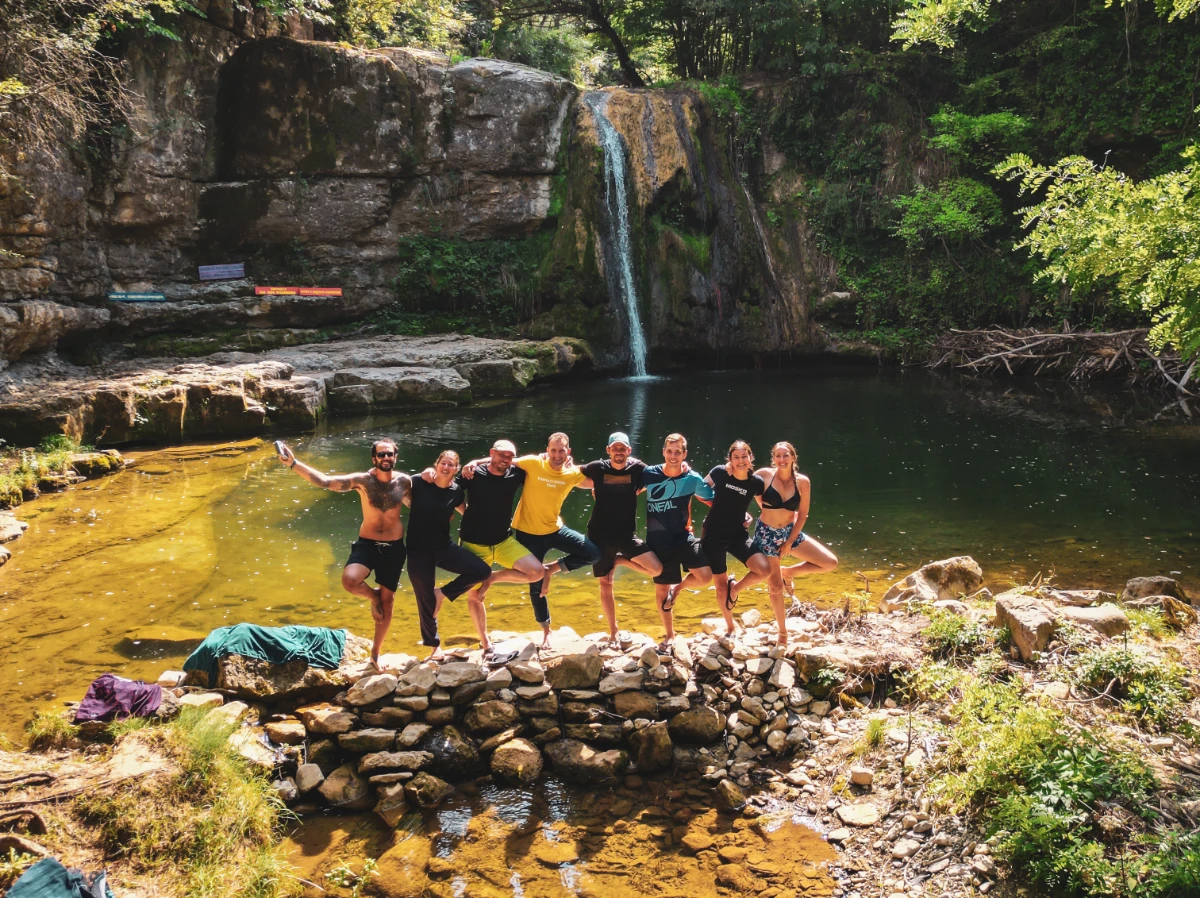
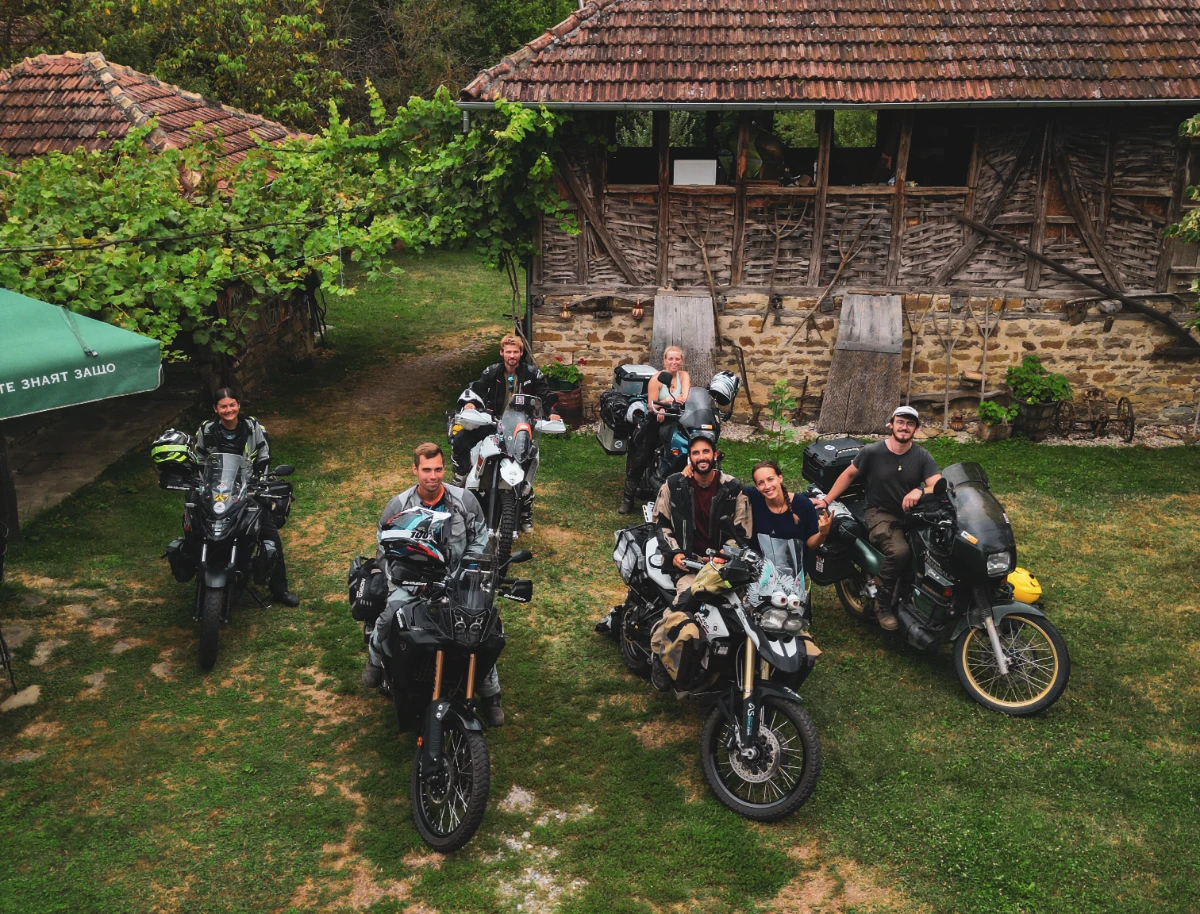
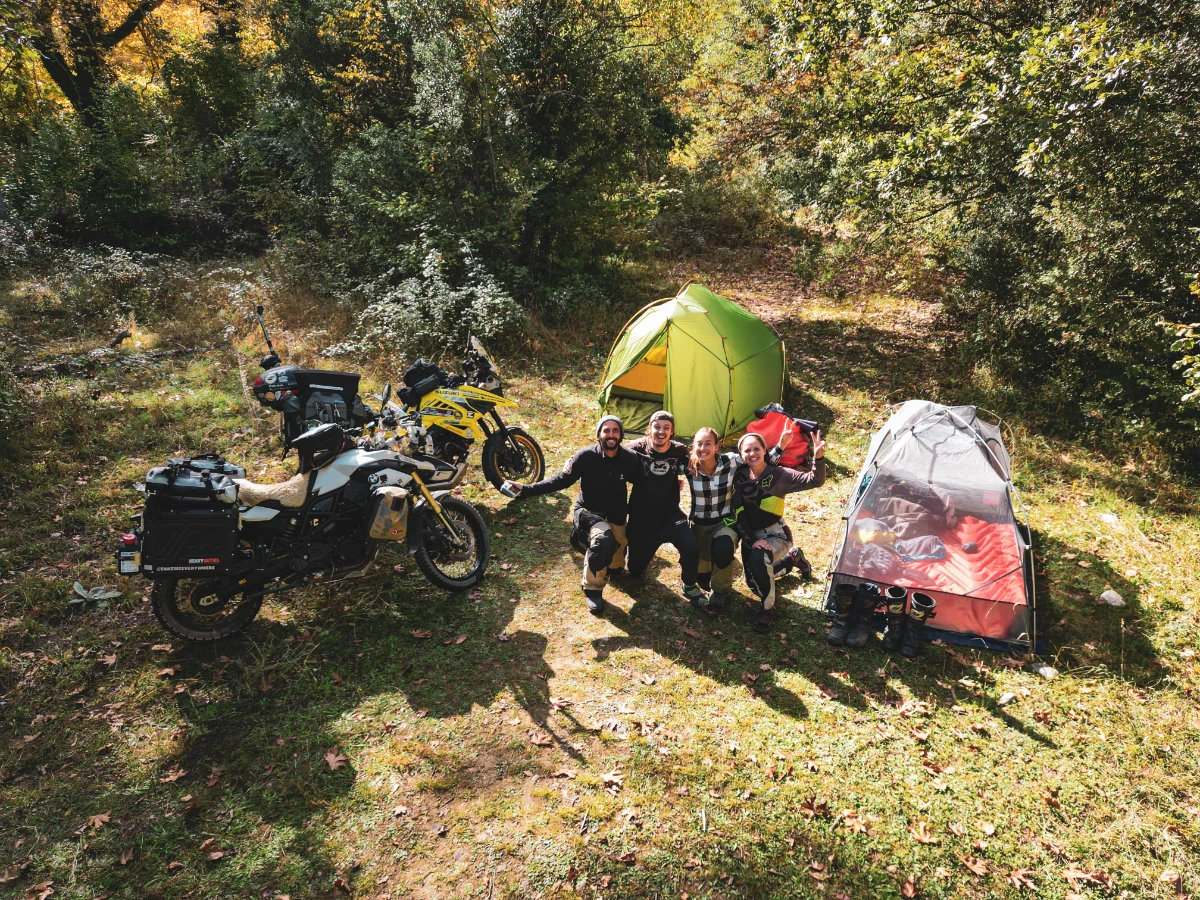
Ivo and Polly, the owners of MotoCamp, have created something genuinely rare: a place that functions as a workshop, a campground, a social hub, and an emotional anchor for long-distance riders passing through. It’s the kind of place where you arrive as a traveller and leave as something more like family. For the first time of the trip, we serviced Falkor with the help of our new friends: full oil change, chain, filters, alongside bikes from a dozen countries. We met Sander & Iris from the Netherlands, Sven & Ellen from Germany, Koen solo on his KTM, Chris & Chiara from Germany, and Joe all the way from Canada. Each of them with a different route, a different story, a different destination, and yet all of us sharing the same campfire, the same garden inflatable pool, the same inexplicable need to just ride.
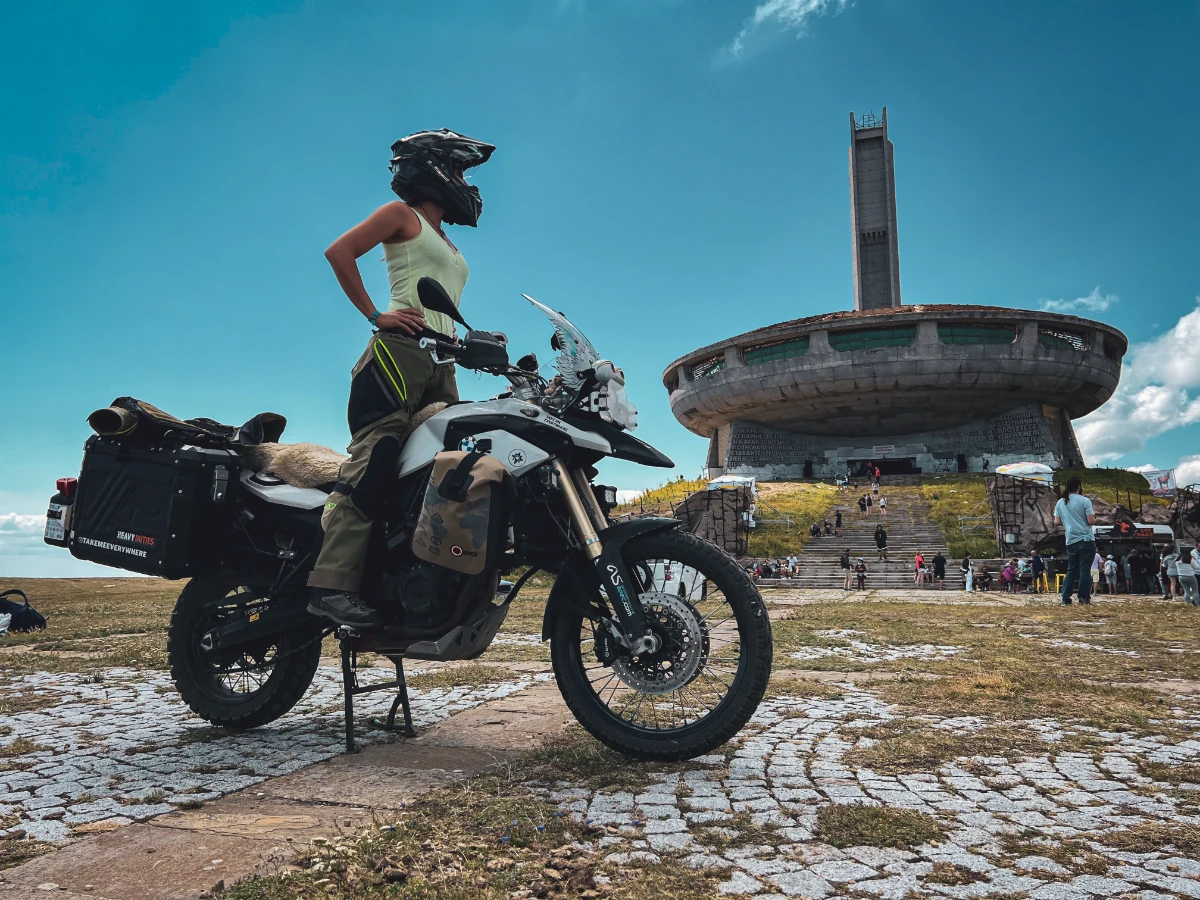
One of the side-trips brought us to Bouzloudja,a communist-era UFO-shaped monument perched in the Bulgarian mountains, a place I’d been dreaming about exploring for years. We’d imagined a silent, slightly eerie urbex experience in the abandoned ruins of a Soviet ideology. What we found was a festival. Music, food stalls, hundreds of people, flags and energy everywhere. The contrast between our fantasy and the reality was so absurd it became its own perfect memory. Some places refuse to be what you expect. Bouzloudja was one of them.
The year in four unforgettable chapters
If we had to choose four threads that defined this year, they would be these, each one a world of its own, each one a reason we can’t stop.
The Balkans: Generosity, Offroads & the Hardest Day of our Journey
We left MotoCamp with Sven & Ellen and pushed south through North Macedonia on the Trans Euro Trail, setting up what can only be described as a five-star wild camp on the heights above Lake Ohrid. There are places that silence you completely, where conversation stops not because there’s nothing to say, but because the view is too large for words. That ridge above Ohrid at dusk was one of them. The lake below, the mountains behind, the sky doing something extraordinary with colour. We ate in silence and considered ourselves extremely lucky.
Kosovo surprised us from the very first day. We’d barely sat down for lunch when a white BMW braked hard in front of us, three men climbed out, and our heartrate briefly climbed. The reality was beautiful. They were motorcyclists too, and one of them was Qendrim, the Linesman responsible for building the Kosovo TET route, one of the people who literally creates the paths we ride. « You are in Kosovo, » he said, with a warmth that was immediately disarming. « You are at home. If you need anything, you call us. » And he meant every word, without condition or expectation.
Qendrim invited us to his mountain cabin, fed us at his own restaurant in Pristina, and helped store Falkor safely when we needed. He embodied everything that the motorcycle community represents at its finest: a generosity that crosses borders, languages, and cultural differencies, offered freely, with no strings attached. The only currency exchanged was stories.
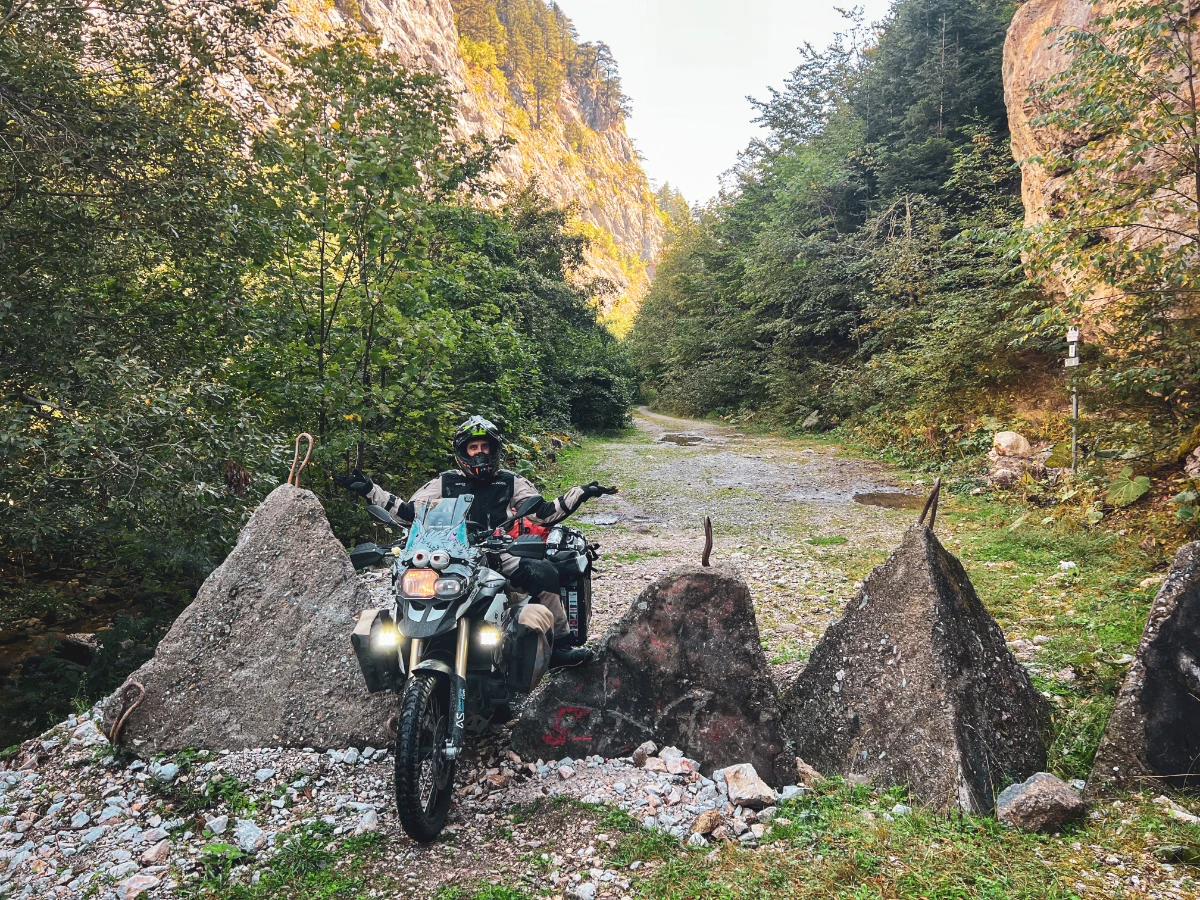
We crossed from Kosovo into Montenegro, not via the official border, but through a TET track that took us past rows of concrete anti-tank barriers called Toblerones (you can guess why). We removed the panniers, squeezed Falkor through, and continued. A few kilometres later, a Montenegrin police officer was considerably less amused than we were. More fear than consequence, thankfully, and we were waved through toward Albania.
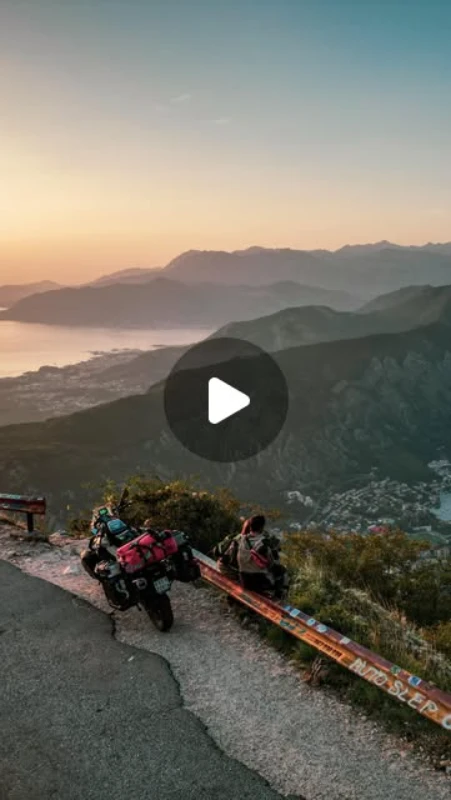
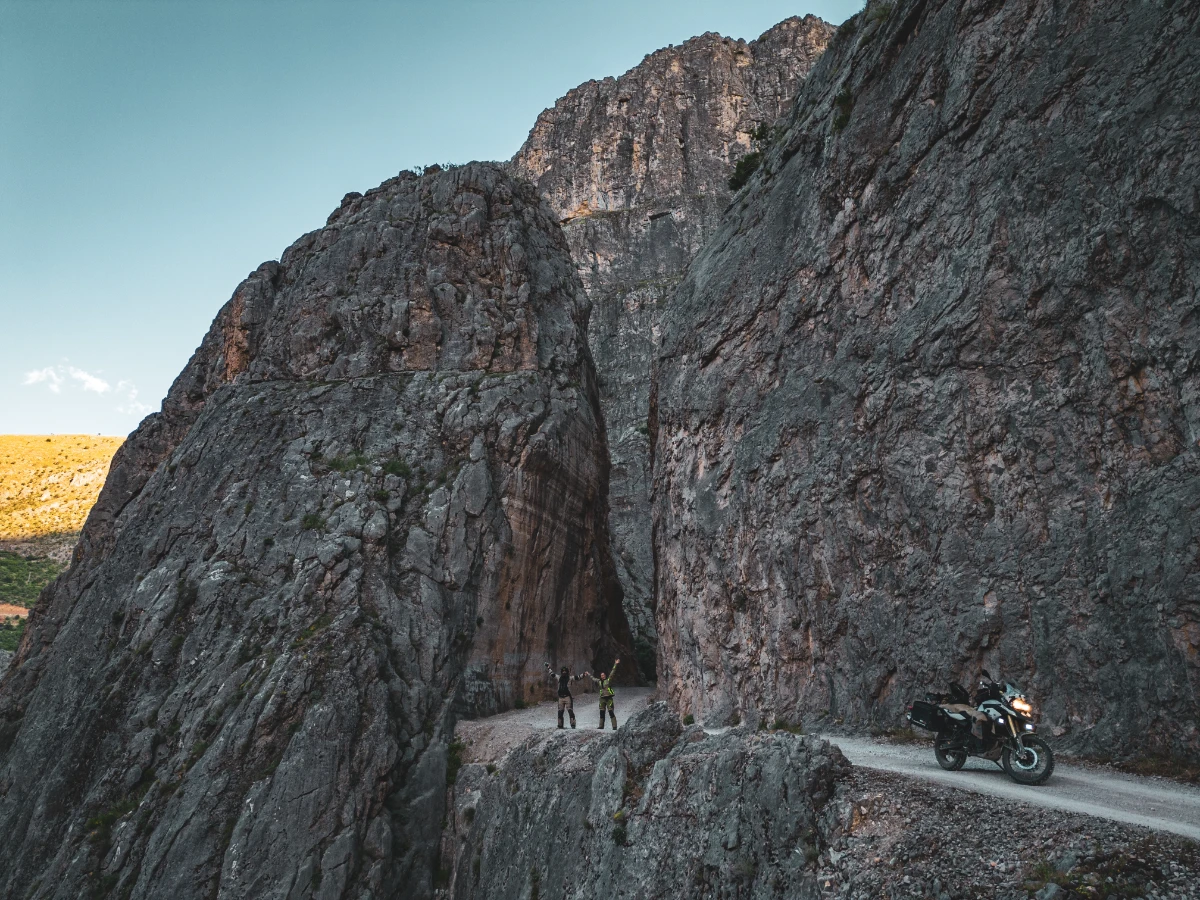
Montenegro gave us the pristine perfection of Kotor and its legendary switchback road, a route so iconic it should be on a poster. Then Albania: the SH20 panoramic route (stop and stare, every hairpin), the astonishing Theth National Park, wild camps beneath mountains that felt like they belonged to a different era. But the road that really tested us was the SH37, a TET track we approached with confidence and humility.
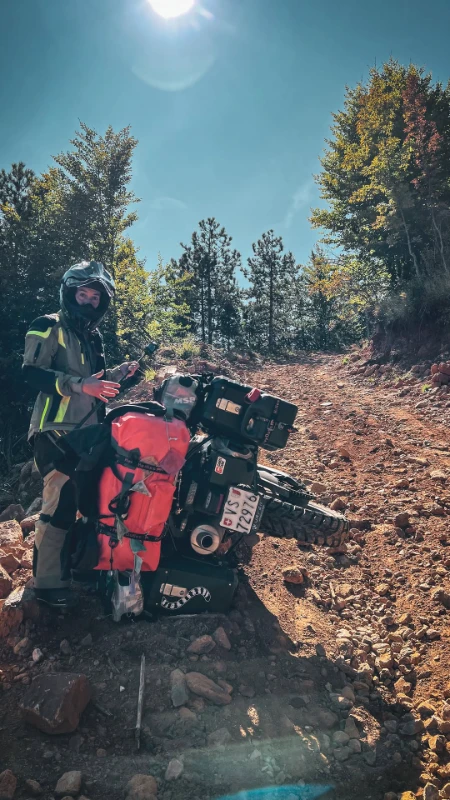
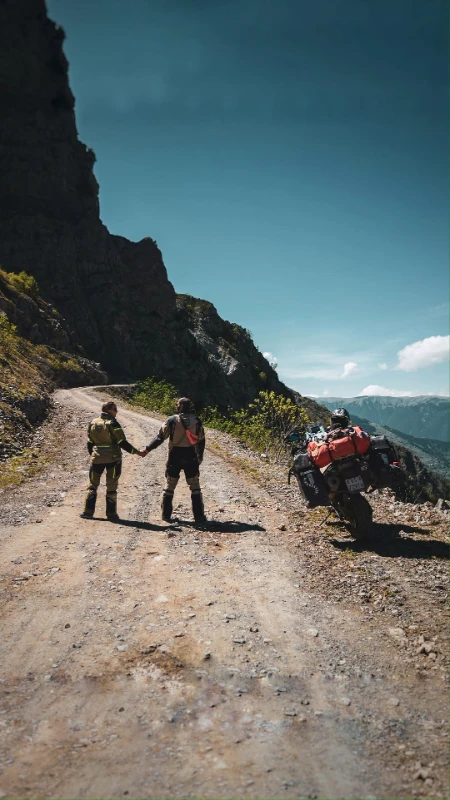
Sixty metres of loose, boulder-strewn track took us an hour. Three falls, each one a heavy, exhausting process of lifting a loaded 250kg motorcycle on a steep, unstable slope. Almost out of water, muscles screaming, the sun dropping toward the ridgeline. And the cruelest part of it: you have no way of knowing if what lies ahead is better or worse. You have committed. The only direction is forward. We arrived at the top depleted, dirty, slightly delirious. And then Bodilla Lake opened beneath us in the last light of the evening, and the world rearranged itself into something worth every bruise.
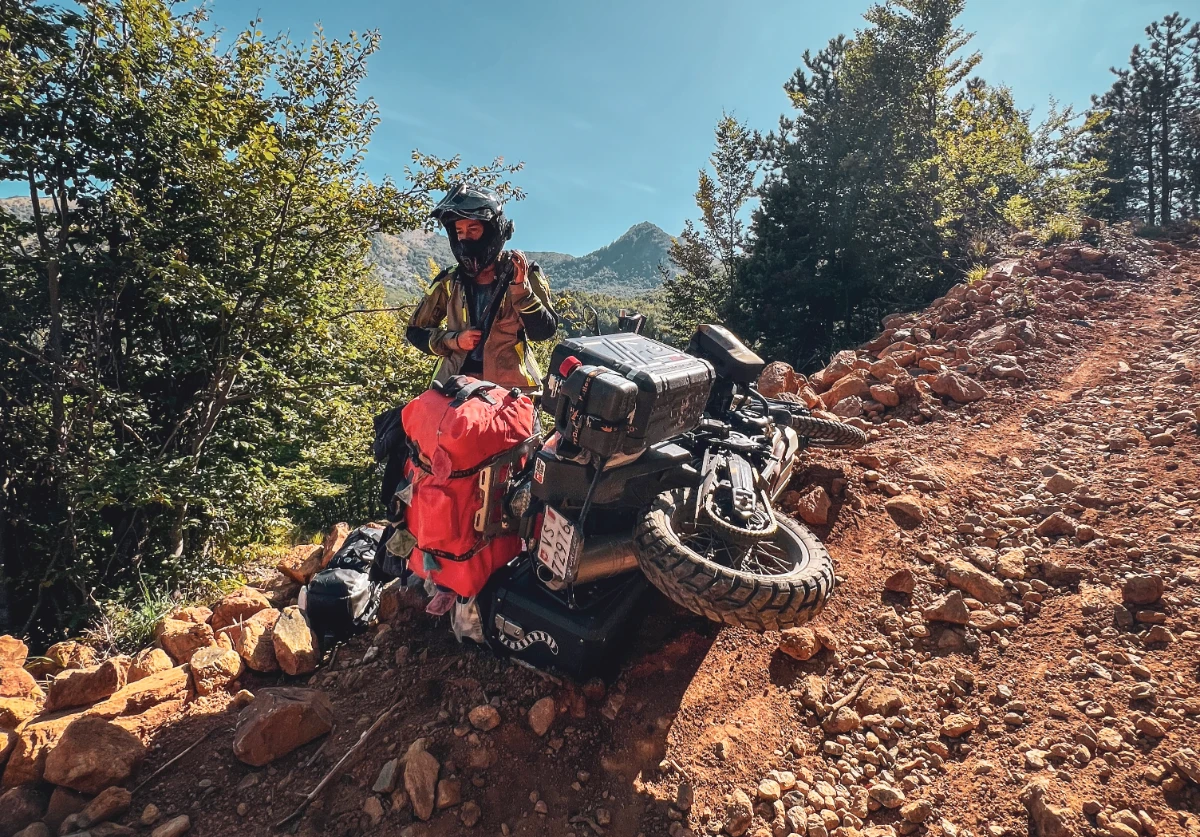
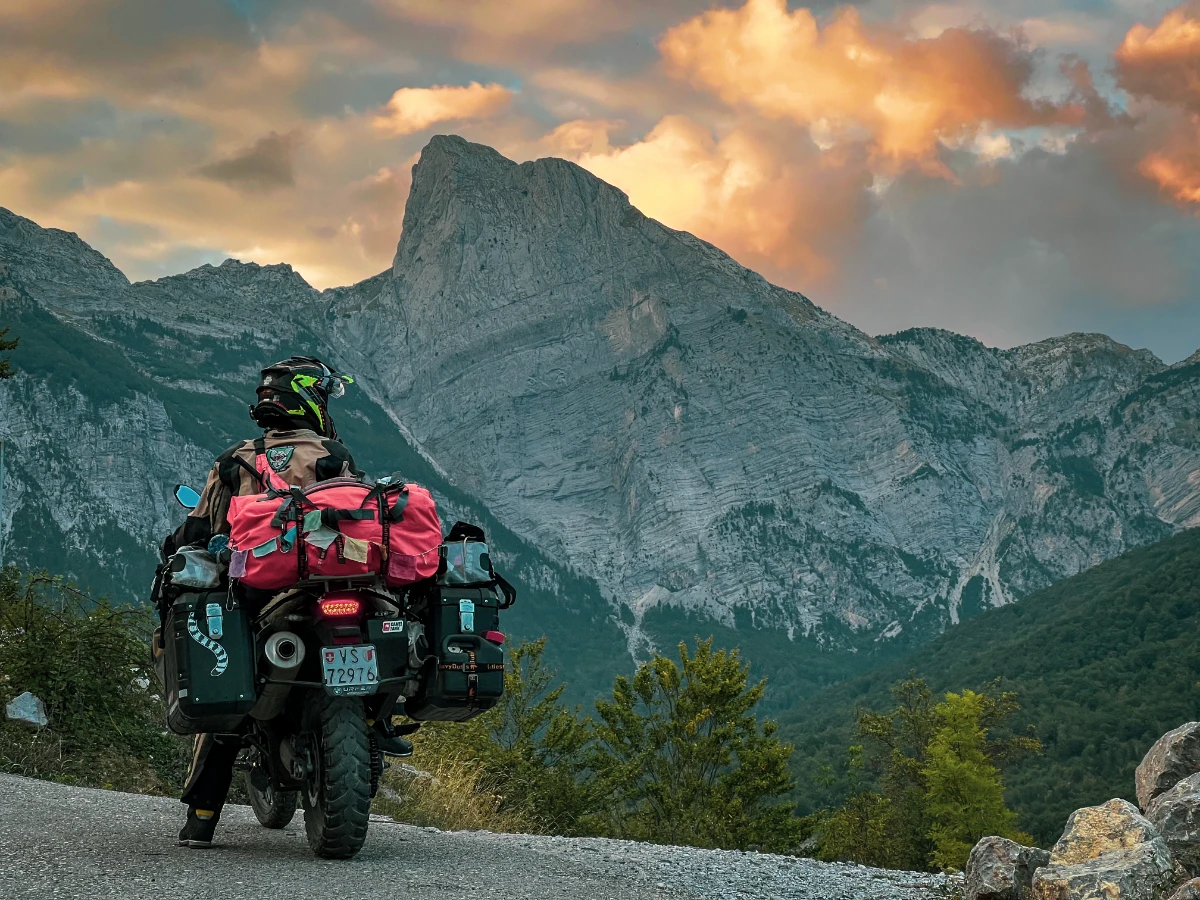
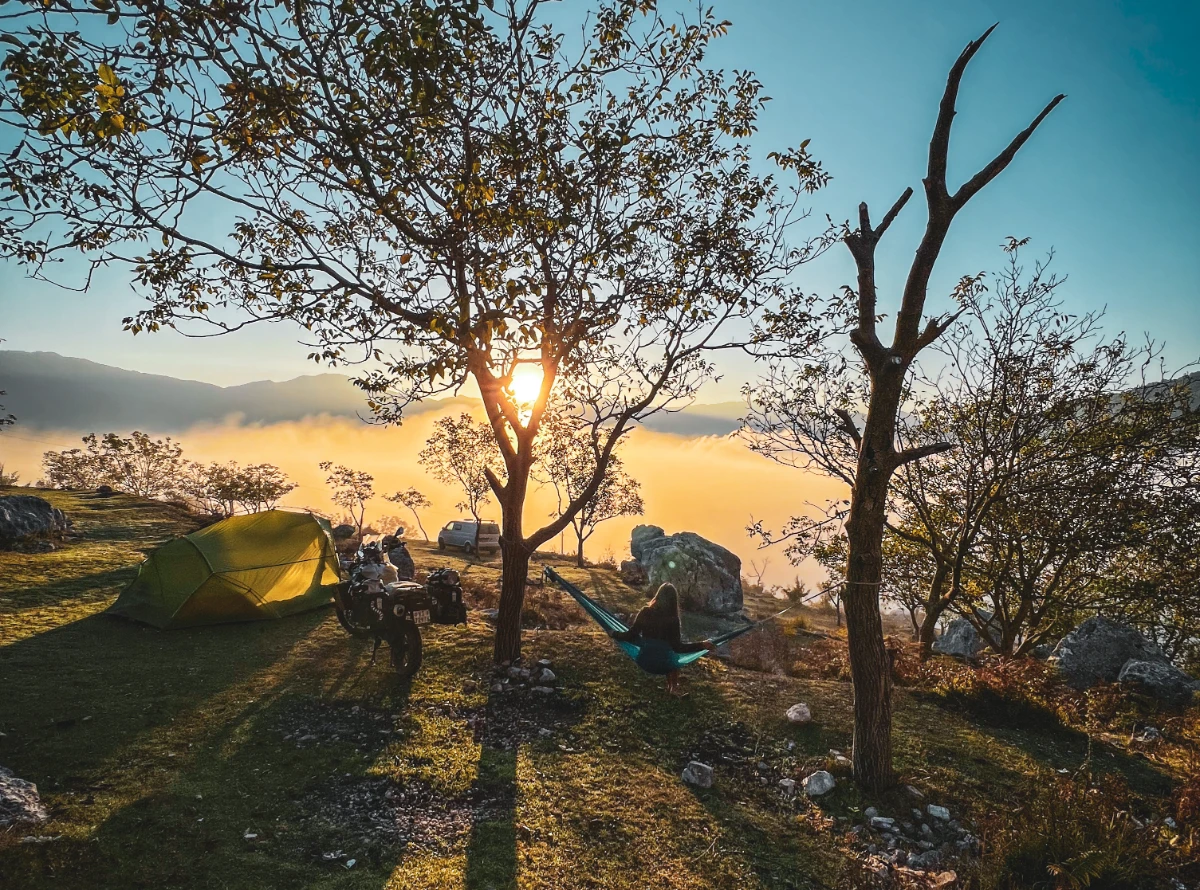
The Albanian coast then brought us a very different kind of adventure. A Swiss YouTuber named Sylvain reached out, he was heading to a Rainbow Gathering, an ephemeral community of around 150 people assembled in the hills above the sea. No leaders. No schedules. No electricity. No internet. Barely any clothes (we’ll leave it at that 😆). We stayed for several days, ate communal meals cooked over open fires, swam at dawn, and had conversations that had nowhere to be. Strange, disorienting, and exactly what we needed after weeks of piste navigation and border crossings.
Greece: Roads, Ruins, a Sailboat & a Cretan Winter
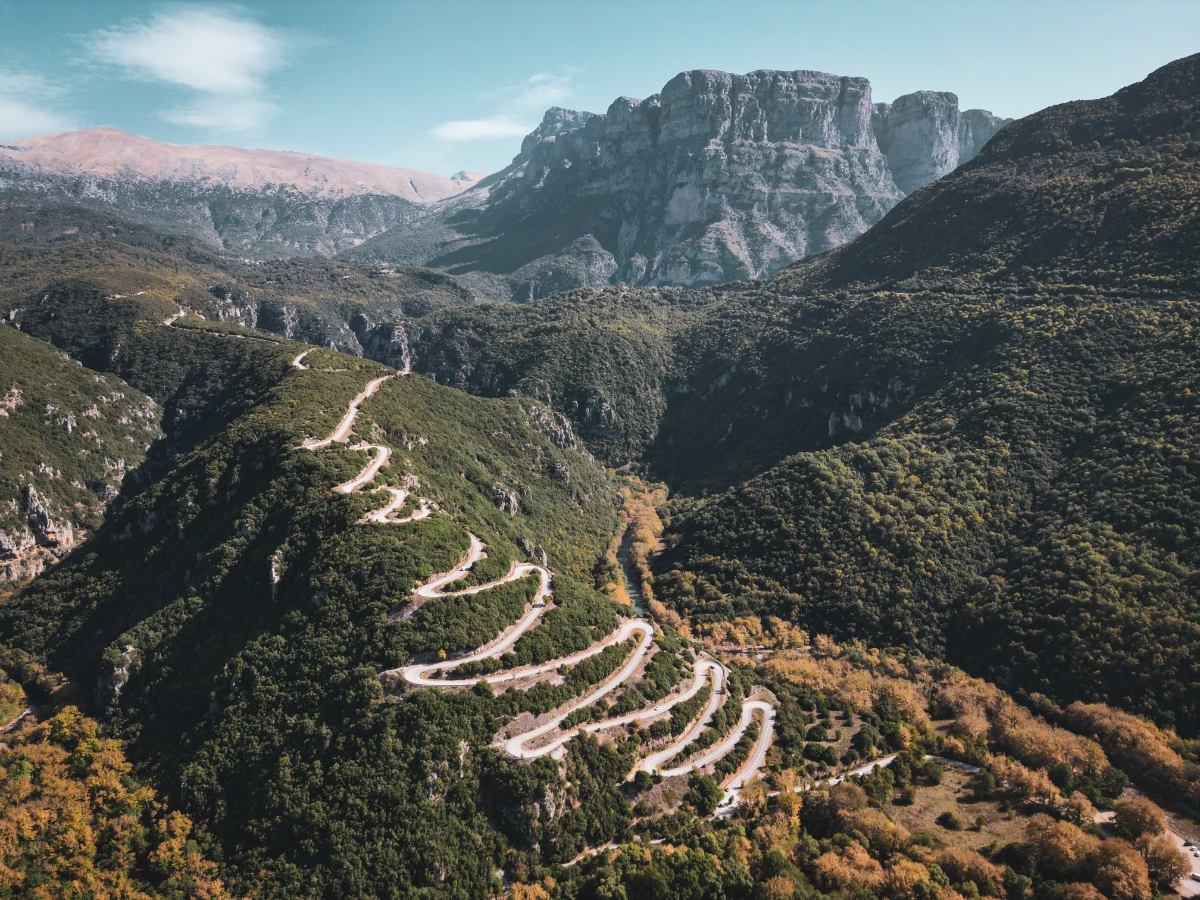
Natha’s eyes welled up with tears of accomplishment. After two years on the road, we finally crossed into Greece, a country she’d heard so much about from her family and was now experiencing with the loves of her life, Vins and Falkor. Greece welcomed us with one of those road sequences that confirms every choice that led you here. The Papingo hairpins, a series of tight, dramatic switchbacks carved into the limestone above the Vikos Gorge, are the kind of road that level up from casual enthusiast to professional pilot. It was here that we finally crossed paths in person with Lavi and Ollie, two riders completing a full lap of the planet on their Suzuki V-Strom « Bumble Bee. » We’d been digital-orbit friends for over a year, had almost met in Morocco during Year One, and now our roads converged on a mountain pass in northern Greece, near the end of their circumnavigation. We rode together through the gorge country, camped under the same sky, and shared a fire that lasted far past any reasonable hour. Some connections take their time arriving.
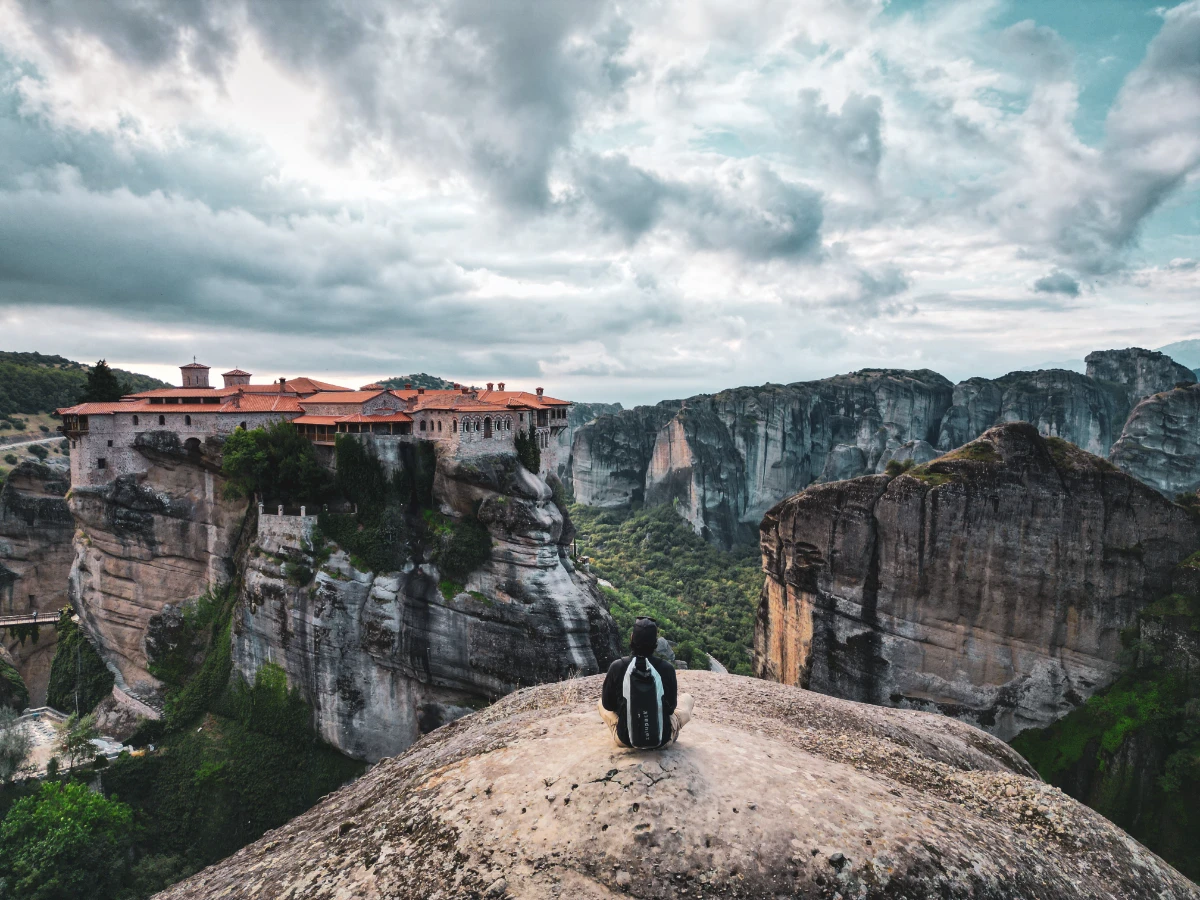
The next morning: the Meteora. Stone pillars rising vertically from a green plain, each one topped with a monastery that has no business being there by any normal laws of construction. We stood at the viewpoints in silence, motorcycles parked behind us, and tried to make sense of the scale. Then the road south to Delphi, then Athens, not as a destination but as a departure point. We left Falkor in a garage and boarded a sailboat.
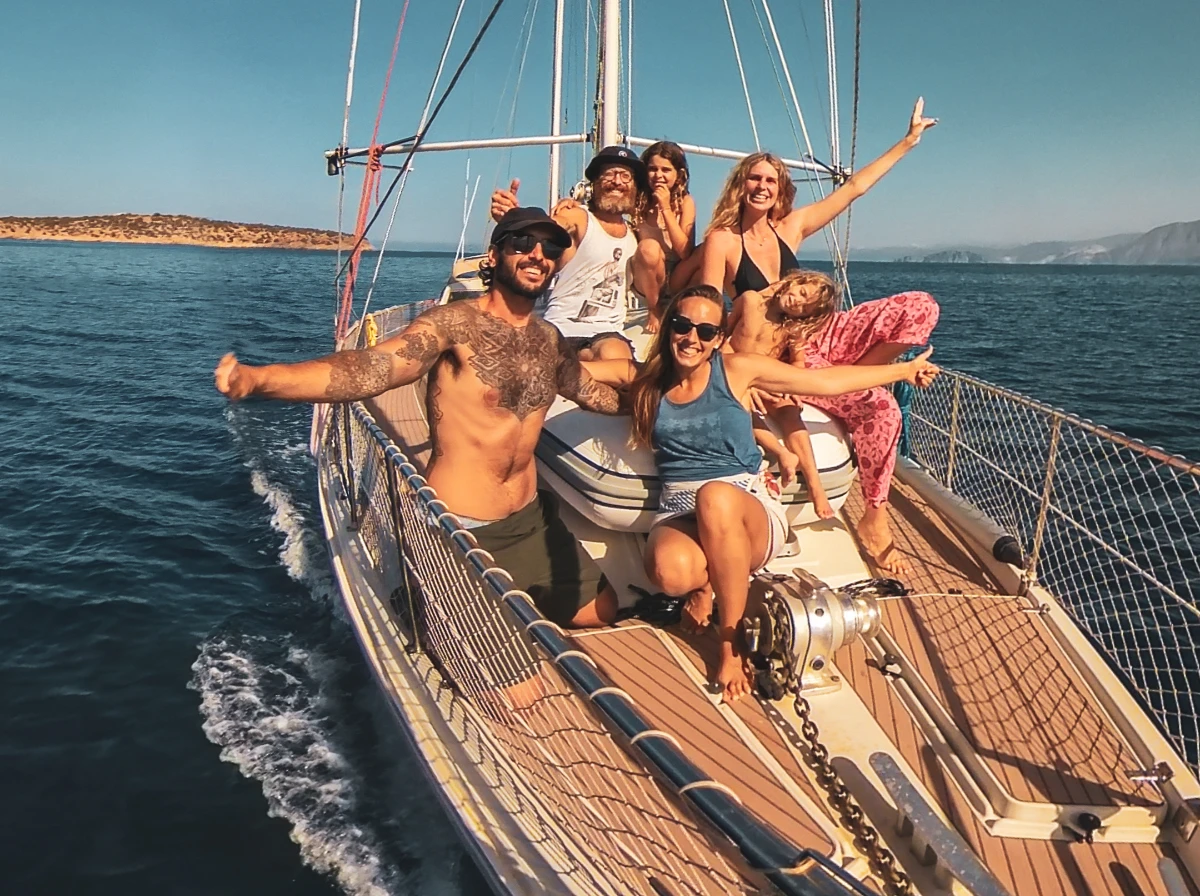
Through Workaway, we’d connected with Roy and Sandra, a sailing family living aboard their Super Maramu 2000 with their children Leo and Berry, navigating the Greek islands and heading eventually to Crete. In exchange for helping with navigation, cooking, childcare, and general boat life, we had a bunk, meals, and access to some of the most extraordinary sailing waters in the world. For those who’ve read our transatlantic sailing story, you know how deep the sea runs in us. Getting back on a yacht, even three years and tens of thousands of kilometres into a motorcycle journey, felt like coming home to a home we didn’t know we missed.
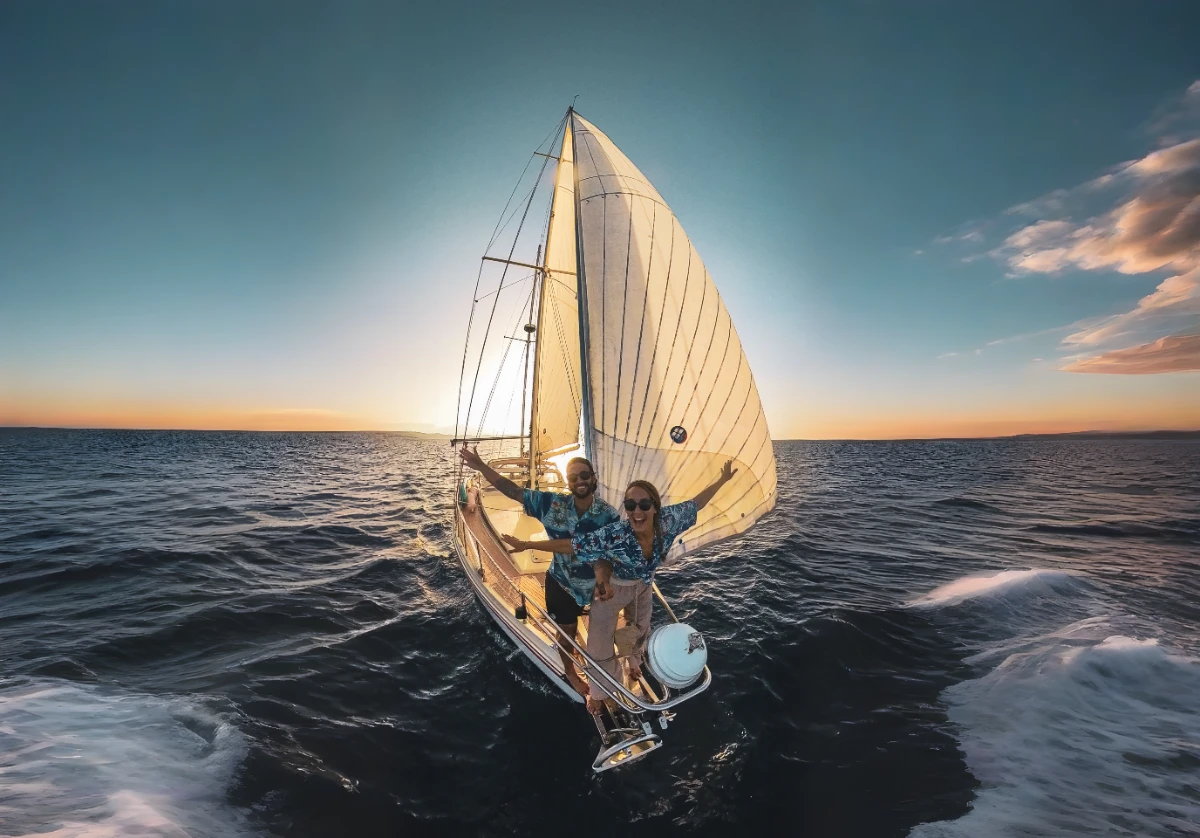
We navigated Kimolos, Milos, Folegandros, and then anchored off Santorini in the crater of an ancient volcano, the caldera walls rising sheer above us in every direction. Then a crossing to Crete. The winds in the Aegean are normally no joke, but we had a very calm and relaxed adventure on the sea. Fair winds and following seas all the way until Crete.
On October 24, 2023, we set foot on Crete, and didn’t leave until March. Winter riding has its limits, and the island offered us exactly what we needed: warmth, community, and time. Through Workaway, we found Evienia and her MaGea Creative Residence in the mountains above Polemarchi, a place surrounded by animals, fruit trees, and the particular peace of a well-tended garden. We helped her develop the content and promotion for her rental space, and in return lived in one of the most generous and nourishing environments of our entire journey. Evienia is the kind of host who feeds you before you even realise you’re hungry.
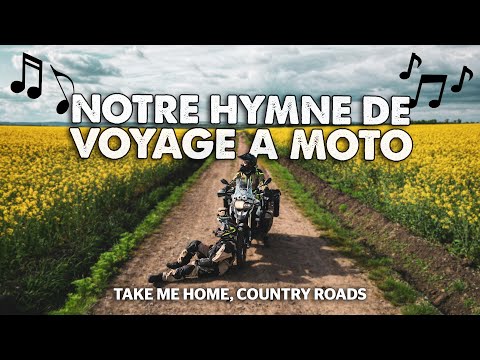
Sander and Iris, our MotoCamp Bulgaria friends, found us there too and came to stay. We explored together, the hidden gorges, the remote beaches, the mountain roads that most tourists never find. We rented a studio in Roumeli for more independence. And Falkor chose this winter to have its first real breakdown, refusing to start on a day we’d planned to ride up toward the slopes of Psiloritis. We used the downtime to record something long overdue: our travel anthem, written and played by our uncle Jeff on guitar. The melody had been with us since the beginning. Now it finally had its film. After a thorough BMW service, new fuel pump, all filters, full diagnostic, Falkor came back to life, better than before.
Crete also gave us two television moments we still find hilarious: a feature on Criti TV, the local Cretan broadcaster, and then an interview on Alpha TV, the largest national channel in Greece. This was definitely not on our bingo list of that year, what a great surprise.
Our Travel Anthem
Written and performed by our uncle Jef on guitar. This melody has followed us since Day One, but Falkor had to break down in Crete for us to finally present it properly on our YouTube channel.
On Greek Television
Local Cretan TV. Then Greece’s biggest national channel. We left with a bottle spin. We ended up on primetime.
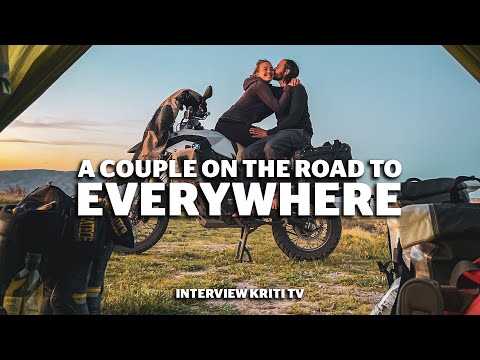
Criti TV — Local Cretan Television
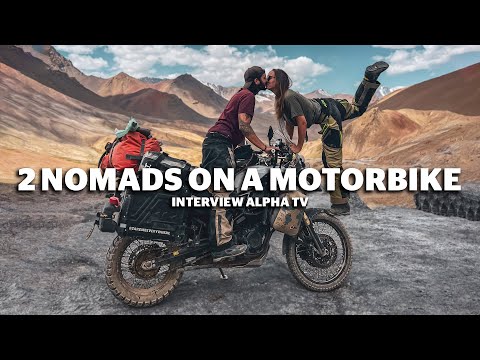
Alpha TV — Greece’s #1 National Channel
Türkiye: The Country transcend All Our Expectations
On March 18, 2024, after two long ferry crossings, we stepped ashore in Turkey. 966 days in Europe and North Africa, and now, officially, we were on the Asian continent. The weight of that number settled over us during the day, not in a single moment of revelation, but gradually, in the way that long-anticipated arrivals often hit: softer, stranger, and more emotional than expected. We’d been riding toward Asia for almost two years without fully naming it as our destination. And here we were.
Our Greek friends had warned us about Turkey with a vagueness that implied concern. They needn’t have. What we found was the opposite of every implied caution, a country of overwhelming hospitality, extraordinary landscape diversity, and a motorcycle-travel culture that immediately embraced us. We fell, completely and without reservation, in love with it.
Kaş was our first « long » stop, a turquoise-water port town where our Workaway host Can needed hands for renovating his camping and bungalow complex. Manual work, fresh air, and the Mediterranean just below. It was there we met Dylann and Marine, a young French couple living in a van, who became travelling companions for a stretch of the Turkish coast and friends beyond it.
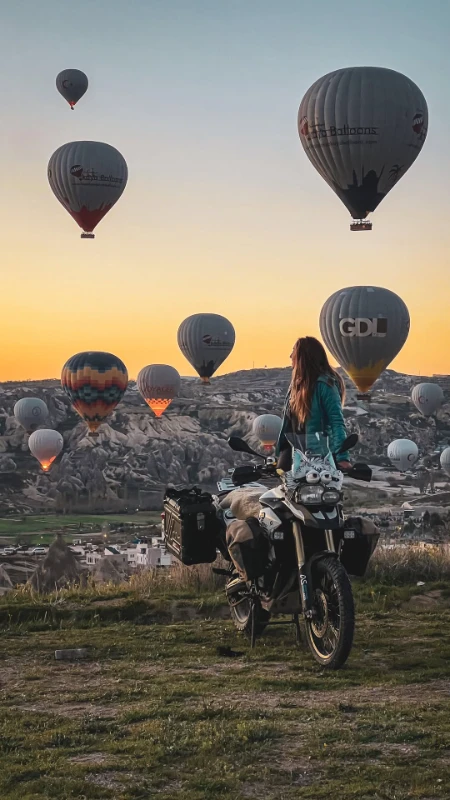
Then came Cappadocia. Nothing, no photo, no film, no description we’d consumed, fully prepared us for it. We stayed for more than three weeks. Three weeks of hot air balloons rising at dawn over tufa chimneys whose shapes defy geological reason, of riding Falkor through valleys that look like another planet rendered in ochre and rose, of wild-camping in silence so complete you could hear the distant burners of the balloons ignite before sunrise. Nathalia’s mother, Maria, joined us for two weeks of trekking, and watching someone experience Cappadocia for the first time is its own gift. Some journeys are made richer by being shared with the people we love.
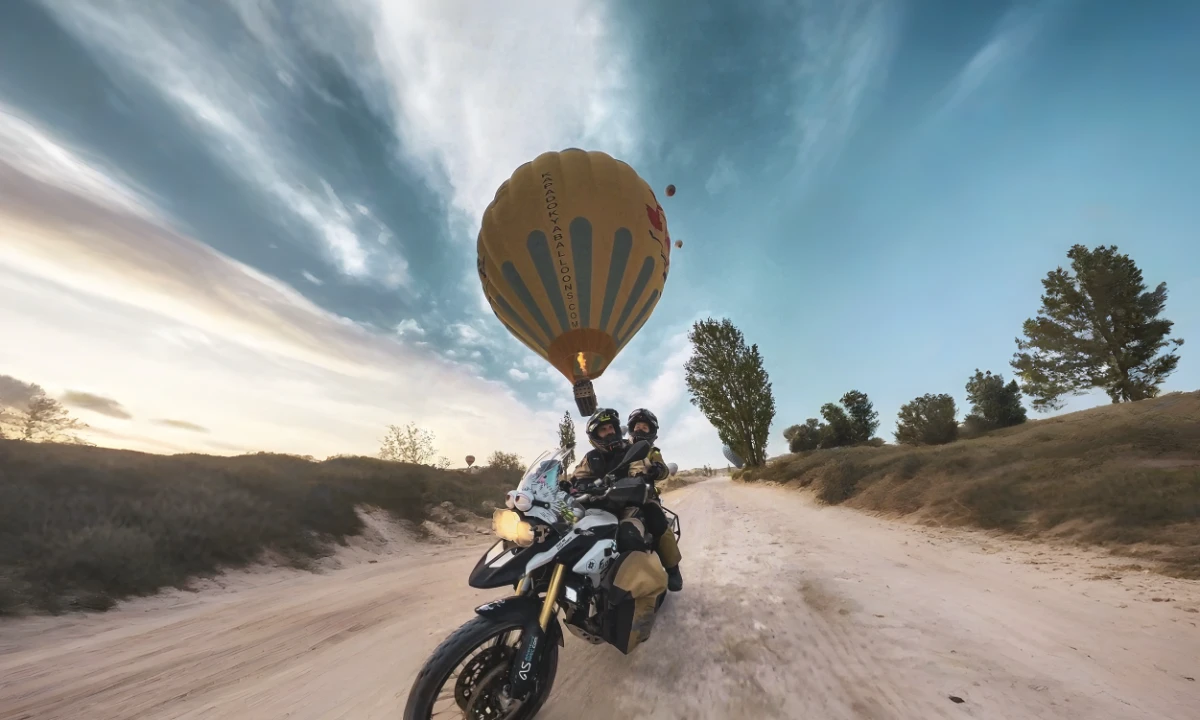
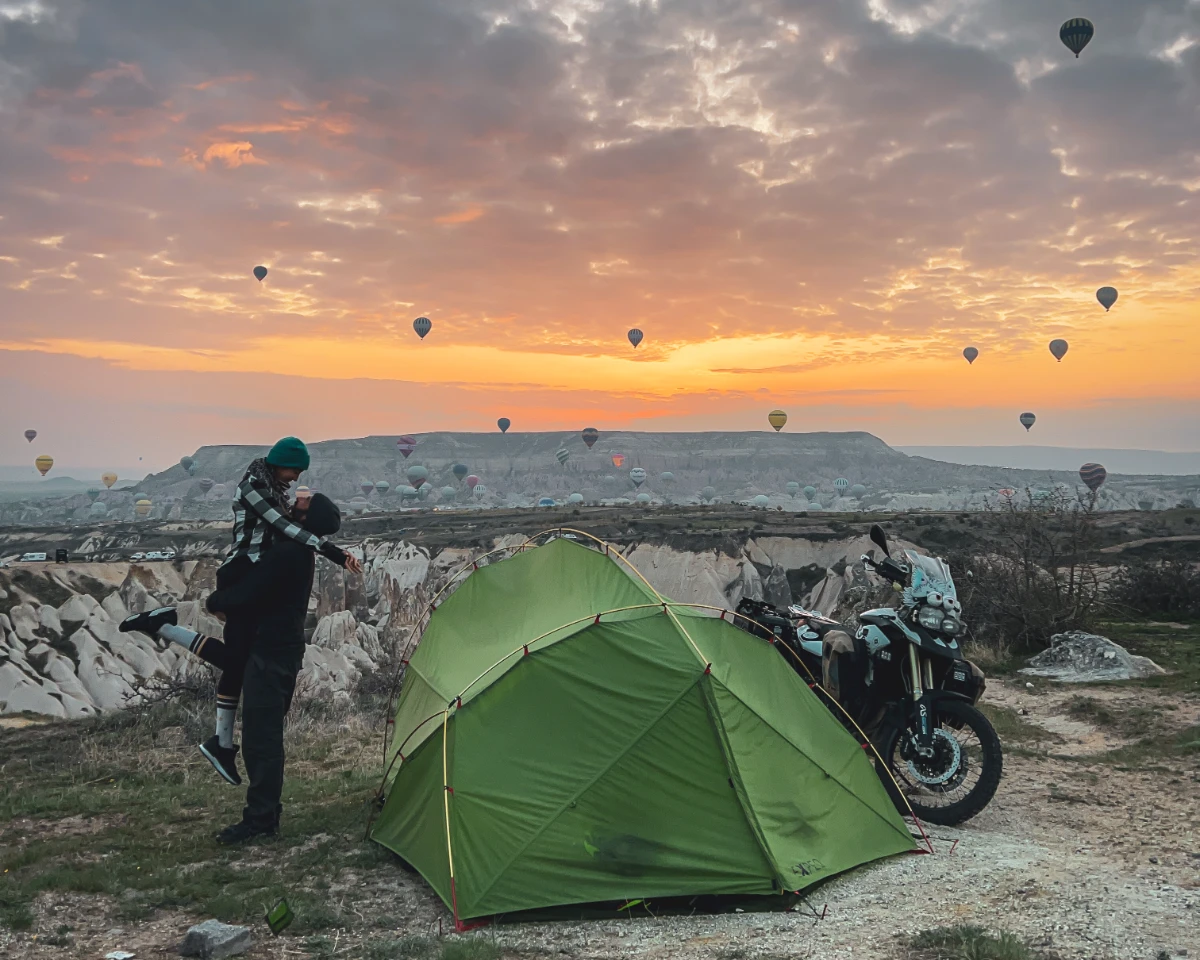
We met Raf Cramate, a Swiss nomad with sixteen years of continuous travel behind him, in a natural hot spring somewhere in central Anatolia. We sat in the same steaming pool for hours, trading stories and sharing our thoughts about our nomadic lifes. Connecting with someone online for months and then encountering them in person in a volcanic hot spring in Turkey is exactly the kind of thing that makes you believe the world is a very small, very well-connected place.
Our Workaway with Merlin in the Hatay region, devastated by the catastrophic February 2023 earthquake, was one of the most meaningful weeks of the entire journey. Merlin had built a vast camping project from scratch, driven by a creative generosity that bordered on the visionary. He could look at a pile of salvaged materials and see a bathroom, a terrace, a garden. We built things together in the heat, learned things about creativity and construction, and left with a deep affection for him. He wanted to sell his camping and travel the world on his motorbike… We learned later, much later, after we had moved on through several more countries, that Merlin passed away. A year after we sat with him in the Hatay sun. Life is now! We should never wait too long for doing the things that we want the most
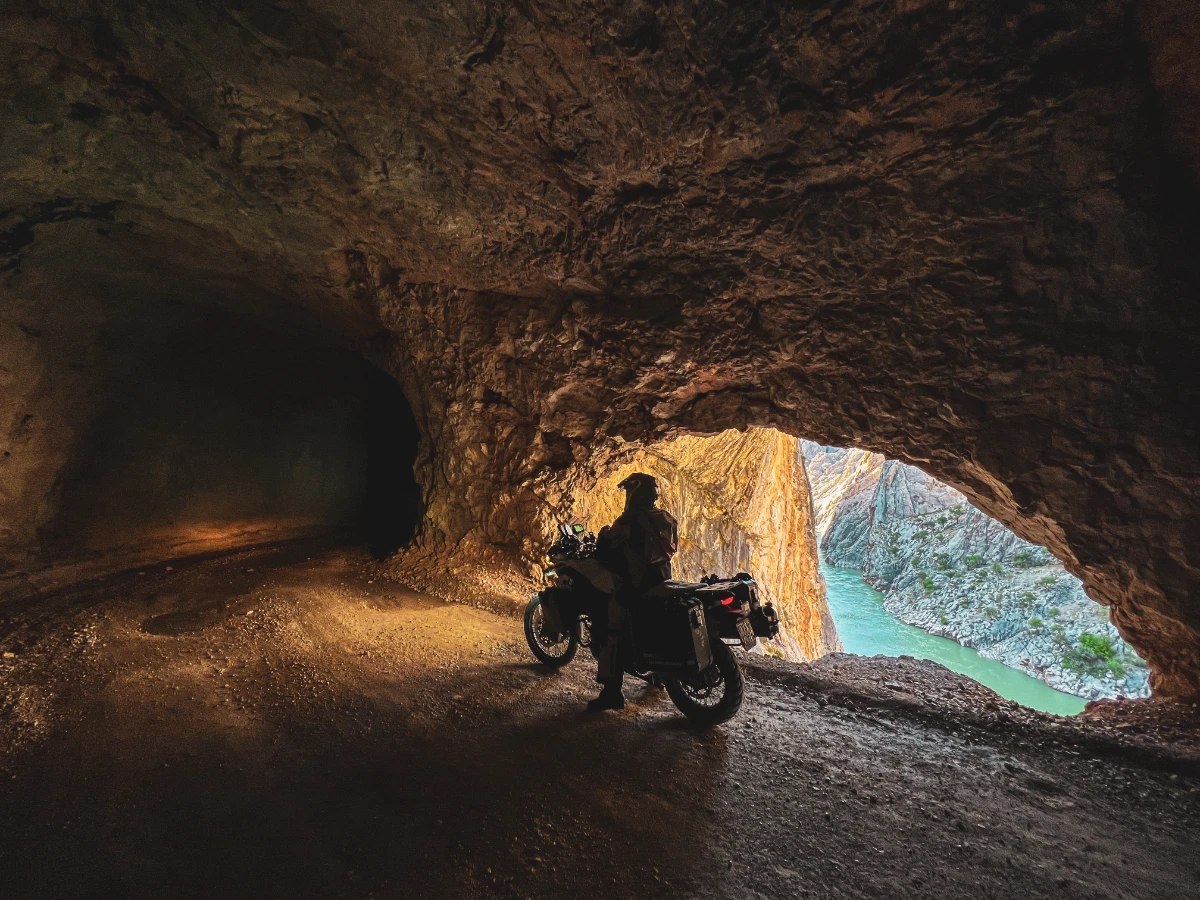
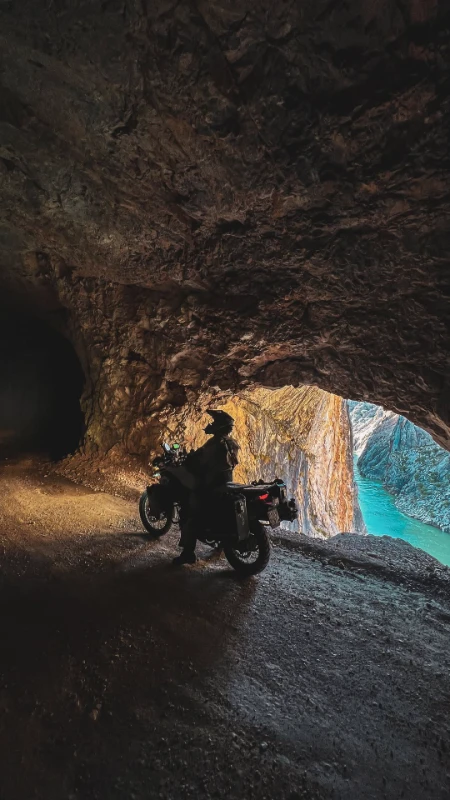
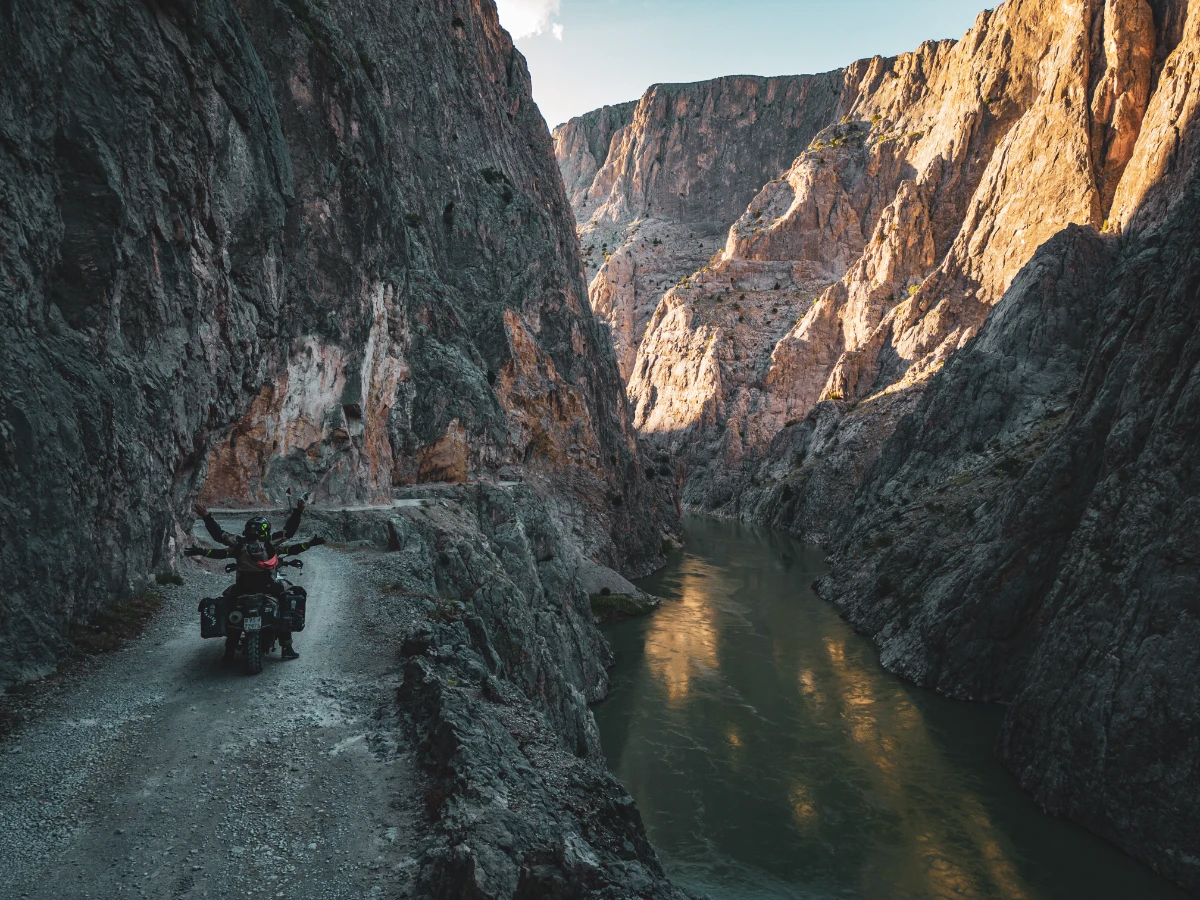
The Dark Canyon deserves its reputation. A road that follows the Euphrates river through rock carved over millennia, in shadow so deep it barely knows daylight. Endless tunnels digged by hands make this route 100% epic! And the D915, billed as one of the world’s most dangerous roads in the world, turned out to be simply one of its most beautiful, an unfair reputation for a route that rewards every kilometre.
After two months that felt like a different lifetime, so dense with experience that the calendar seemed to bend, we crossed north toward Georgia. Turkey had been the country that rewrote our assumptions about a region, about a culture, about what it means to arrive with the wrong expectations and leave with the right memories. If there’s one lesson we’d press into every traveller’s hands: go anyway. Judge nothing in advance. Let the country speak for itself.
101 days of Workaway — the secret infrastructure of our travels
Before we push north into the Caucasus, it’s worth pausing on something that doesn’t always make it into the highlights but shapes everything: Workaway. In Year Three alone, we spent 101 days in voluntary exchanges, sailing the Greek islands, wintering in a Cretan residence, renovating a camping on the Turkish coast, building projects in earthquake-damaged Hatay. That’s over a third of the year spent in genuine, reciprocal connection with people who shared their homes, their tables, and their lives with us.
Workaway doesn’t just lower the financial cost of travel, it changes the nature of it. You don’t pass through places the way a tourist does. You inhabit them. You wake up in them with responsibilities and routines. You learn the name of the neighbour’s dog. You truly get to connect with people that knows the place. And in exchange, you live adventures that no booking platform can produce. Sailing the Aegean on a Super Maramu 2000. Cretan winters in the middle of olive groves. A camping rebuilt alongside a man who saw beauty in things most people would discard.
Workaway: Live the dream without the trust fund
Months of exchanges. Sailboats, olive groves, campings and creative residences. We give a few hours of our time and skills each day, we receive a room, meals, and the kind of stories no hotel can offer. Our link gives you 3 months free to start your own adventure.
Help a family navigate Greek islands. Earn your bunk aboard a Super Maramu 2000.
Your skills are worth more than cash. Trade them for accommodation and a authentic experiences.
101 days of free accommodation. That’s a very significant chunk of any travel budget.
We are still in touch with the people we met through Workaway even after years on the road.
Use our link and start with 3 months free on your membership. Honest recommendation — we’ve lived it for 3+ years.
Our Year 3 Exchanges
| Host / Experience | Platform | Country | Days | What We Did |
|---|---|---|---|---|
| Roy & Sandra — Sailing Family | Workaway | 🇬🇷 Greece | 23 | Sailing, cooking, childcare — Kimolos, Milos, Folegandros, Santorini, Crete |
| Evienia — MaGea Creative Residence | Workaway | 🇬🇷 Crete | 63 | Content creation & marketing for the Cretan creative retreat |
| Can — Kaş Camping & Bungalows | Workaway | 🇹🇷 Türkiye | 8 | Renovation of camping, bungalows & outdoor spaces |
| Merlin — Hatay Camping Project | Workaway | 🇹🇷 Türkiye | 7 | Build & creative projects at a visionary camping near the earthquake zone |
| Total Workaway days | 101 | ~28% of the year, lived on a very low budget | ||
Also: TrustedHouseSitters
Workaway isn’t our only secret weapon. TrustedHouseSitters lets us house-sit and pet-sit in extraordinary homes around the world — completely free. Perfect if you love animals and adventure.
🐶 Get -25% on TrustedHouseSitters →Georgia & Armenia: Where Strangers Welcome you like Brothers
Some months earlier, a Facebook comment beneath one of my posts: « If you ever come to Georgia, tell me, I can host you. » No profile photo, no details. Slightly fishy. We replied twenty-four hours before crossing the border: « We’ll be there tomorrow. » The response came in five minutes flat: « Cross the border and go to Bar Route 66. My men will take care of you. » Not exactly reassuring. But the motorcycle community has its own currency of trust, and we decided to spend some.
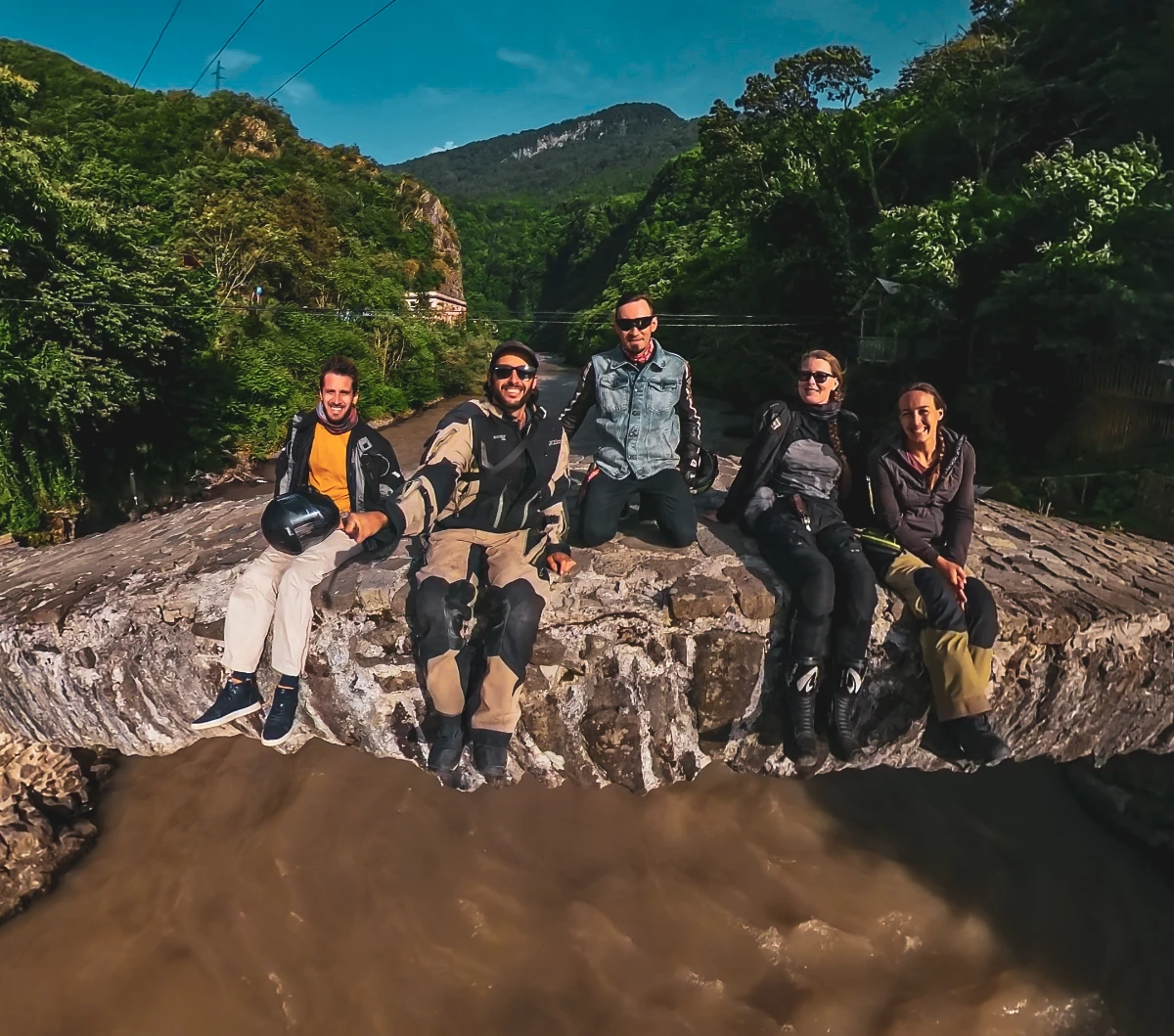
Within hours of arrival, Georgia had wrapped itself around us. The biker community connected to our mysterious host descended on us with a warmth that was almost overwhelming in its spontaneity. Restaurants where paying was treated as an insult. A free room in a community biker house. And on the very first evening, a pirate ship in Batumi harbour, fireworks over the Black Sea, champagne with people we’d known for eight hours, Jack Sparrow firing theatrical cannonballs into the Georgian night. We are not making this up.
Julia, one of the group’s leaders, ran a Telegram channel for bikers across the entire country. Need motor oil at 9pm in a small town? She posts. Within hours, someone arrives at your door with the best oil on the market, as a gift. The Georgian motorcycle community operates less like a club and more like a mutual aid network run entirely on generosity. We were absorbed into it immediately.
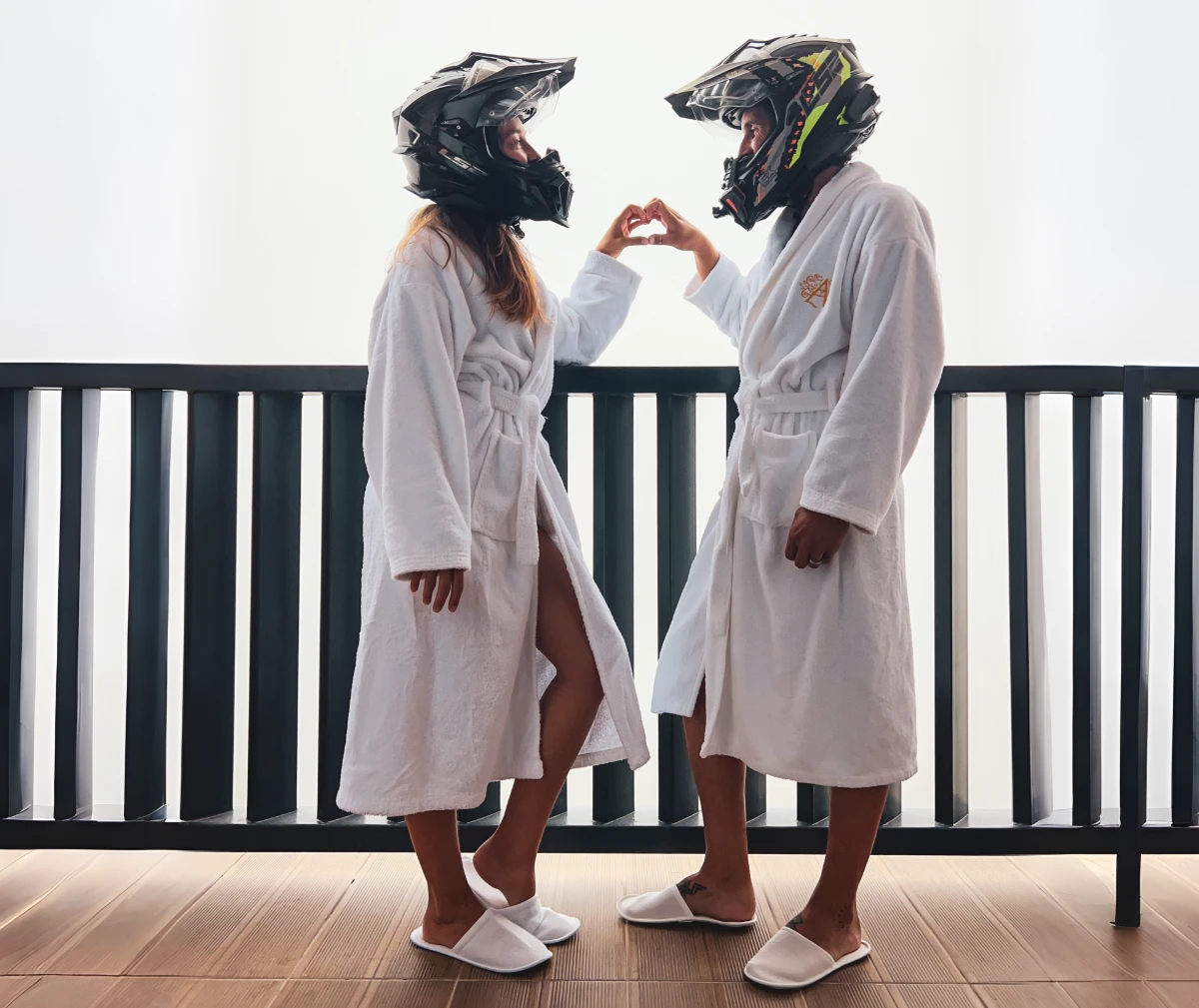
Our mysterious Facebook benefactor turned out to be a billionaire who owns the luxury Ambassadori hotel group. He told us we could stay in his hotels whenever we wished. We would never manage to meet him, always travelling, always unavailable, always generous from a distance, but we stayed in his hotels in Goderdzi and Tbilisi, feeling the particular absurdity of going from roadside camping to five-star mountain lodges without anything changing except a message notification. His Hotels are absolutely gorgeous and we had an amazing time in Ambassadori Goderzi & Tbilisi.
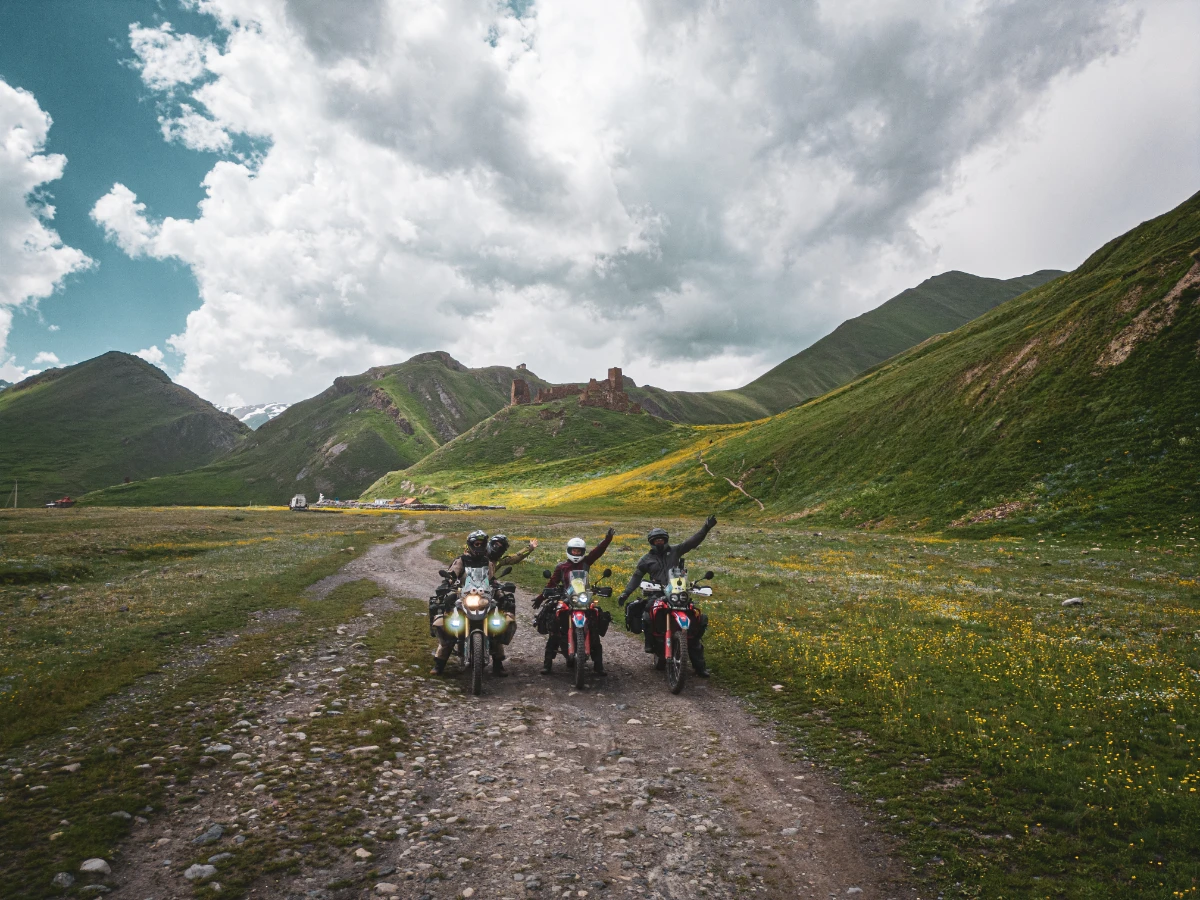
Georgia’s roads matched its people in generosity. Driving in Georgia is like playing a game of Mario Kart: animals cross the road at any moment, cars don’t have hoods, and people drive at breakneck speeds. The Truso Valley, a remote track that follows a river through a landscape of mineral-stained rocks and abandoned towers, is the kind of route that demands you stop every hundred metres and simply look. Kazbegi and the Gergeti Trinity Church, suspended above the clouds at 2170m. Roads that are technically challenging and visually impossible.
Armenia was a deliberate loop, we needed to collect our Russian transit visas there (six-ten days available in Armenia versus three if issued in Georgia), and we were glad we went. At Camping 3GS, the overlander crossroads of the Caucasus, we encountered the full spectrum of long-distance travel: overlanders from a dozen countries comparing routes, comparing breakdowns, comparing philosophies. Sander and Iris found us there too, our Bulgarian campfire friends reappearing right on schedule. And we met Mia (@wanderingtrotters), a solo female traveller we’d followed online for years, suddenly walking across the same gravel, the particular joy of turning a digital friendship into a real handshake.
Russia: Six Days, Three Worlds
On June 21, 2024, we crossed into Russia with our 6-day transit visa. For the first time we are riding as a gang alongside with Sander and Iris. Six days to cover the distance from the Georgian border to Kazakhstan, manageable, but unforgiving if anything went wrong. What we hadn’t fully expected was how profoundly those six days would shatter every preconceived image of Russia we’d carried.
Grozny, the Chechen capital, looked absolutely nothing like Russia. It looked like a Gulf city, glass towers, spotlessly wide boulevards, ornate Islamic architecture, fountains, order. The contrast with the Russian Orthodox aesthetic we’d been imagining was so complete it felt like a different country entirely. Because in many ways, it is.
Then the Sulak Canyon, a geological rupture deeper than the Grand Canyon, with turquoise water visible hundreds of metres below from an unmarked viewpoint that appeared around an ordinary corner. The Caspian coastline, flat and ancient and strangely melancholy. And then, on Day Five, a town called Lagan.
Lagan is a Buddhist city. Buddhist stupas and prayer flags and Kalmyk temples in southern Russia, a landscape that looked nothing like anything we’d associated with this country, and everything like the Asia that had been calling us since a tarot card in Morocco. We had ridden from Switzerland, through 32 countries, to this: our first Buddhist stupa. The emotion was deep, the dream we had, started here to become truly tangible .
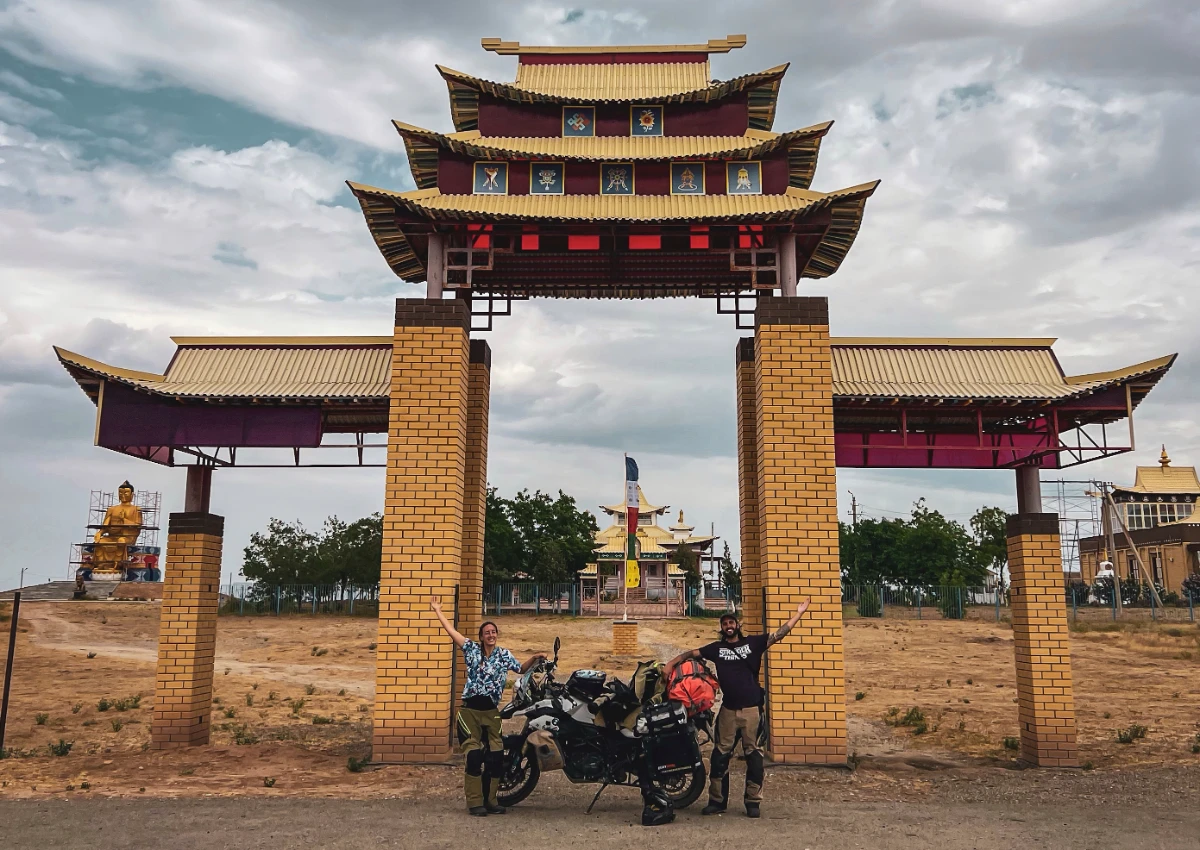
Accommodation in Lagan presented a challenge: no hotel could legally host foreign nationals. We went through refusal after refusal until a local man offered us the garden of his sister’s abandoned house. We pitched our tents between overgrown rose bushes and ate whatever we had in our bags. The last stop in Russia, Astrakhan, all onion domes and wedding-cake architecture, felt finally like what we expected from « Russia ». It was time to cross this new border and to discover Central Asia and the famous Silk Road.
The Silk Road: Deserts, Ancient Cities & One Diabolical Highway
On June 26, Kazakhstan. Camels. Flat steppes extending past every horizon. Blue-domed mosques against dust-coloured plains. Smiling people who wanted to take our photograph as much as we wanted to take theirs. And for Vins: a specific, long-held fantasy finally becoming part of our own story. The Silk Road. The names that had filled childhood geography books. Now Falkor’s tires were on it and ready to ride through potholes and ancient cities.
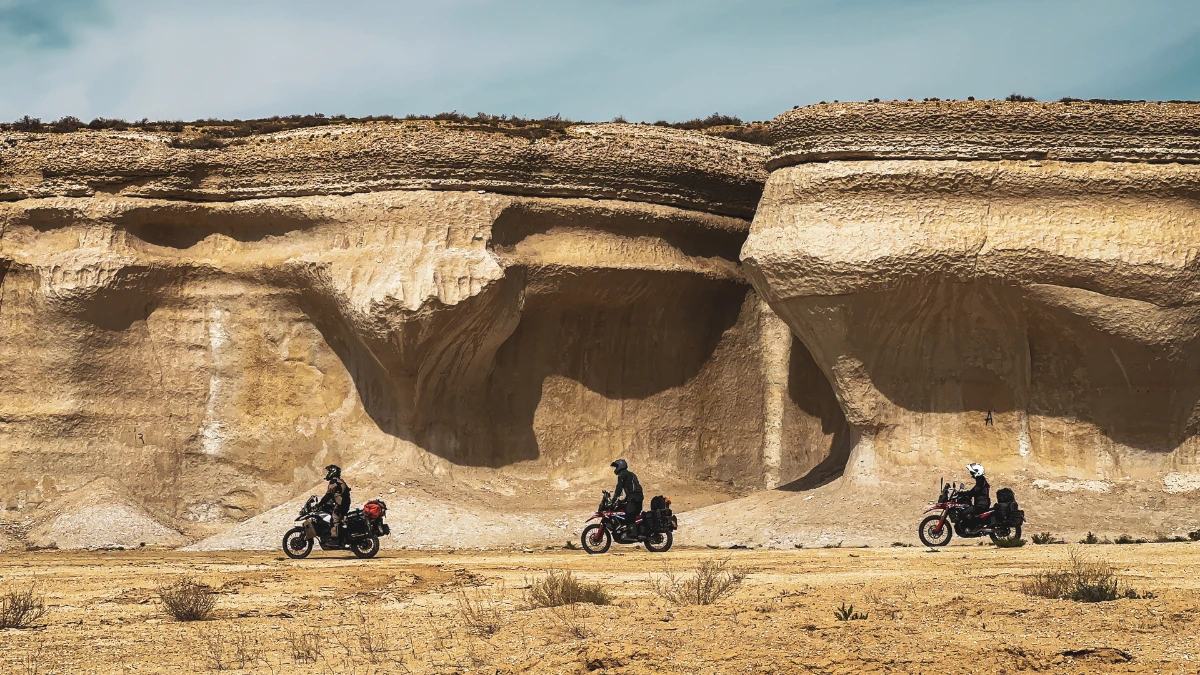
The Mangystau Desert was our first serious challenge of the Stans. We planned our fuel stops with the kind of care you’d give to a sea crossing, filling every available container because petrol stations exist in the Mangystau with the frequency of good internet, meaning, occasionally and never when you need them. Water rationing. GPS tracks through soft sand. Coloured canyons that appear without warning after hours of monotony, like the landscape deciding to show off. The silence in the deep steppe is not the silence of absence, it’s the silence of scale, of being genuinely small in something genuinely vast. Having Sander and Iris alongside made the anxiety manageable. Alone, this would have been genuinely risky.
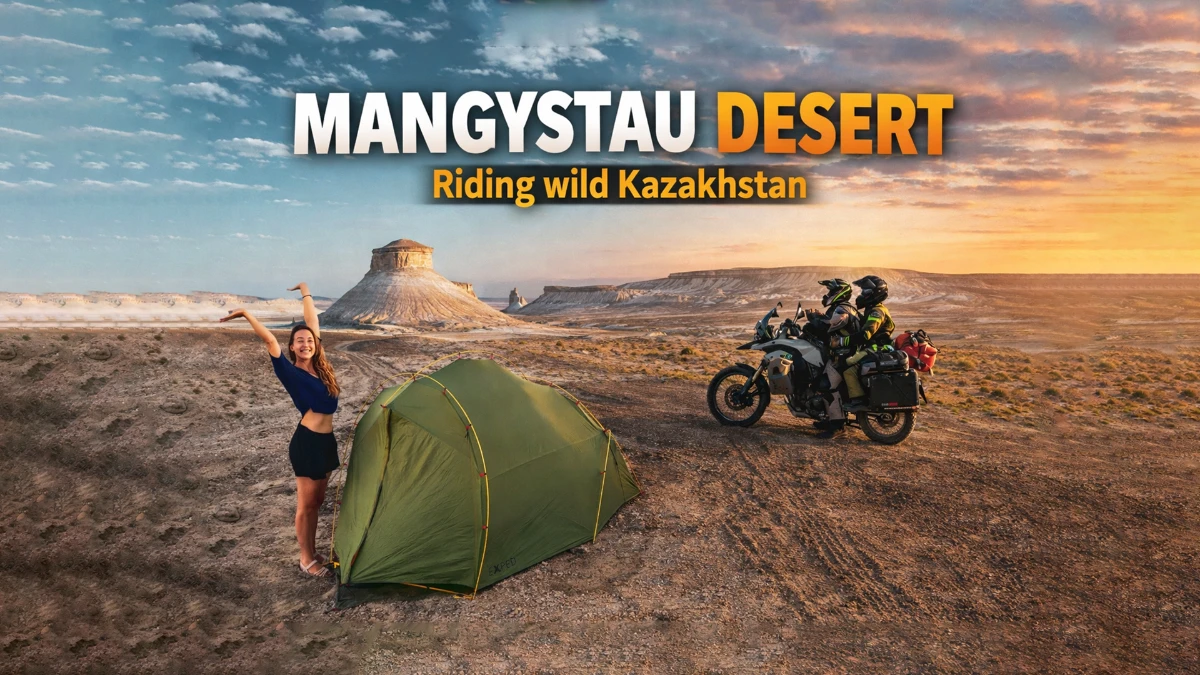
🎬 Mangystau Desert, Kazakhstan — the full adventure
Uzbekistan arrived via what we immediately named the Pothole Highway, 400 kilometres of straight road, arrow-level straight, flanked by dust and punctuated by craters large enough to swallow a wheel whole. Google Maps said ten hours. Refusing to slow down for anything less than certain death, we made it in eight. We met Seb, a German rider on a CRF, on that same road, and absorbed him into our caravan almost immediately. His riding style, his energy, his easy laughter, it clicked from the first hour. Our gang grew by one.
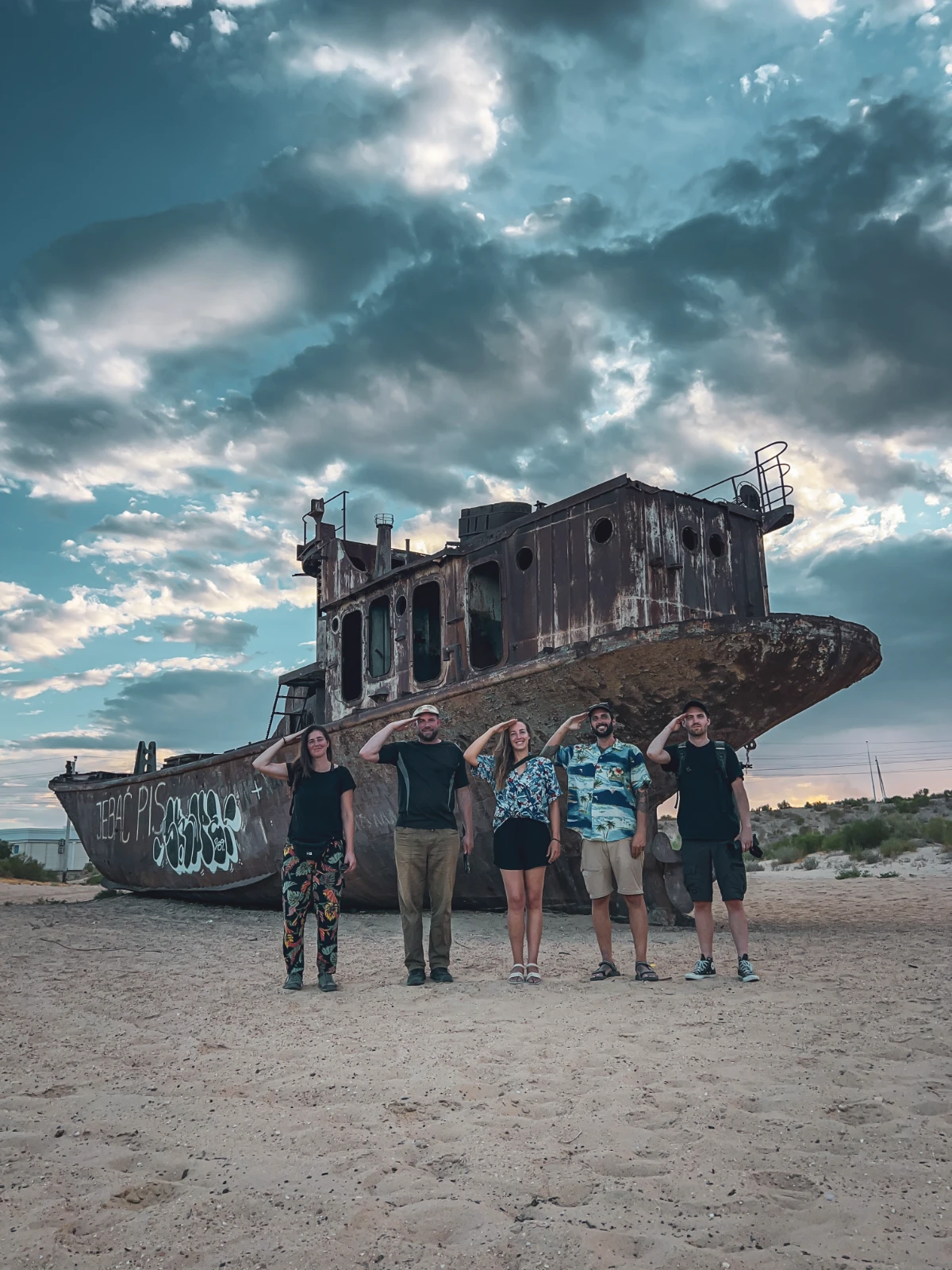
A detour to the Aral Sea, or rather, what remains of it, was one of the trip’s most affecting moments. Fishing boats stranded in sand where ocean used to be, their hulls rusting under a sky that remembers water. Environmental catastrophe given a face, given iron, given the smell of salt in a place that hasn’t seen salt water in decades. No photograph captures the silence of those boats.
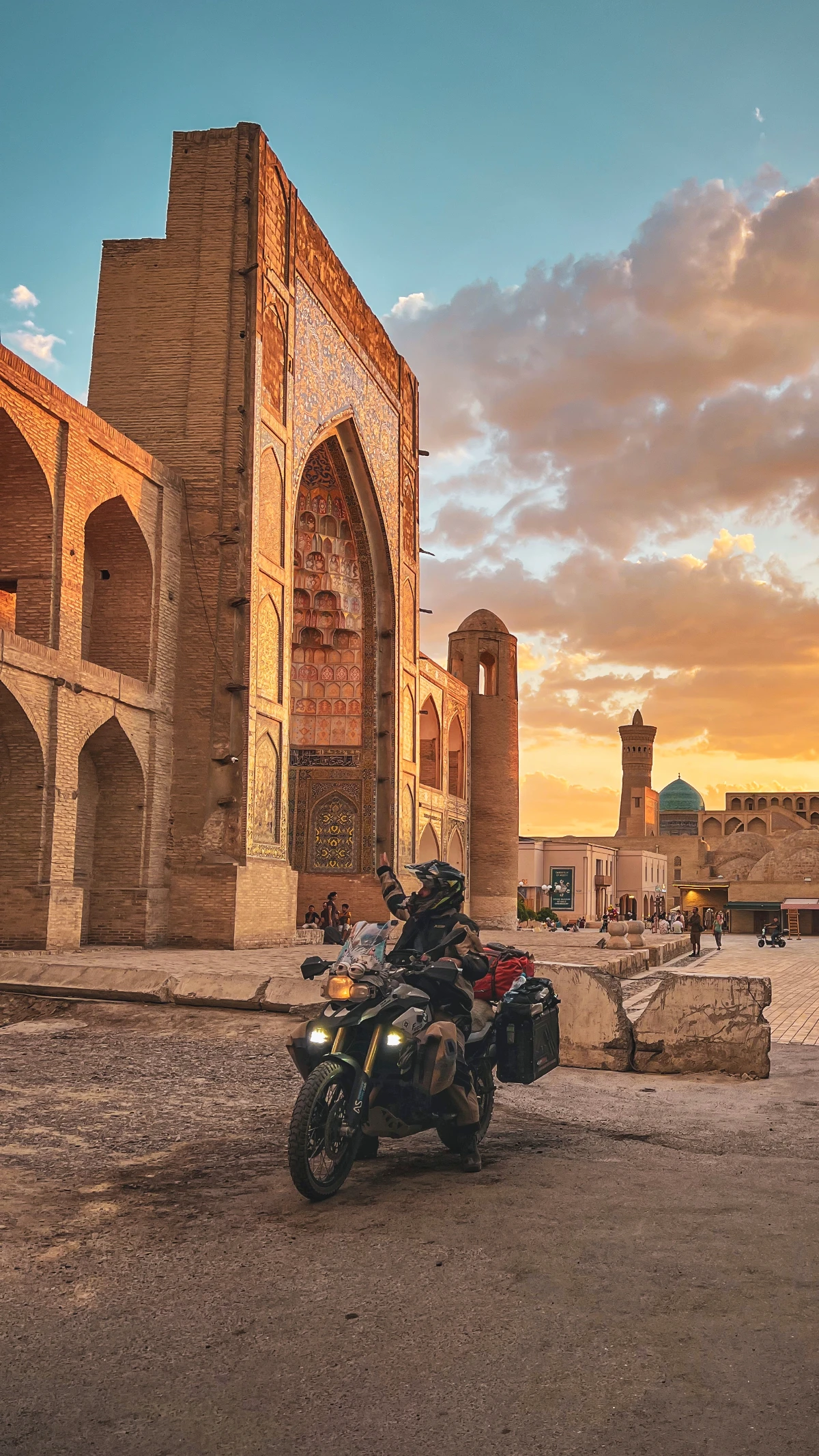
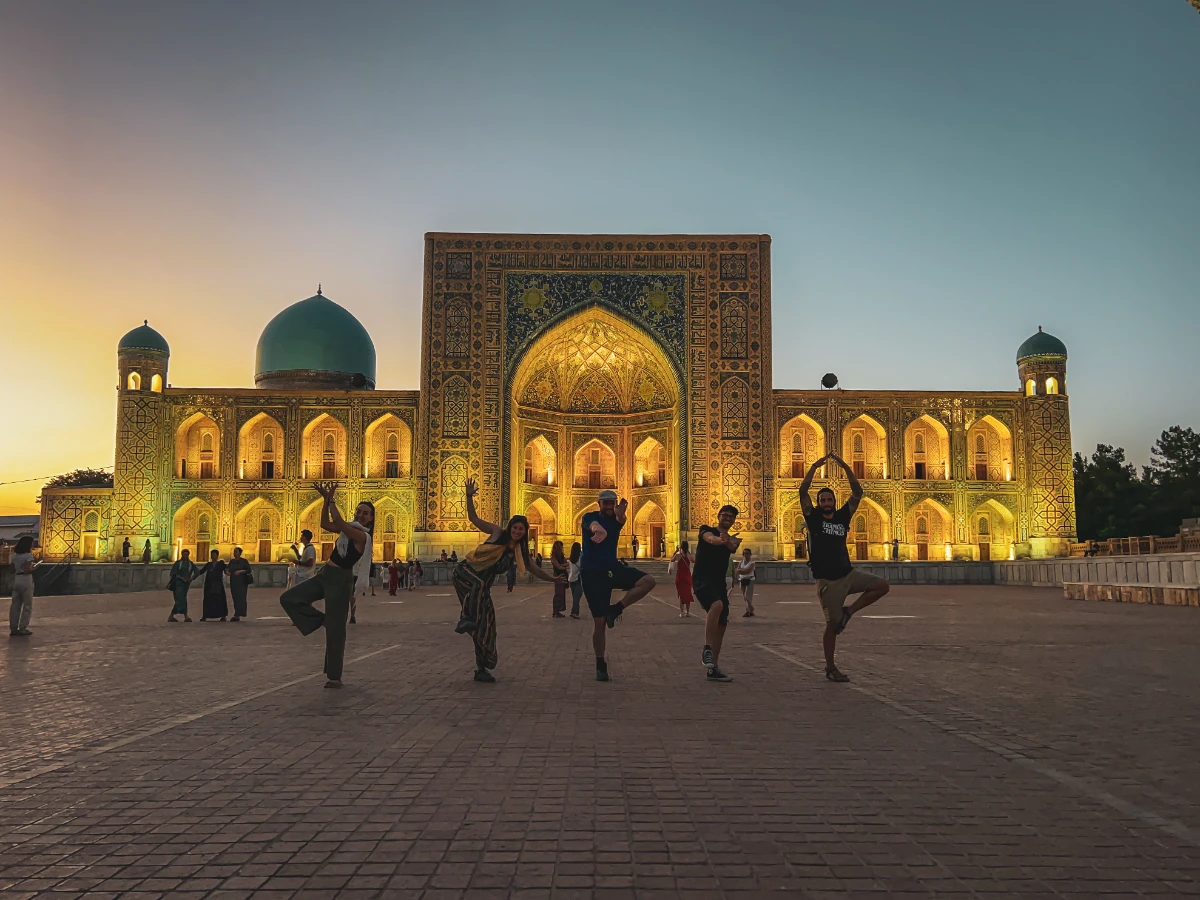
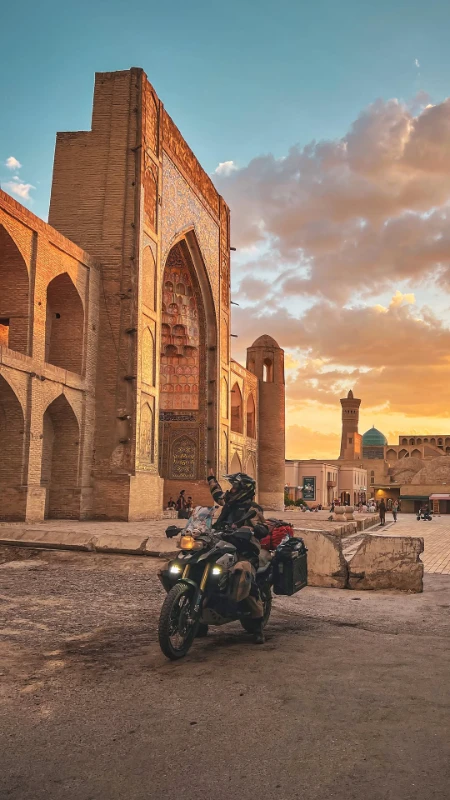
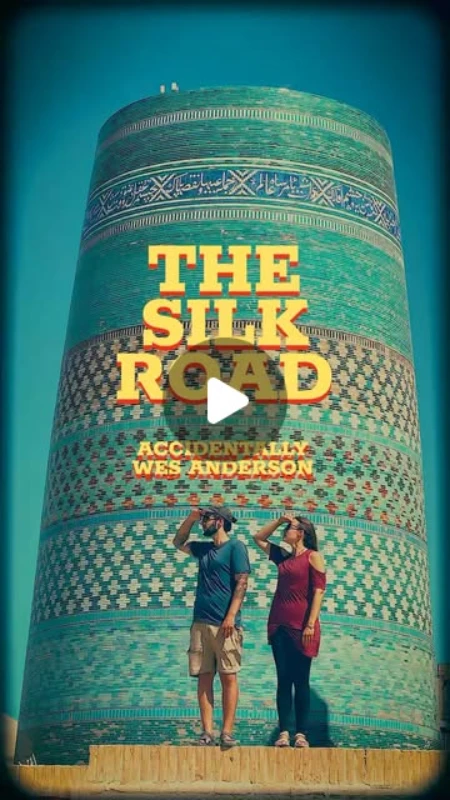
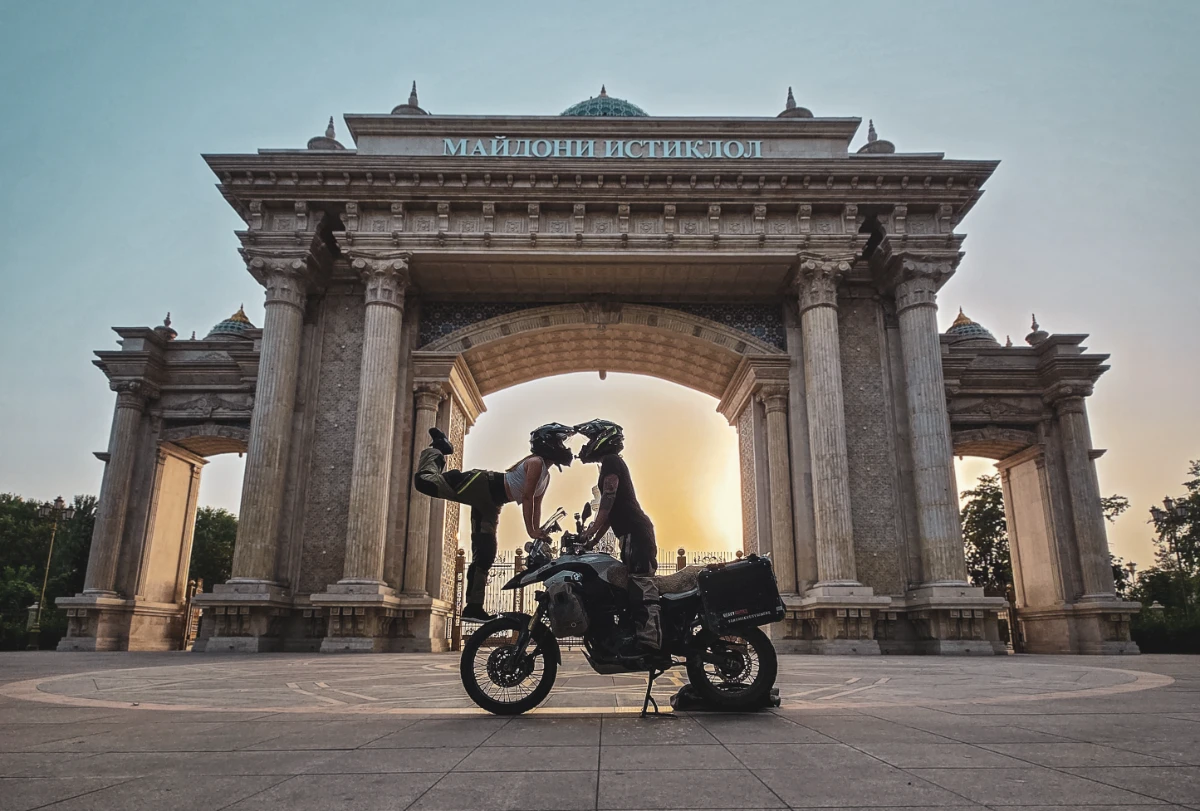
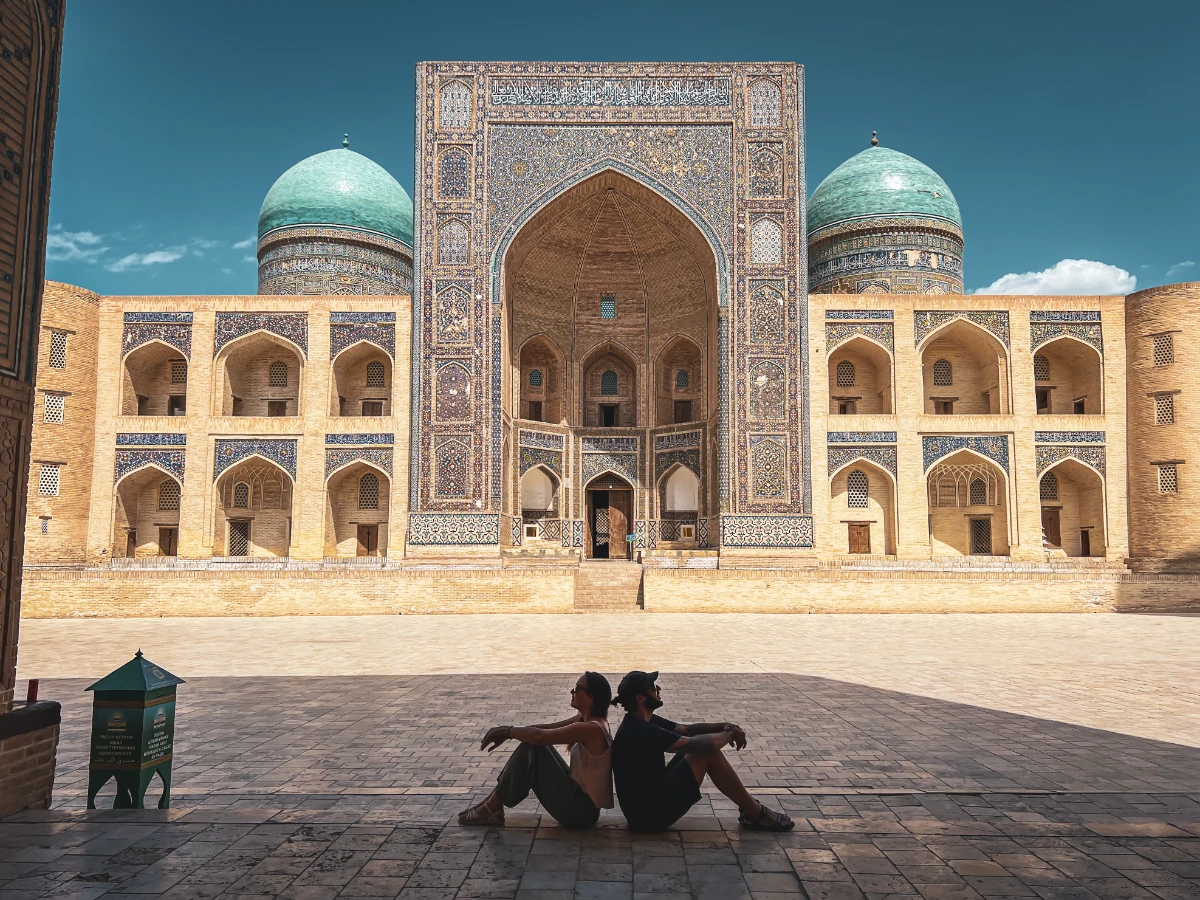
Then: the cities. Khiva. Bukhara. Samarkand. Names that have meant wonder and distance and mythology since we were old enough to read. Each one exceeded expectation in a different way, Khiva the perfectly preserved labyrinth, Bukhara the living city of a thousand years of commerce and religion, Samarkand the imperial, the turquoise-tile cathedral of the Silk Road. In Khiva, we filmed a small cinematic homage to Wes Anderson because the symmetry of the architecture literally demanded it. See the Reel below.
Tajikistan: Seven Lakes, the Death Tunnel & Three Years Complete
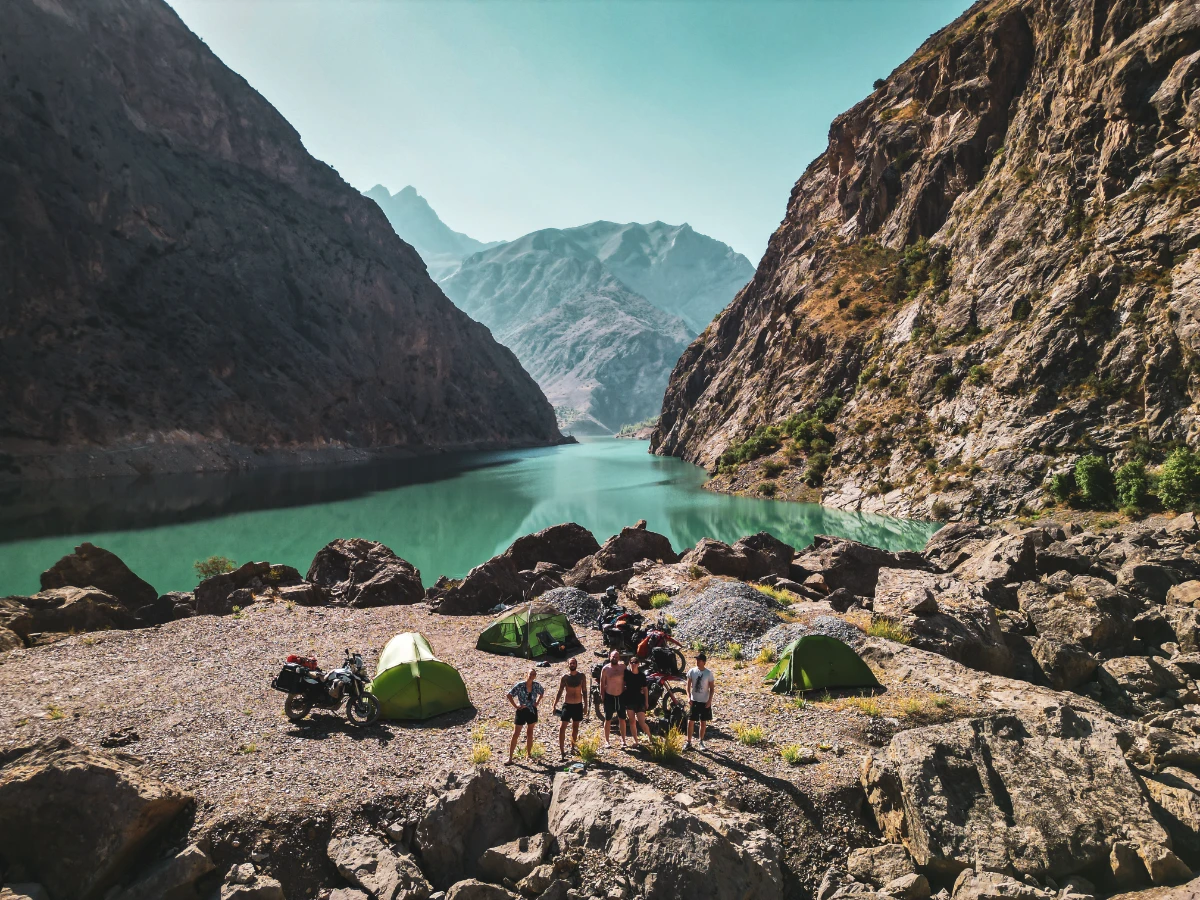
Tajikistan announced itself with altitude and cold air and a quality of light that high mountains produce, hard, clear, generous with contrast. The Seven Lakes trail was the perfect first day: a winding tracks through a series of lakes that changed colour with each new valley, from opaque grey-green to deep turquoise to the impossible cobalt of the highest ones. Seb was still with us, all three bikes picking their way slowly through the rocky track, everyone stopping too often for photographs, nobody apologising for it.
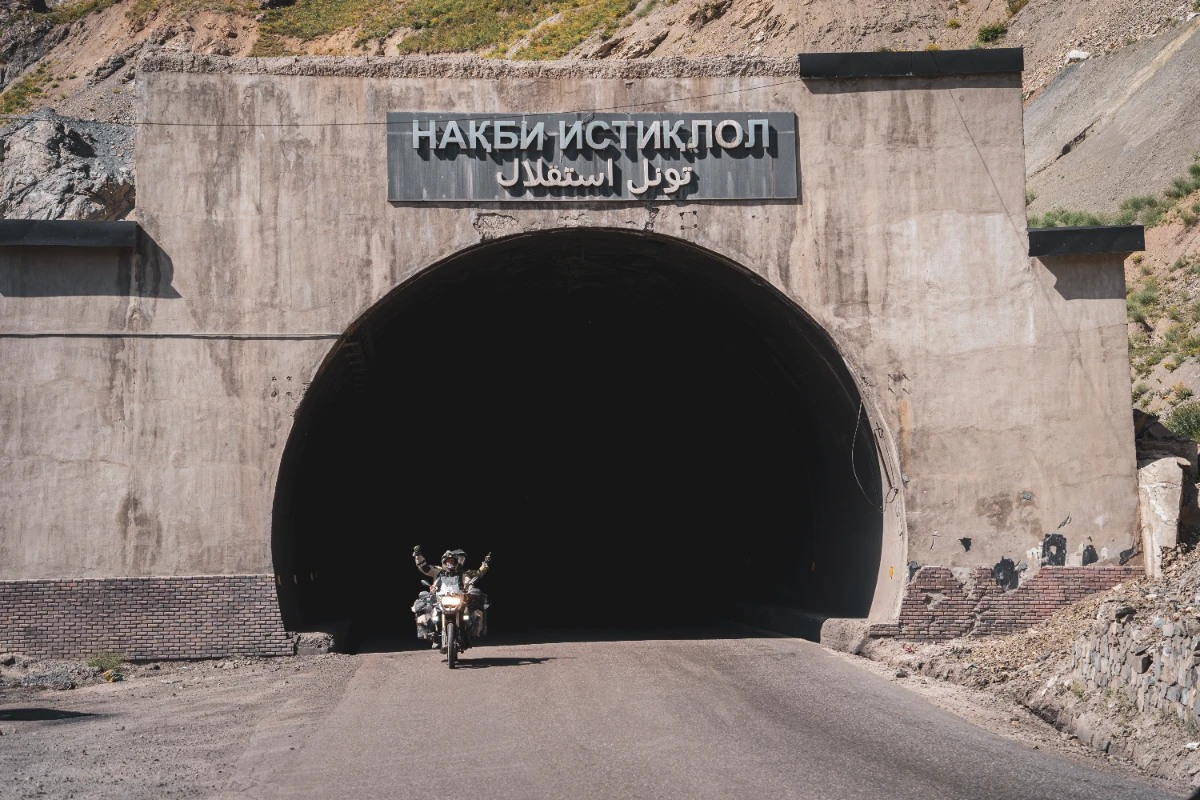
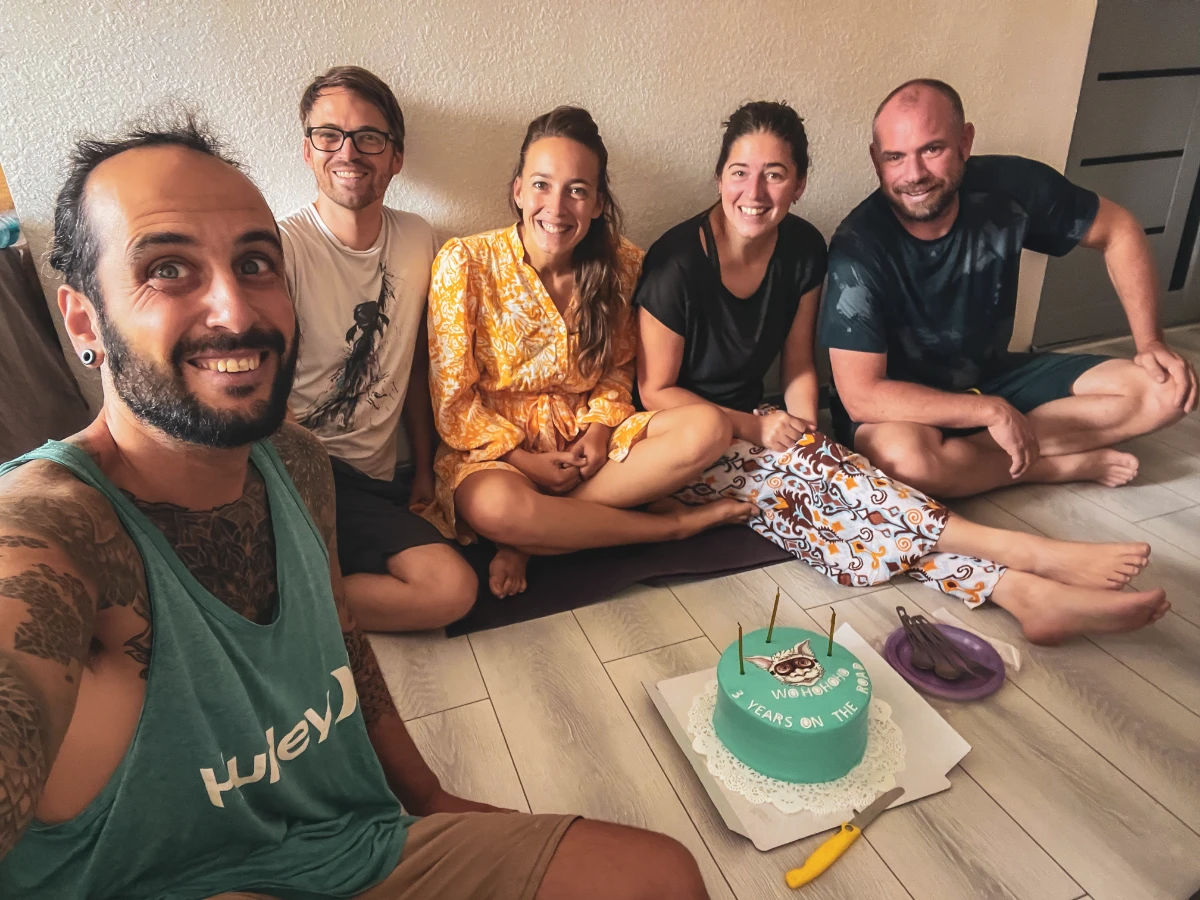
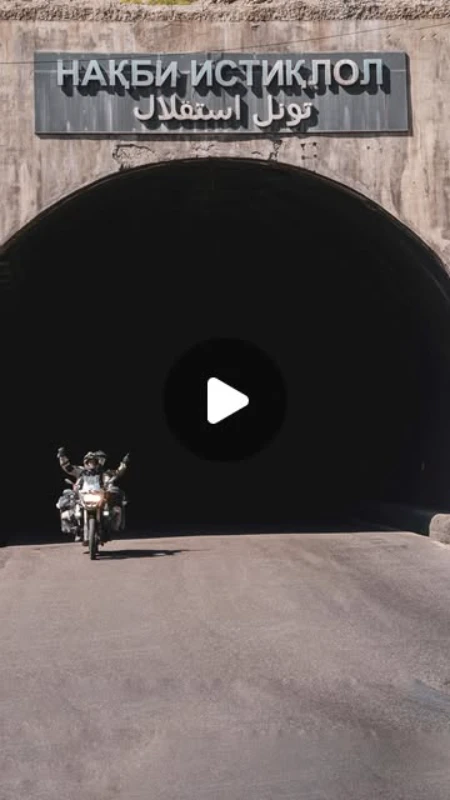
The next day was August 1, 2024. Our three-year anniversary. Three years since a wine bottle spun on a map in Switzerland and pointed West. Three years with Falkor. Three years of sleeping under the sky in places we couldn’t have named before arriving. As a symbolic transition from one year to another, we rode through the terrifying Ansob Tunnel.
We met a motorcyclist who nearly died in that tunnel… His bike slipped in one of the many puddles, and it was almost impossible for him to get it back on its wheels, in the dark, with polluted air to breathe. Fortunately, no cars were passing by at that moment. He told us he came within a hair’s breadth of dying that day.
The Ansob, known to every overlander who crosses Tajikistan as the Death Tunnel, earns every syllable of that name. There is no lighting inside. No ventilation. The exhaust from the constant stream of heavy trucks collects in the unventilated space until the air is a grey-brown suspension of carbon dioxide and diesel particulate. You ride by your headlight beam alone, can’t see the walls, can’t judge the depth of the craters slamming into your tires one after another, can’t breathe properly. Eyes streaming, lungs burning, navigating by instinct. We emerged on the other side coughing, pale, and laughing with that specific kind of relief that you only feel when you’ve done something genuinely unpleasant and come out the other side intact.
Sander and Iris had taken the long way around. Smart. But we’d (us + Seb) chosen the tunnel deliberately, because there is something clarifying about going through darkness on an anniversary, something that rhymes with the journey itself. You ride toward the light. Sometimes the light is a mountain valley. Sometimes it’s Dushanbe at the end of a five-kilometre exhaust cloud. Both count.
That evening, the five of us, Sander, Iris, Seb, Nathalia, and I, celebrated in Dushanbe. Three years behind us. The Pamir Highway ahead. The year had been enormous, and we were still standing, still together, still hungry for what came next.
Romania · Moldova · Ukraine · Bulgaria · North Macedonia · Kosovo
Montenegro · Albania · Greece · Türkiye · Georgia · Armenia · Russia · Kazakhstan · Uzbekistan · Tajikistan
How do you afford a year like this?
Honest answer: we don’t track every euro with a spreadsheet. This isn’t a frugality blog, it’s a life. But we do make very deliberate choices, and here’s how Year Three actually worked financially.
🧾 The real travel economics of Year 3
- 101 Workaway nights = zero accommodation costs for over a third of the year. Those are nights that would otherwise have cost €15–€60 depending on the country. The maths speak for themselves.
- Balkans strategy: Lidl. Seriously. In Romania, Bulgaria, North Macedonia, Albania, we made Lidl our daily commissary. Fresh bread, hummus, olive oil, fruit. Dinner for two under €10 most evenings. Combined with wild camping, the Balkans are astonishingly affordable for motorcycle travelers.
- The tent is our most used piece of gear. Not just in nature, in campgrounds, in gardens, on the edge of towns. Every night in the tent is a free night, and often the best bug-free option.
- Arriving in Asia changed everything. Food costs dropped dramatically from Turkey onward. A full meal for two in Central Asia: €3-5. Street food is abundant, delicious, and aggressively priced. The vegetarian challenge is real (Central Asian cuisine is magnificently meat-focused) but manageable with patience and some sign language.
- Central Asia accommodation typically ran €15-25 per night for a double room with private bathroom, not always to a great standard, but functional. We prioritised homestays, where the price is similar and a substantial breakfast is almost always included. Homestay breakfasts in Kazakhstan and Uzbekistan are not small.
- The big variable: Falkor. A full BMW service in Crete plus a new fuel pump was the year’s largest unplanned expense. Budget a maintenance buffer. Motorcycles on 30,000km years have opinions.
- For more cost breakdowns, visit the blog where we go into more specific figures about year 1 and year 2.
The road gives beauty. It also takes its toll.
We don’t do highlight reels without the lowlights. These are the moments that scared us the most. Each one taught us something we couldn’t have learned any other way.
The Dog Attack at the Romanian-Moldovan Border
Seven dogs, not curious, not playful, coordinated and aggressive. They attacked on the Romanian side, regrouped, and came for us again the moment we crossed into Moldova. In the chaos of escape, I missed the fork to Moldova entirely. The Ukraine sign appeared where the Moldovan one should have been.
📱 Watch the ReelA Night in the Odessa Region — Two Days After an Attack
We checked into a hotel in Reni, in a town full of parked trucks and almost no civilians. I walked streets where people stared at my military-coloured riding gear with unmistakable unease. That night, a quick search confirmed: the region had been struck two days before. We took the Danube ferry home at first light and learned the hard lesson about research before rushing.
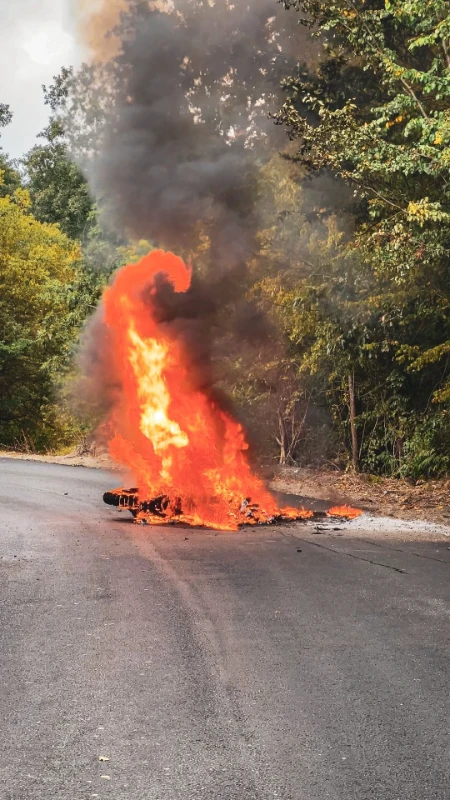
Koen’s KTM in Flames — Bulgaria
The footpeg sparked on the tarmac. One drop of fuel from the full tank was enough. In seconds, the fire was total. Two extinguishers, a blanket, water, dirt, nothing worked. In twenty minutes, the bike was ash. Koen had to pay an €80 fine at the police station for damaging the road surface. The story ends well: no injuries, and a new life that rose from these ashes.
📱 Watch the ReelAlbania TET SH37 — The Hardest Day, So Far
Sixty metres of offroad track. One hour. Three falls. Nearly out of water. Every muscle depleted. And no way of knowing whether it got better or worse ahead. You just commit and keep going. At the top: Bodilla Lake at sunset. The beauty was worth every bruise. But in the moment, it was the hardest single day we have ever had on this journey.
📱 Watch the ReelFalkor vs. the Cretan Sea Storm
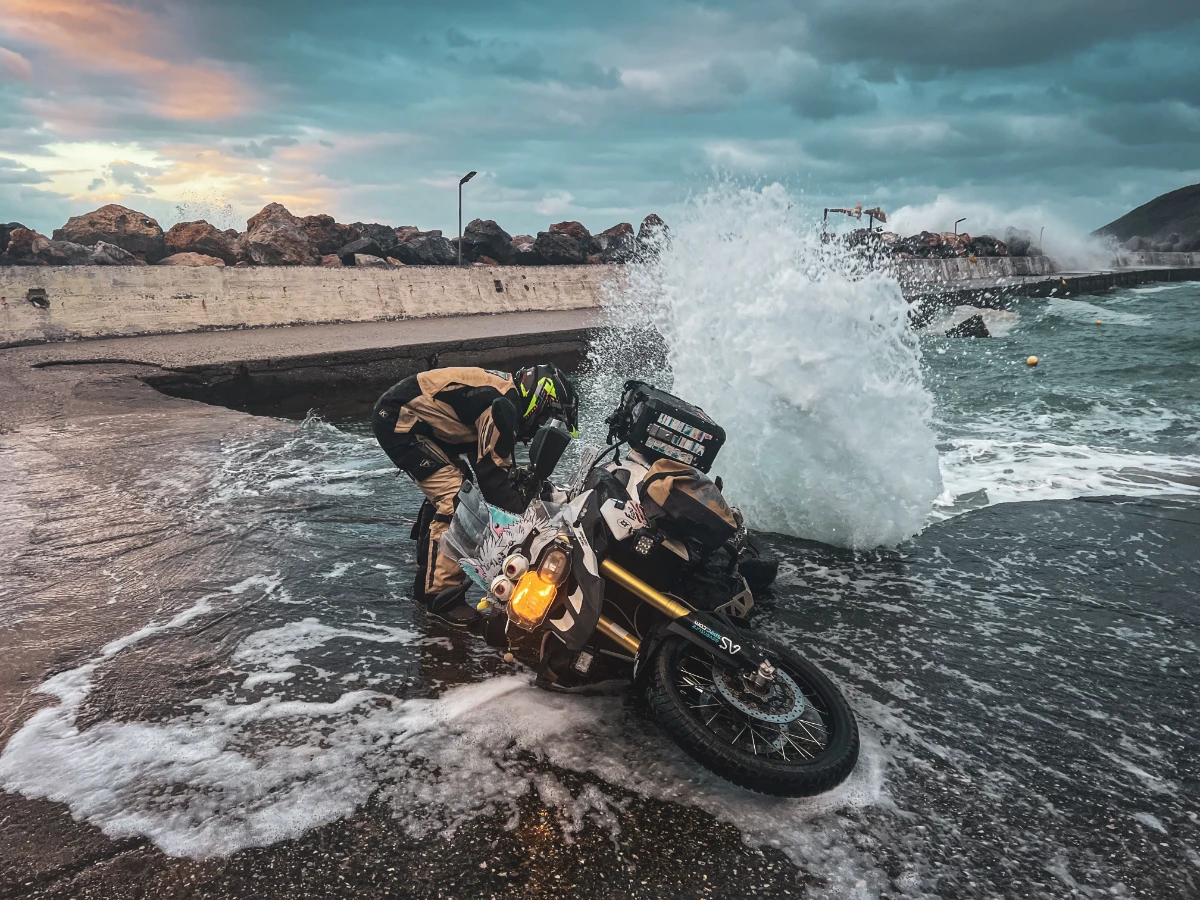
I rode too close to the shoreline during a storm. A patch of wet seaweed on the sea road. Falkor went down instantly, right on the water’s edge, waves breaking over us both as I scrambled to lift him before the sea could claim us. Completely my fault. Completely terrifying. Falkor survived. Humility in the face of the elements.
📱 Watch the ReelThe Ansob Tunnel — Death Tunnel, Tajikistan
5km. No light. No ventilation. Toxic diesel air that sits in your lungs like wet concrete. Water falling through the ceiling. The road surface: a sequence of flooded craters navigated blind. We emerged coughing and laughing with relief. A chosen metaphor for Year Three: you go through the dark to get to the light.
📱 Watch the ReelThe moments we’ll tell when we’re old and grey
Replace « travel » with « alive » and you’ll understand why we keep going.
🏕️ MotoCamp Bulgaria — 10 Days That Became Lifelong Friendships
One night became ten. Ivo, Polly, and an ever-changing gang of riders from across the world. Still in contact. Still family.
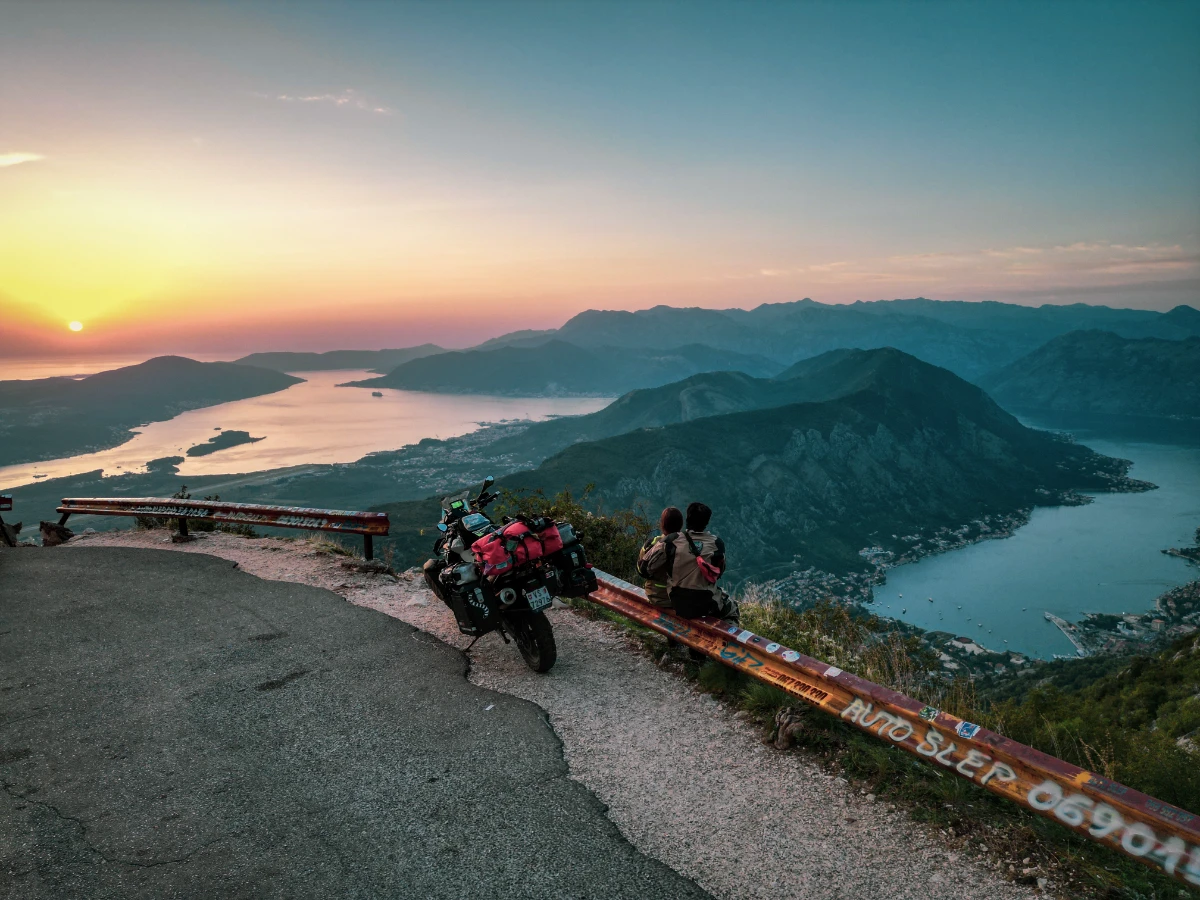
🏰 Kotor, Montenegro — The Legendary Switchback
The road that climbs to Kotor’s fortress is a poster. Ancient city below, bay beyond, Falkor banking through one perfect hairpin after another. Pure joy.
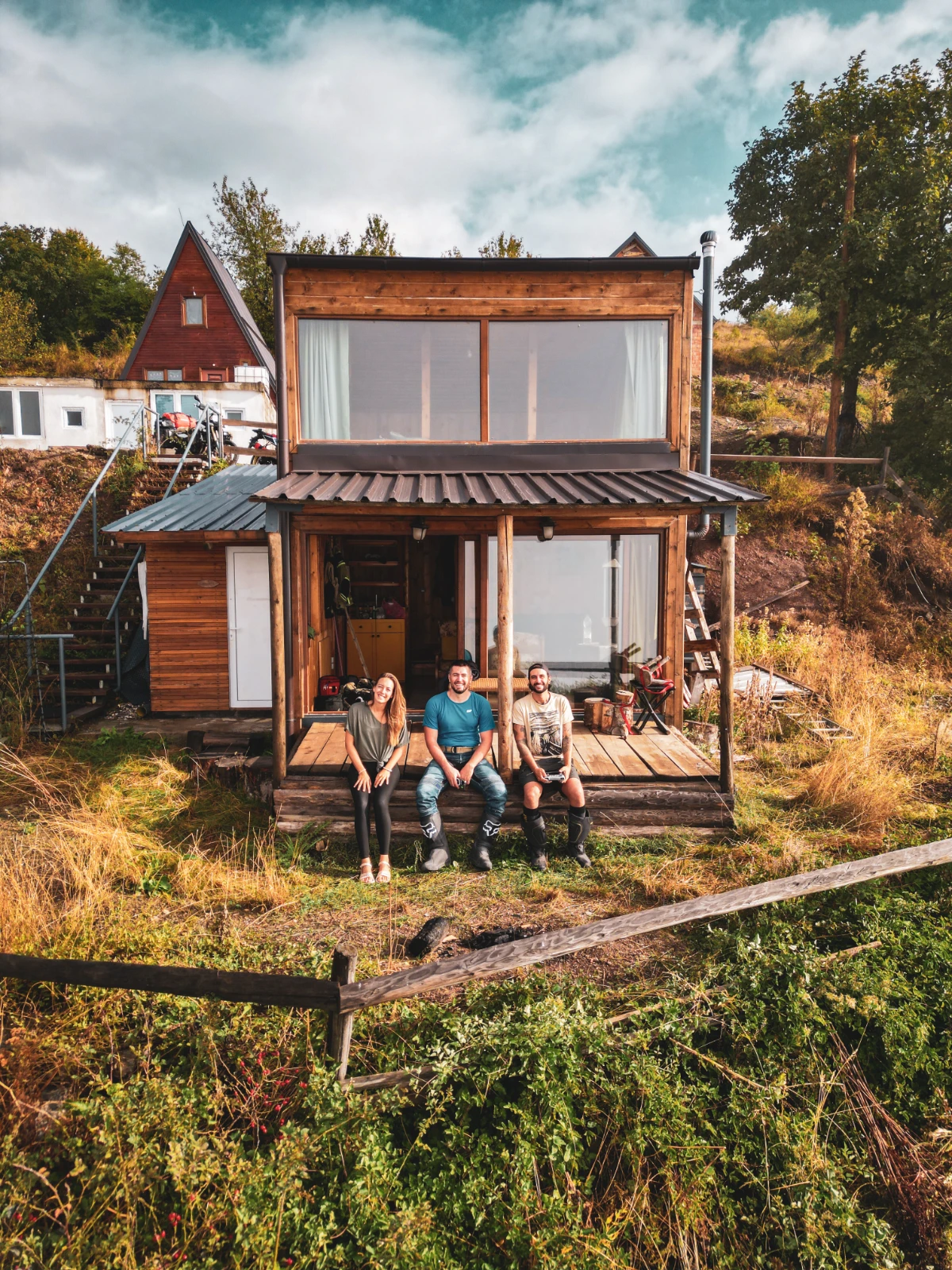
🤝 Kosovo — The Spontaneous Generosity of Qendrim
A white BMW. Three men. « You are in Kosovo, you are at home. » The motorcycle community crosses every border. Experimenting humanity at it’s best.
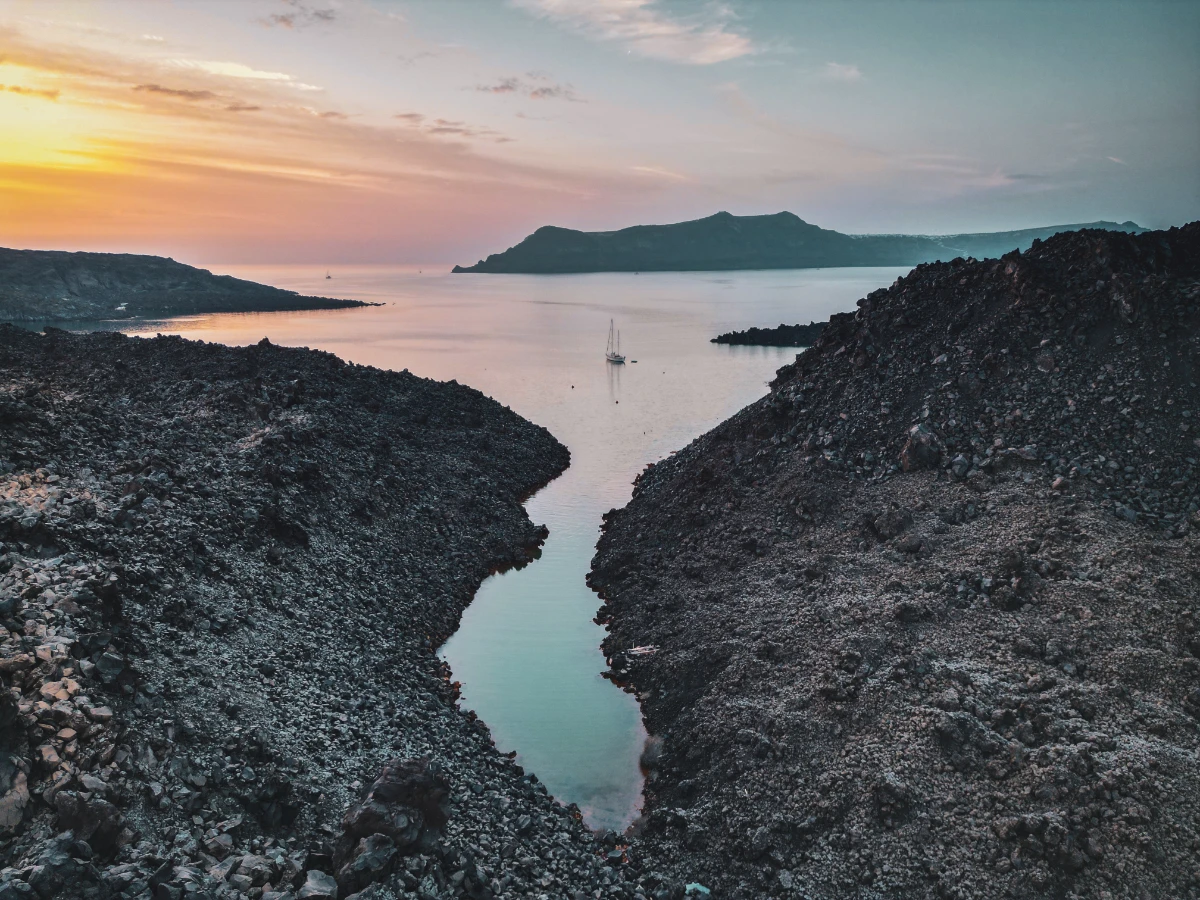
⛵ Sailing the Aegean — From Kimolos to Crete
We swapped four wheels for a hull and rediscovered a part of us that crossed the Atlantic years ago. Anchored inside Santorini’s volcanic crater. Magical.
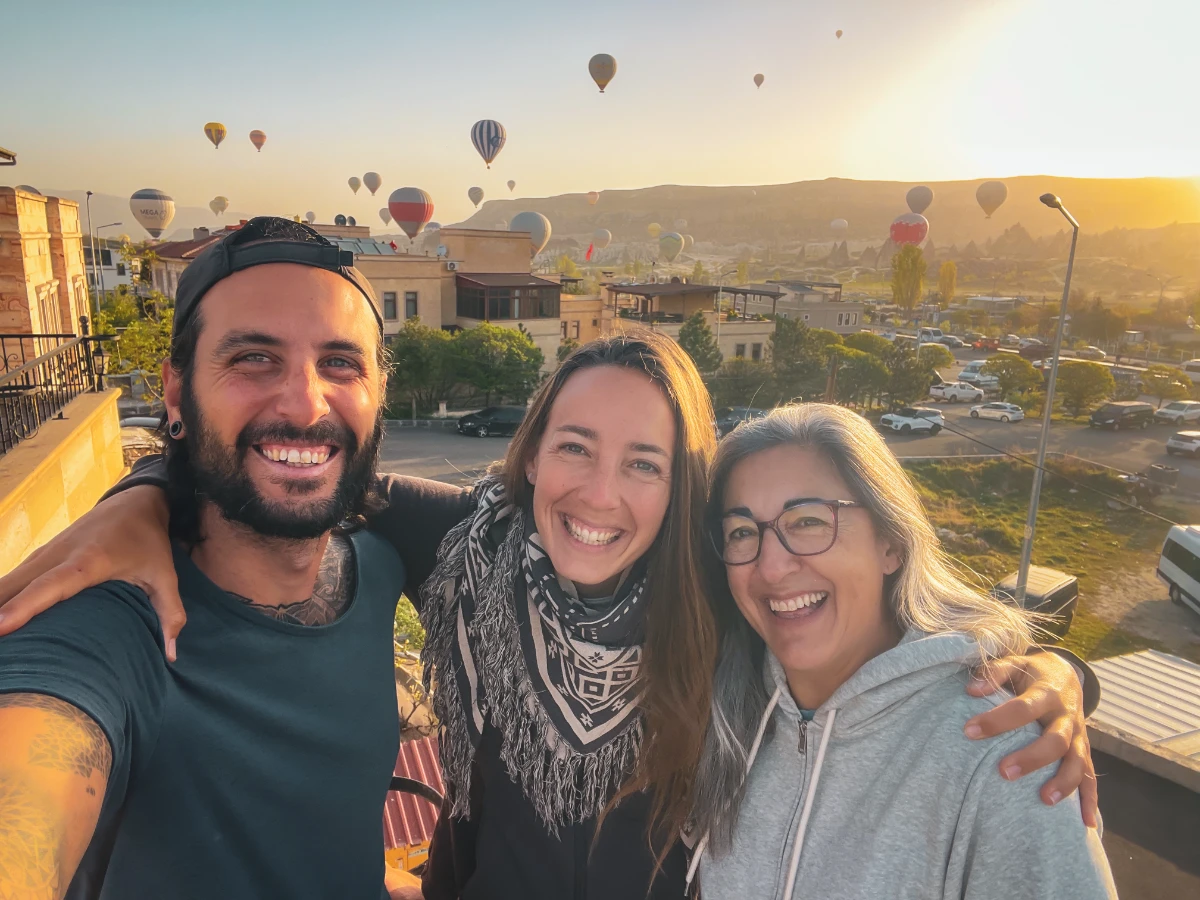
🎈 Cappadocia — Shared with Maria, Nathalia’s Mum
Hot air balloons, tufa valleys, wild camping. Watching someone experience Cappadocia for the first time is its own kind of gift. Some views need to be shared.
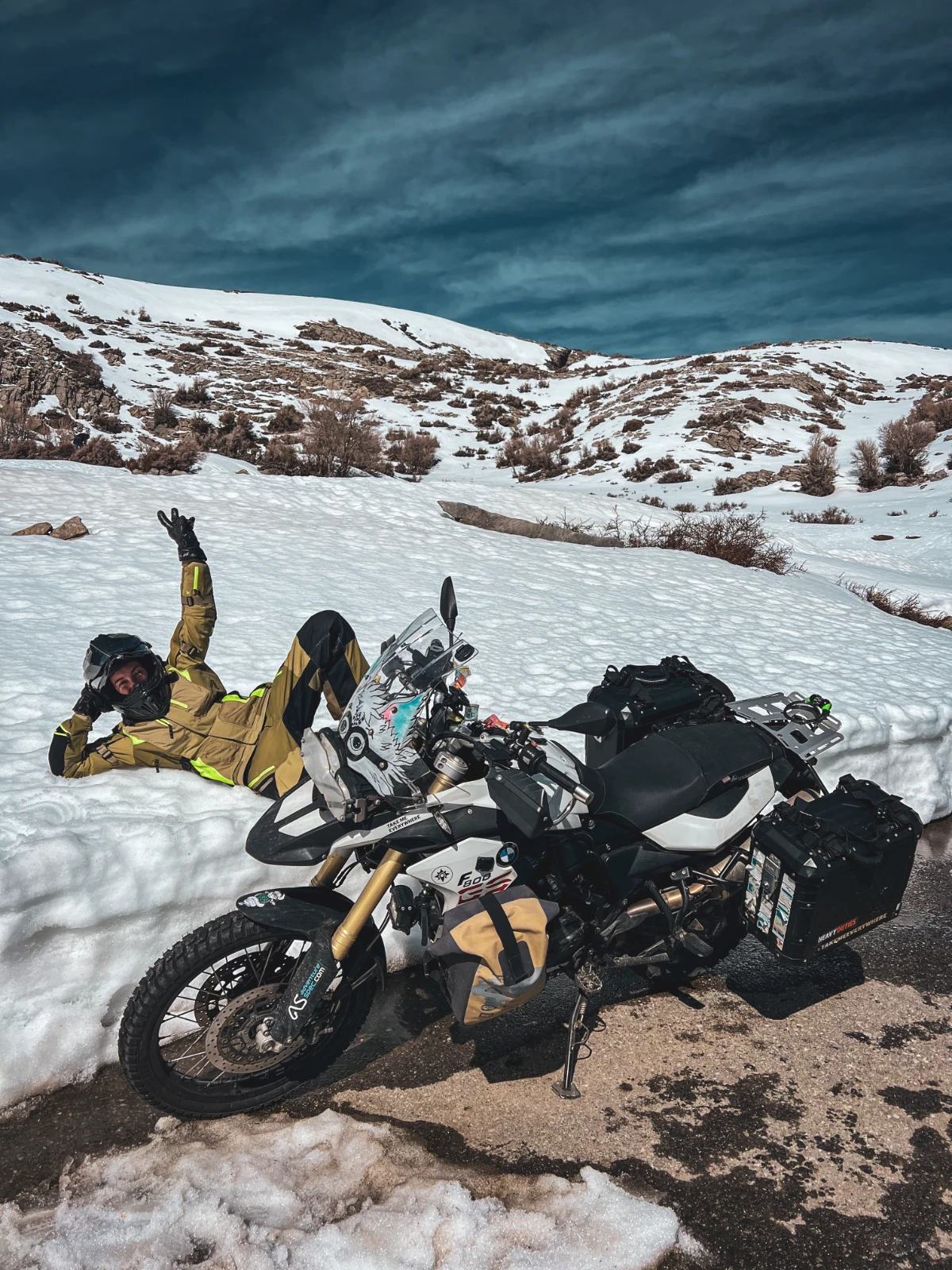
❄️ A Winter in Crete — The Island Revealed Slowly
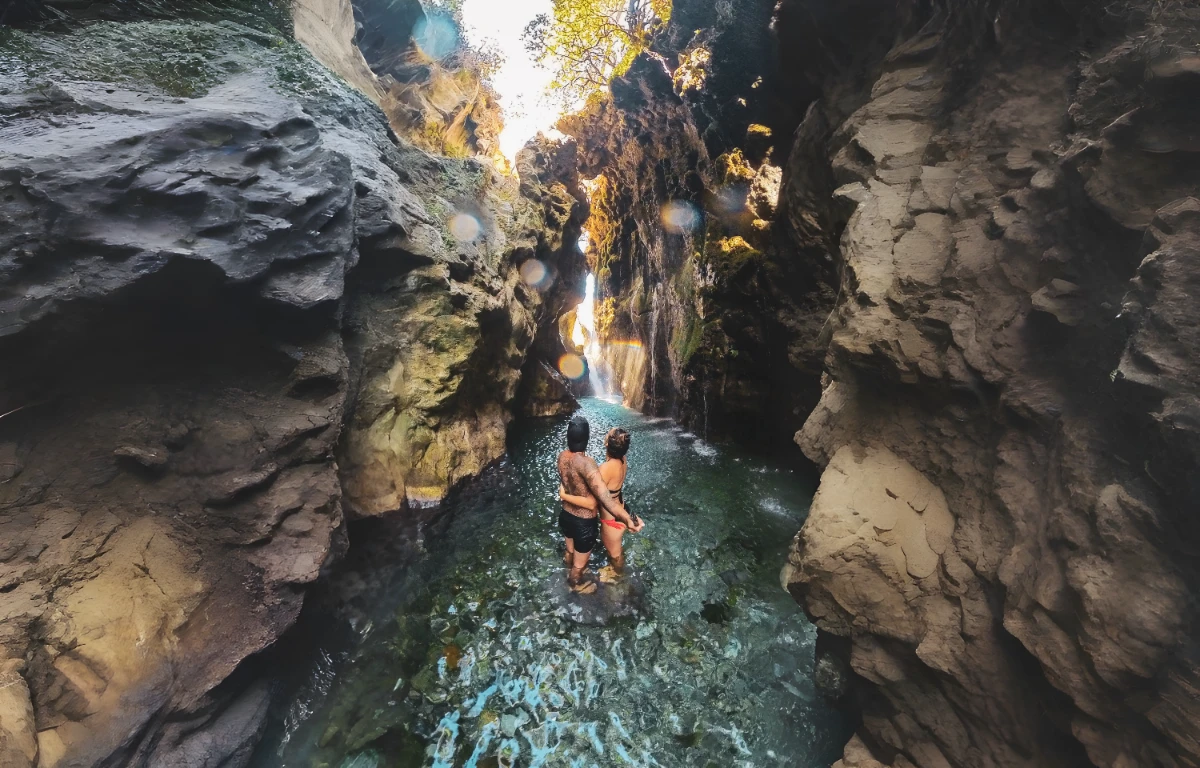
The Crete that tourists miss. Snow on the mountains. Empty gorges. Secret beaches. Two TV interviews. Evienia’s cooking. Friends from Bulgaria arriving at the door. The island at its truest.
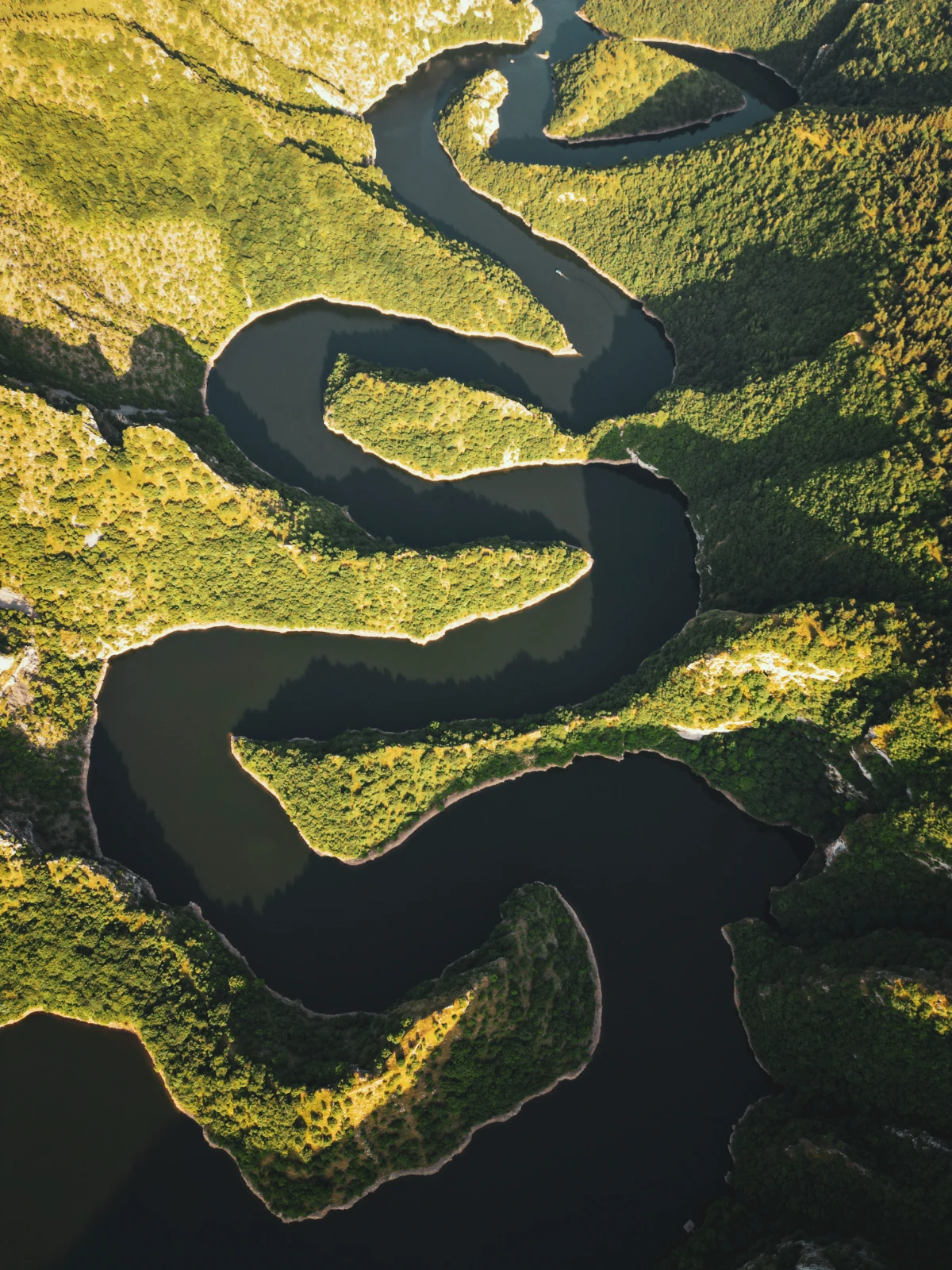
🐍 Uvac, Serbia — The Meanders That Stop Time
The Uvac river bending back on itself in impossible loops through a forested canyon. One of those drone shots that looks like a landscape painting. A moment of visual disbelief.
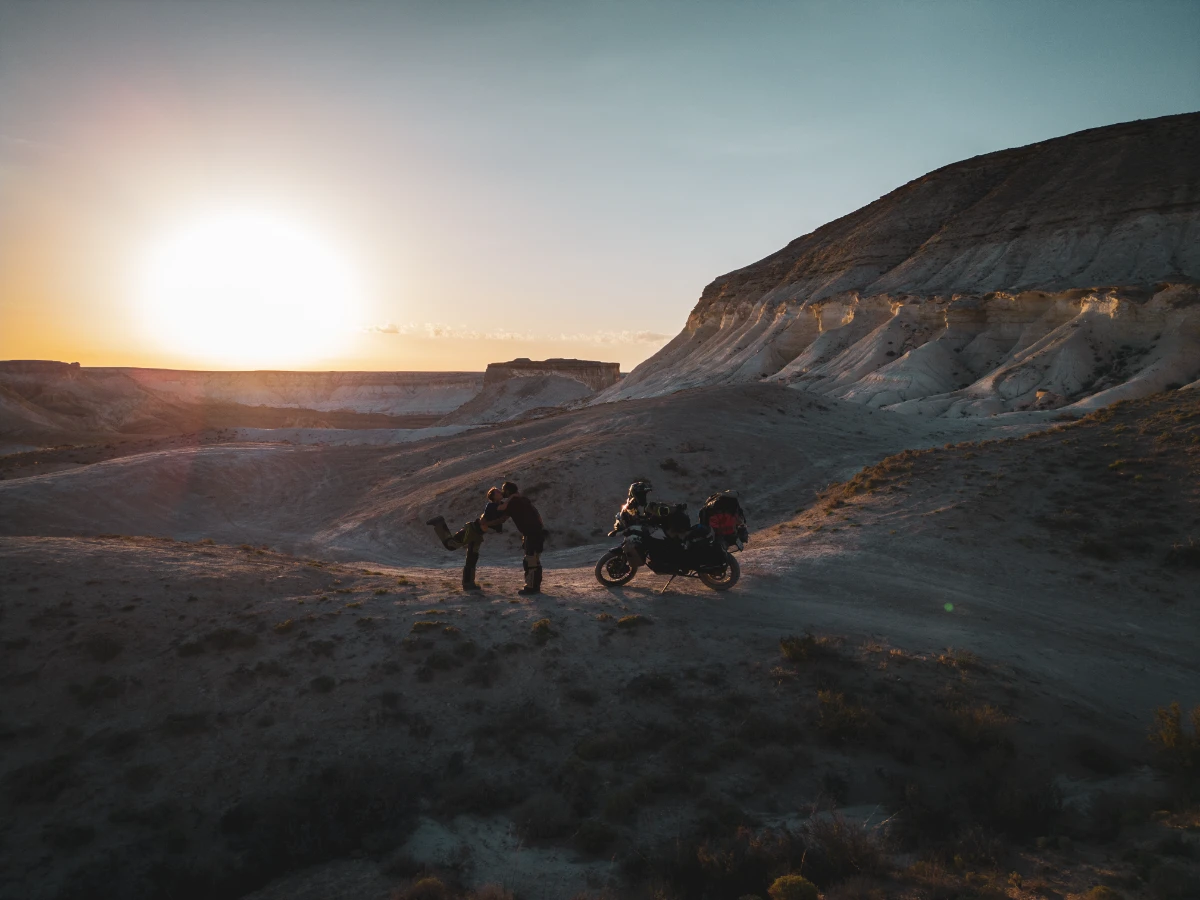
🏜️ Mangystau Desert, Kazakhstan — Into the Void
Fuel gauges and water reserves watched obsessively. Coloured canyons appearing from nowhere. Silence so complete you hear your own heartbeat. Our greatest desert traverse.
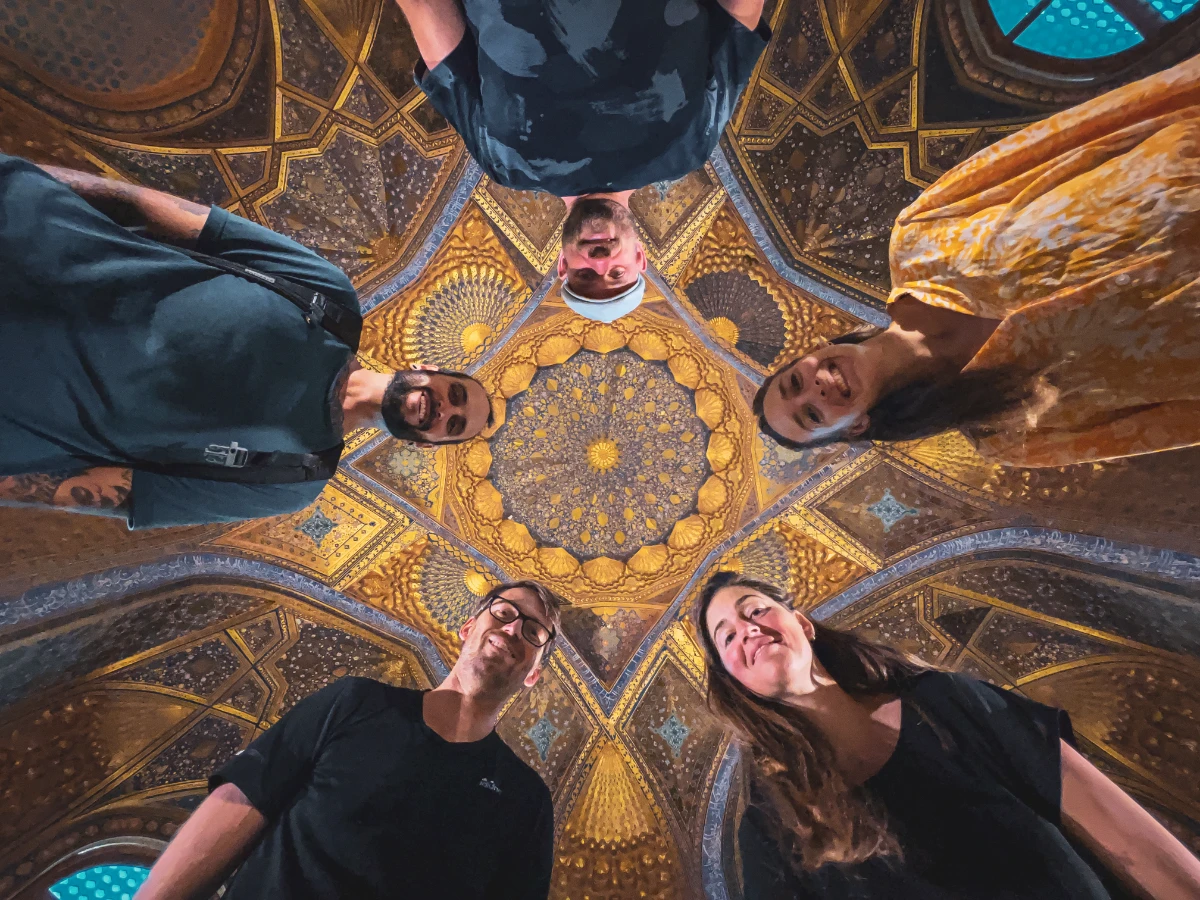
🕌 The Silk Road Cities — A Childhood Dream Made Real
Khiva, Bukhara, Samarkand: names from school books suddenly underfoot. The same ancient tiles, the same minarets, the same light. Still astonishing after a thousand years and even better to discover it with friends from the road.
Three years. Sixteen countries. Here’s what we know now.
Not travel tips. Life observations, carved out of 30,000 kilometres, 101 Workaway days, and more moments of genuine uncertainty than we can count.
The world is better than the news
Every country we were warned about gave us its best face. Turkey after Greek cautions. Kosovo after regional stereotypes. Georgia after geopolitical assumptions. The narrative of danger almost never matches the reality of a human being at a table or a roadside.
Disasters become the best stories
The dog attack, the Death Tunnel, the burning KTM, the night in Odessa, these are the moments people ask about. Comfort produces memories that age poorly. Difficulty produces stories that last forever. Embrace the hard days. They are the point.
Community is the real infrastructure
BunkaBiker, MotoCamp, Kosovo’s TET riders, Georgia’s biker Telegram, Camping 3GS in Armenia, the motorcycle community is a global goodwill network that outperforms any official tourism infrastructure. Join it. Contribute to it.
Slow is the only way
Ten days at MotoCamp. Two months in Turkey. A winter in Crete. The richest chapters of this journey were never the fast passages. Speed is about counting countries. Slowness is about knowing people.
Research has its place — and its opposite
Ukraine taught us to check before crossing borders. Tajikistan taught us that some places reward the traveller who arrives knowing almost nothing. Both truths coexist. Find your balance.
Keep dreaming — or the Nothing wins
Falkor is named after the Luck Dragon from The NeverEnding Story. In the film, the world is destroyed by The Nothing, an emptiness that spreads when people stop dreaming. Three years in, the lesson is unchanged: keep imagining. Keep moving. Don’t let the Nothing win.
Travelling as a couple is a superpower
We’ve been together since we were 14. Over 22 years. Long-term travel tests every relationship differently than a holiday. It reveals and demands in equal measure. We’ve argued in mountain rain and laughed in desert canyons. This journey is the longest, most important conversation we’ve ever had.
Workaway is a life philosophy, not a travel hack
101 days of reciprocal living. Not working to save money, living in exchange for contribution. There’s a profound difference in what you get back. Try it with 3 months free.
Watch the Year 3 Highlights
Short films from the road — click to watch each Reel directly on Instagram.
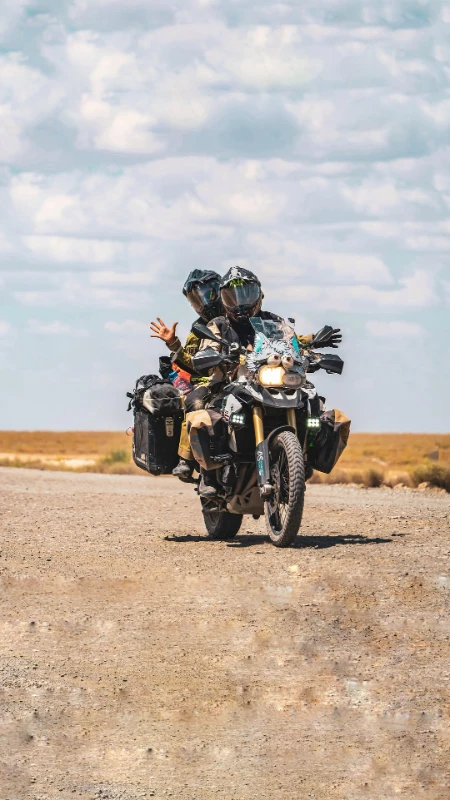
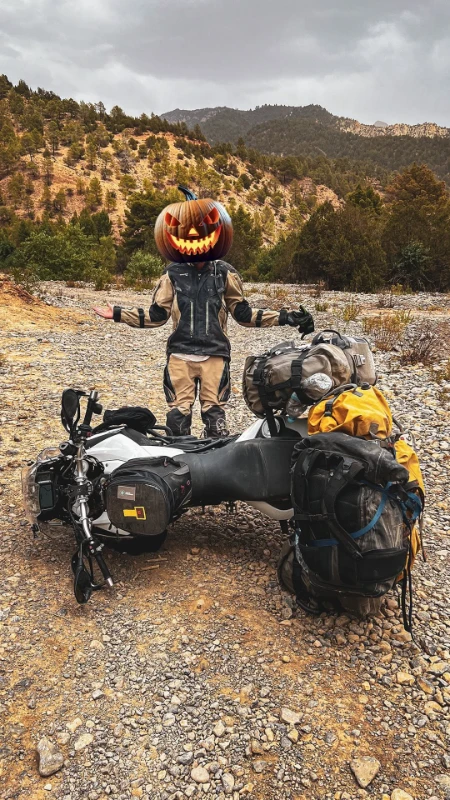
The Year in 12 Images
Click any photo to browse the full gallery.
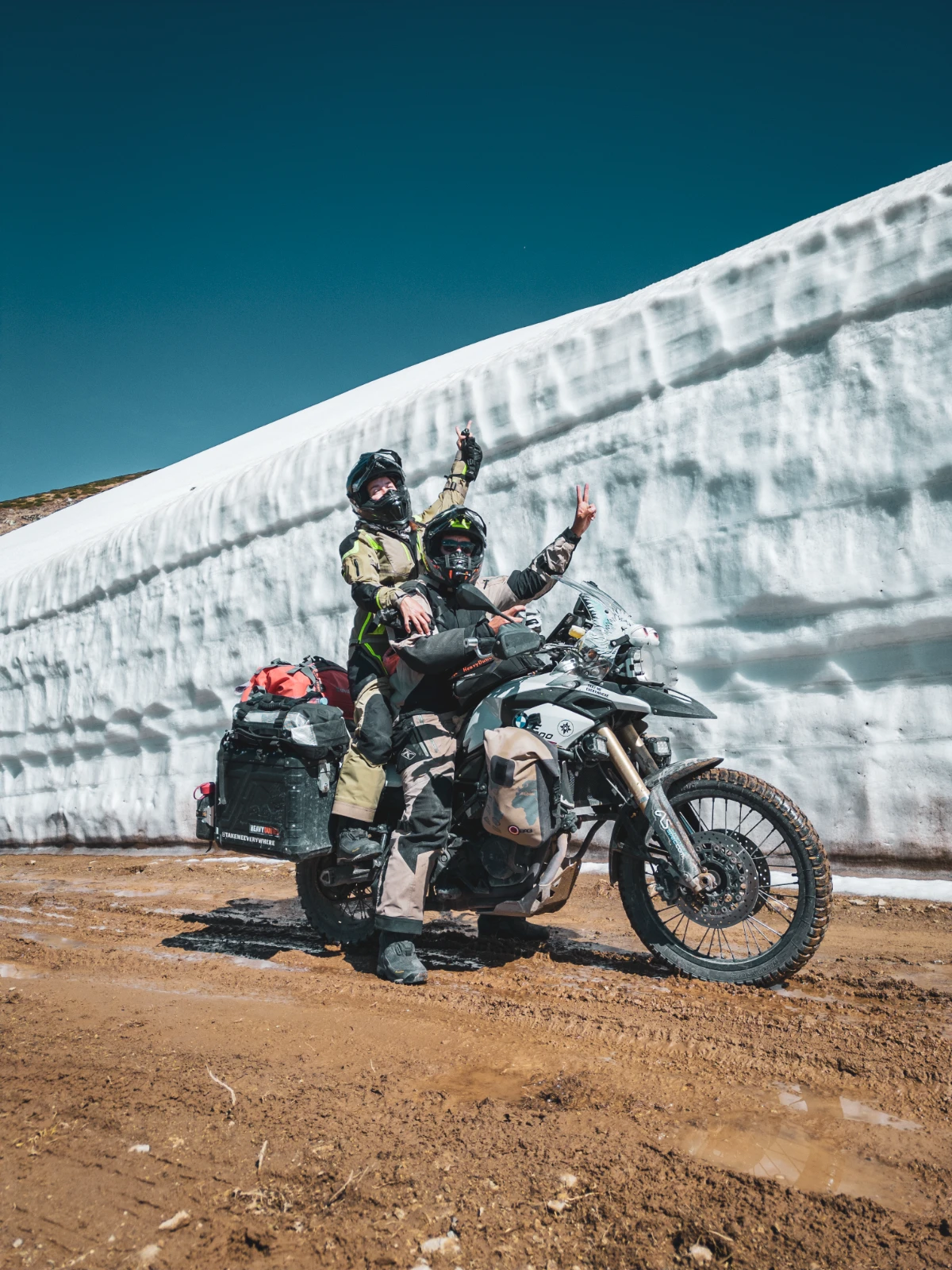
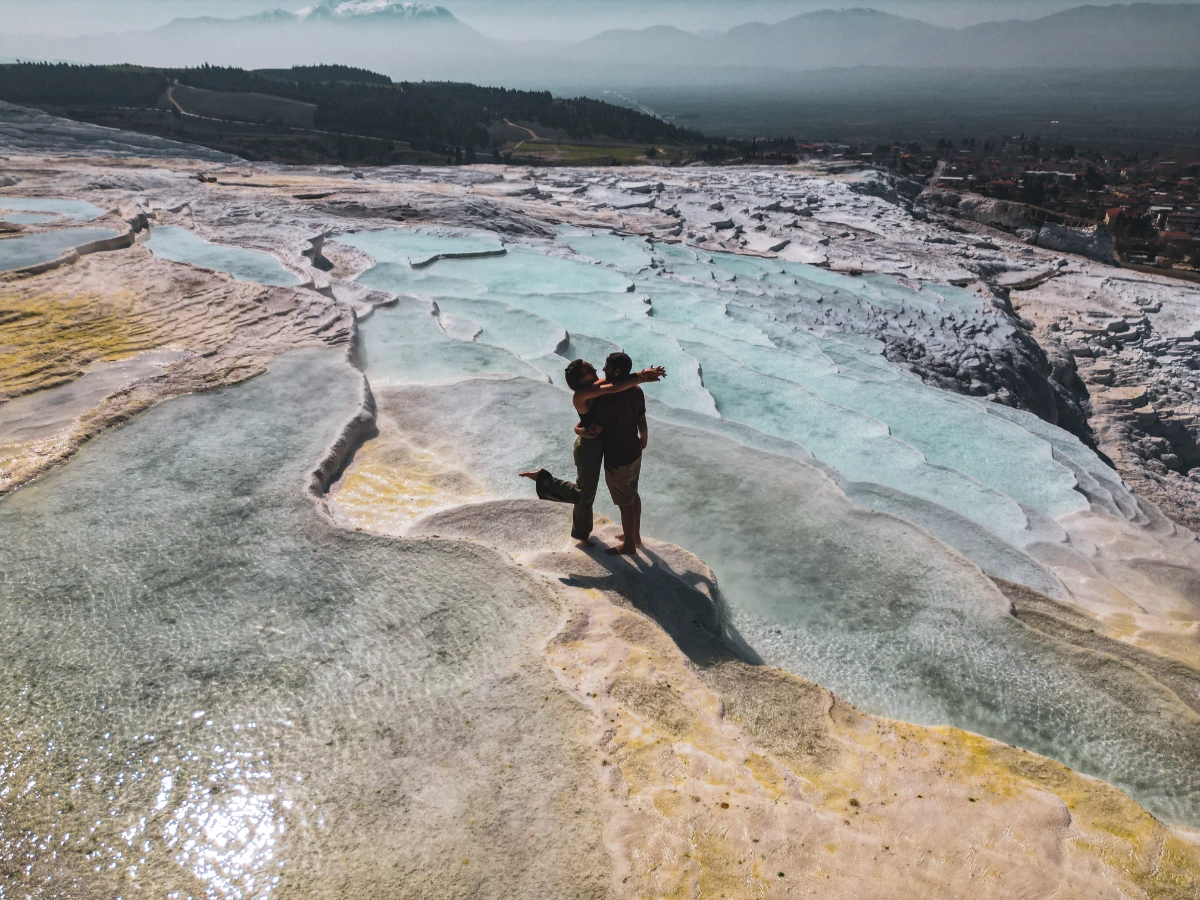
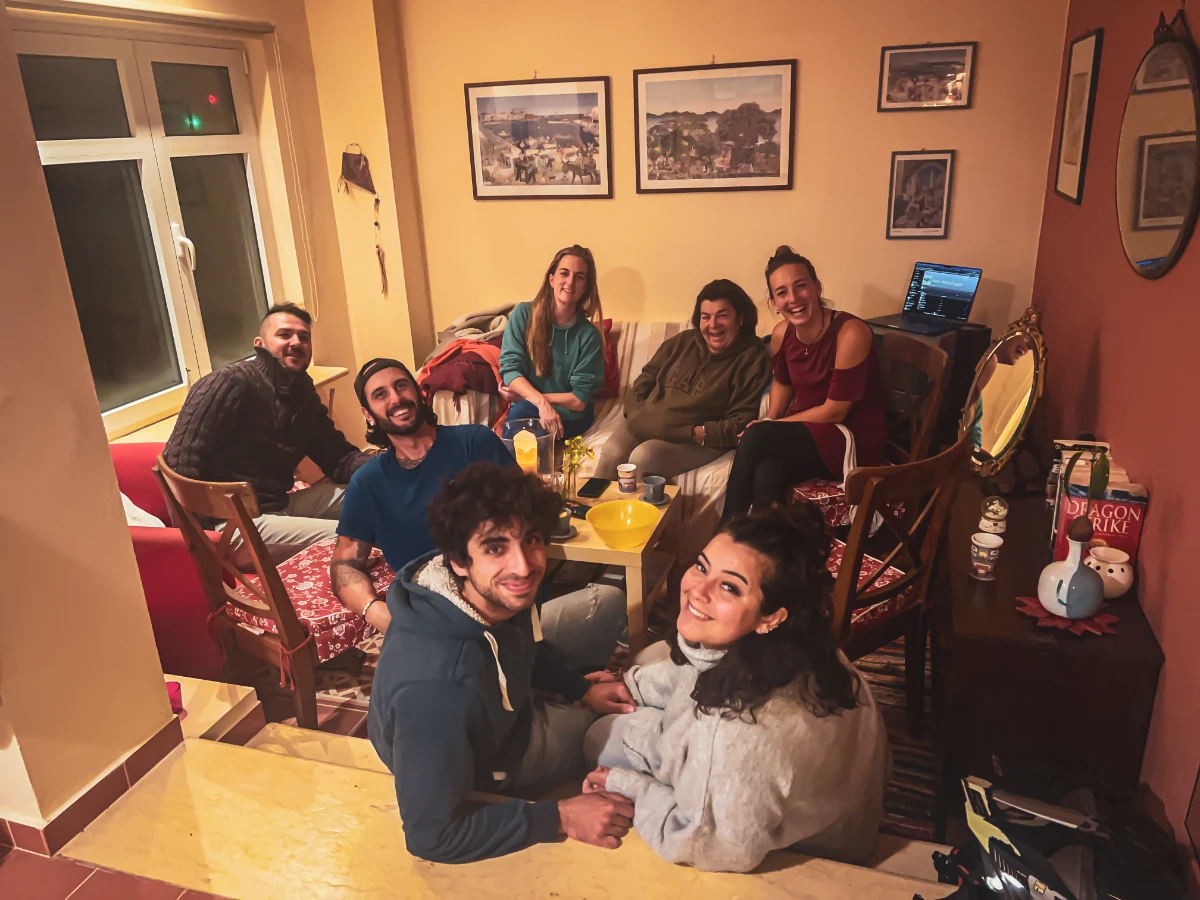
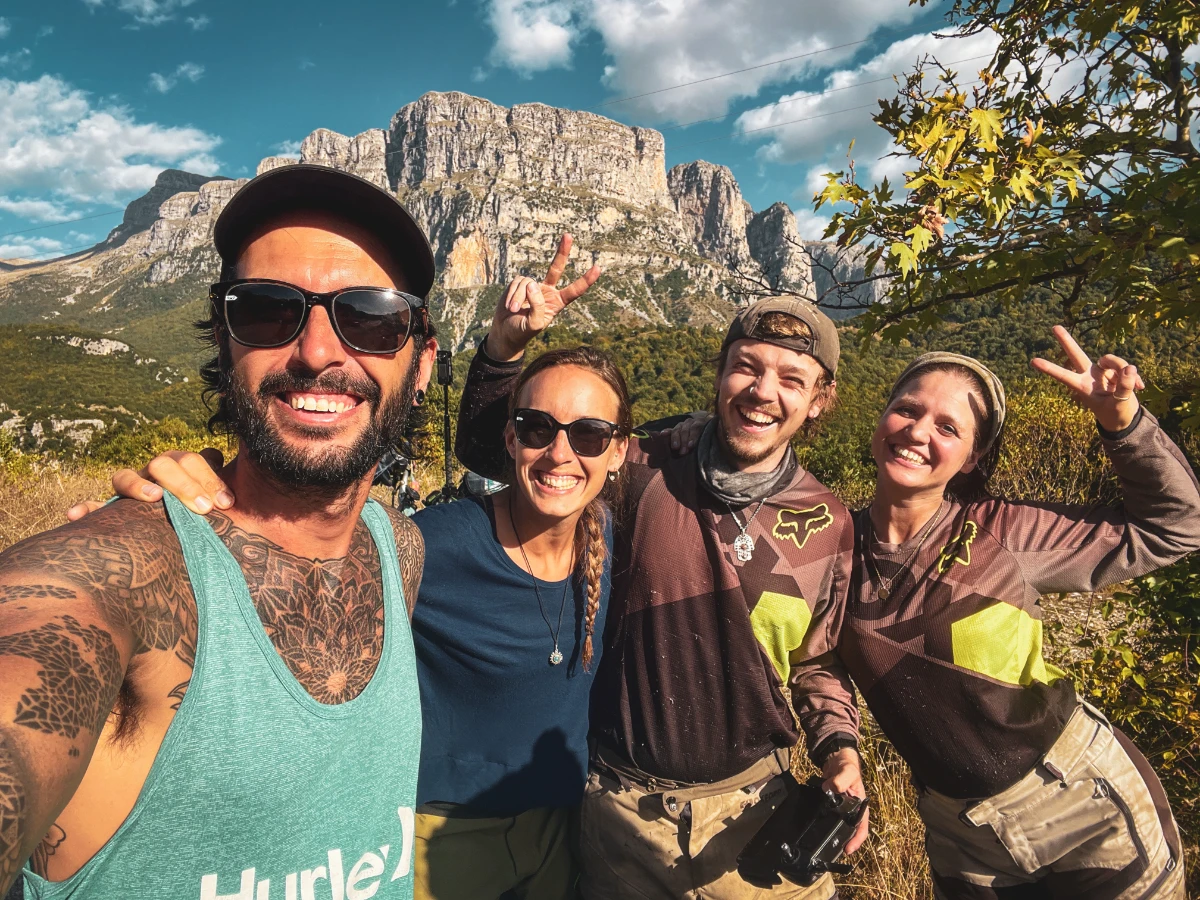
✦ Year 3 in a Nutshell — The Take Me Everywhere Summary
- 16 countries from Romania to Tajikistan — the first year that carried us off the European continent and into Central Asia.
- 101 days on Workaway — sailing Greek islands, wintering in Crete, renovating in Turkey. The lifestyle that makes all of this possible.
- Accidental war zone, burning motorcycles, death tunnels — and somehow, still smiling at every sunrise.
- People, people, people — MotoCamp, Qendrim, Georgia’s bikers, Sander & Iris, Mia, Raf, Merlin. The road’s greatest gift will always be its people.
- We read about the Silk Road as 20-year-olds on our round-the-world trip. In Year Three, we rode it on Falkor. Still can’t quite believe it.
- We wrote about some of these roads in our Lonely Planet Moto en Europe — which you can order now.
- Year Four begins in Dushanbe. The Pamir Highway lies ahead. The Nothing is not winning today.
Workaway is how you live the dream without the trust fund
101 Workaway days in a single year. Sailing the Aegean. A Cretan winter. A camping renovation in Turkish turquoise waters. This is what reciprocal travel looks like — and our link gives you 3 free months to start your own story.
Sailing, building, teaching — Workaway is life, not tourism.
101 days = accommodation and meals covered. That’s a significant portion of any travel year.
Our honest recommendation after 3+ years of using it. Use the link for 3 months free on your membership.
What Year Three really was
If you’ve made it this far, thank you. You’ve just lived a small, compressed version of the year that changed everything for us. We didn’t plan it to be this intense. We never plan anything, really. That was always the point.
Year Three was the year we stopped being travellers and started being something harder to define. A wine bottle spin, a tarot card in Morocco, a dog attack at a random border, a wrong turn into a war zone, ten days that became lifelong friendships, a motorcycle burning to ash on a Bulgarian road, a cold Albanian mountain, a sailboat between Greek islands, a Cretan winter, Turkish roads that sang under our tires, a Georgian pirate ship, a Uzbek fairy tale, and five kilometres of darkness we chose to ride through on our anniversary and so many other incredible memories. A metaphor we didn’t plan. A year we will carry forever.
Year Four begins at the foot of the Pamir Highway. We have no idea what it holds. That’s exactly why we’re going.
If our story touches something in you, that whisper asking what would happen if you just went, take it seriously. The world is not dangerous. The world is extraordinary. And it’s waiting for you to come find out.
— Vins & Nathalia · Falkor · The NeverEnding Journey 🐉
If this story added a little light to your day, if it made you dream, smile, or reach for your passport, you can add a little light to ours. Buy us a tank of fuel and we’ll use it to ride somewhere extraordinary and bring the story back to you. 💛
Year Four is already underway — follow us in real time
The Pamir Highway. Kyrgyzstan. Beyond. Subscribe, follow, and ride along with Falkor wherever the road takes us next.