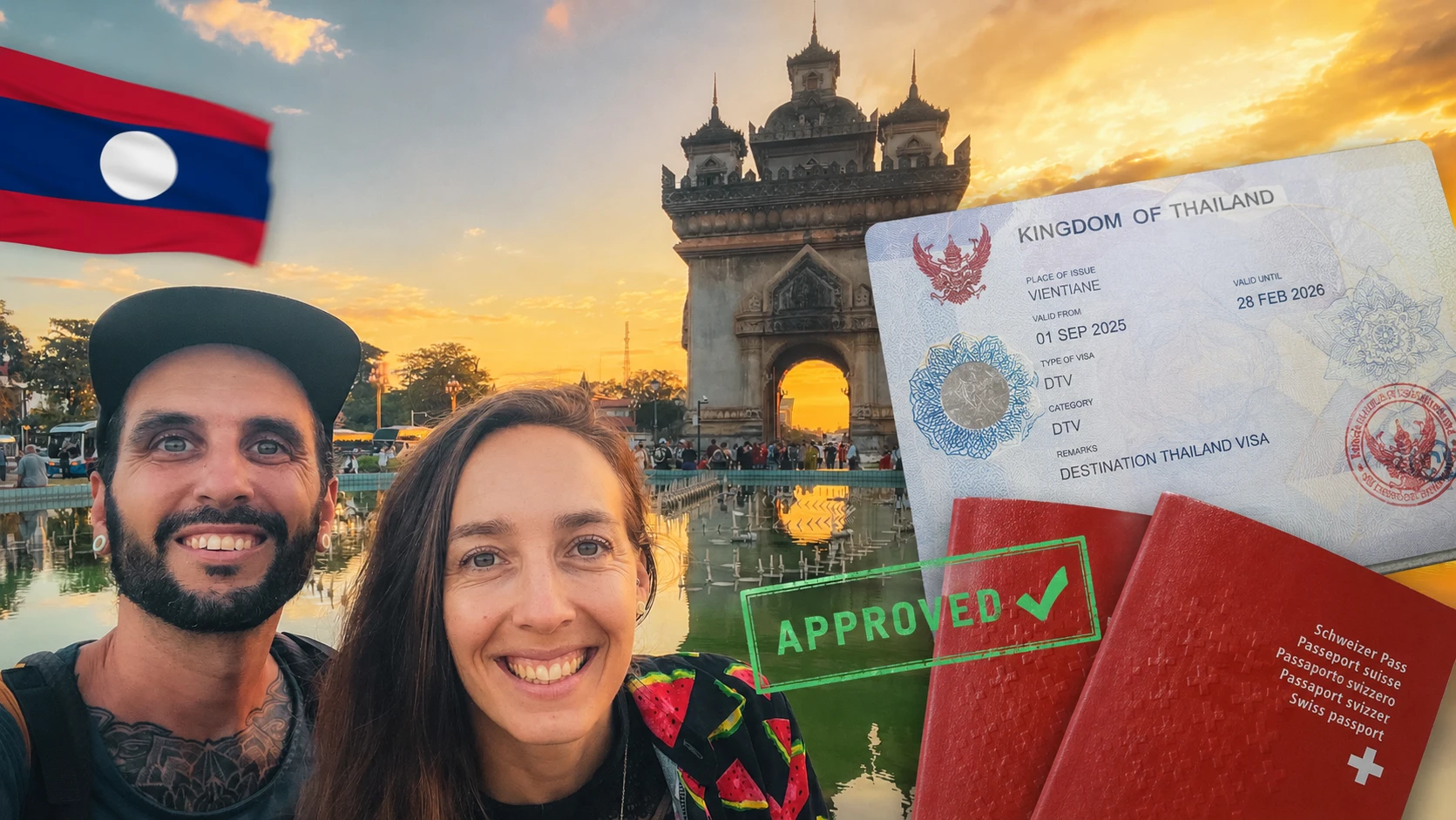
DTV Visa Thailand: The Complete Digital Nomad Guide (Workation Category)
DTV Visa Thailand: why we finally applied after 4 years on the road
The DTV visa Thailand is what let us finally slow down after four years of packing, unpacking, and moving on before we’d even finished unpacking. Not for a month. Not for three. Really slow down. The problem, as always, was the visa. That’s when we first heard about the DTV — the Destination Thailand Visa — and its « Workation » category: Digital Nomad, Remote Worker, Foreign Talent, Freelancer. Reading that description, we looked at each other and thought: that might actually be us.
So we went straight to the official DTV visa page to read everything ourselves, instead of trusting secondhand advice. There are three DTV categories, but Workation was clearly the one that fit. The honest fear, however, was our income: it’s low and irregular. We’re freelancers without a fully « official » freelance status, paid every six months by one of our main contracts, and some months we simply don’t hit our own target. We weren’t sure we’d qualify — but we decided to try anyway.
A quick disclaimer before you read on: we are not a visa agency and we’re not immigration specialists. This DTV visa Thailand guide is nothing more than our own experience, shared honestly, because we followed the official process to the letter and it worked — even for two low-income freelancers. So please always double-check current requirements on the official site, since visa rules can change.
The 3 DTV visa Thailand categories (and why we picked Workation)
- Soft Power activities — Muay Thai training, Thai cooking classes, medical treatment, and similar approved cultural/wellness programs.
- Thai spouse — for partners of Thai nationals.
- Workation — digital nomads, remote workers, freelancers, and « foreign talent » who work remotely for companies or clients outside Thailand. This is the one that matched us: content creators paid by international partners, working from wherever Falkor happens to be parked.
Our DTV visa Thailand timeline: application to approval
| Date | Step |
|---|---|
| Tue 4 Nov | Application submitted online, from Luang Prabang |
| Mon 10 Nov | 10,000 THB paid in cash at the consulate in Vientiane |
| Tue 11 Nov (midday) | Additional documents requested: a photo for Vincent, a photo + 3 months of financial evidence for Nathalia |
| Tue 11 Nov (evening) | Interview scheduled for Friday 14 Nov, 9:30 |
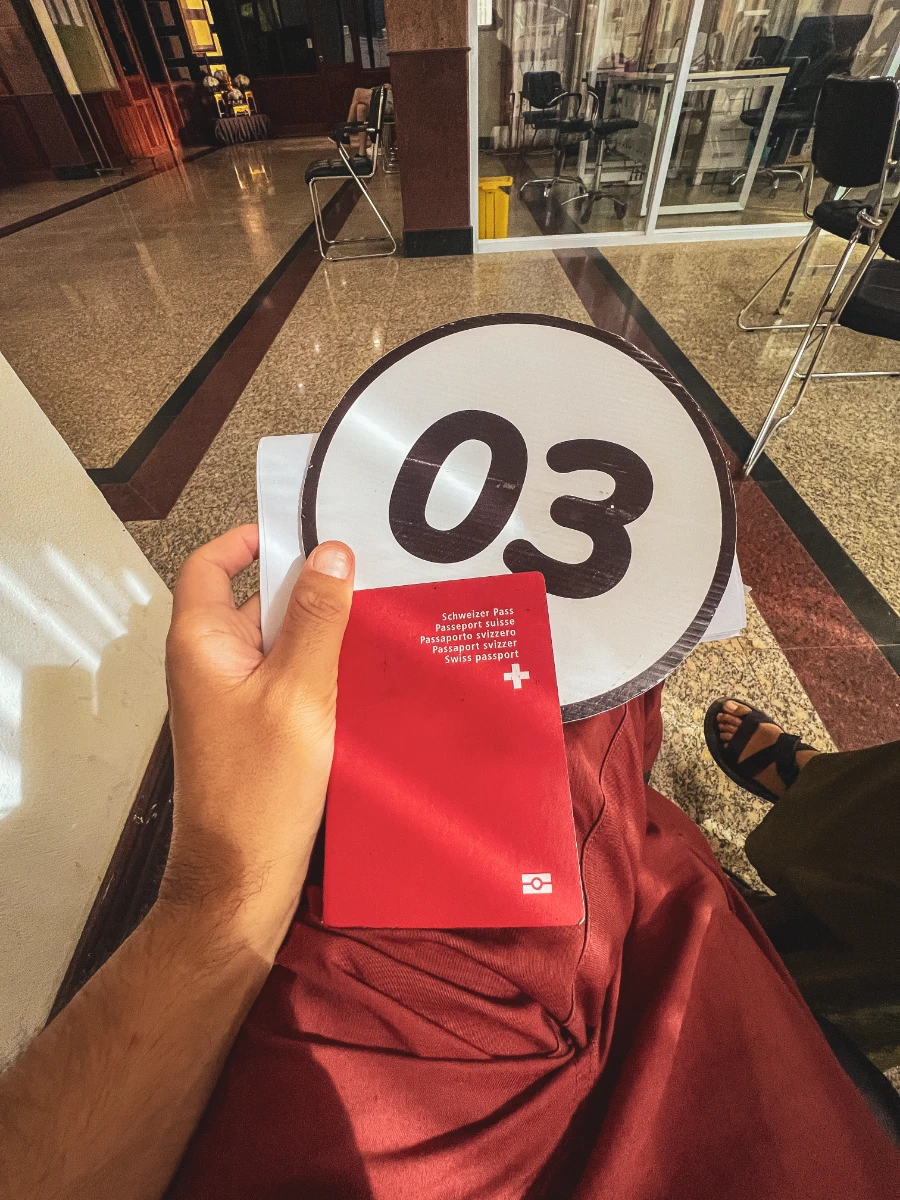
| Fri 14 Nov, 10:00 | Interview — five minutes, simple questions: name, job, what you’ll do in Thailand, bank account shown to the officer |
| Fri 14 Nov, 11:45 | Visa approved |
In short, four days between payment and approval. The whole process was smooth and, honestly, a lot less scary than the horror stories we’d read online. We queued 20 minutes before the consulate opened to pay the 10,000 THB — the line was already long — and had our documents printed at our hostel’s reception the night before.
What we actually submitted for our DTV visa Thailand application
The core of the application was a PDF portfolio we built ourselves, showing that we’ve been digital nomads since 2021, traveling full-time and working remotely for two companies — we’re content creators promoting Insta360 and Polarsteps, plus authors for Lonely Planet, on top of small freelance jobs. For financial proof, we took screenshots of our last three months of bank statements, added a THB conversion next to each amount so the officer could read it at a glance, and highlighted the important bits: name, total balance, income, dates.
All the payments run through Vincent’s account, but that wasn’t a problem for Nathalia — we genuinely operate as a duo under the name Take Me Everywhere, and even without much recurring income on her own account, her application went through without issue. As for the photos, we followed the official specs closely: plain white background (not grey), well centered, plus the usual passport photo and a copy of our Laos visa.
Applying for your DTV visa Thailand in Vientiane: practical spots
🛏️ Lanexang Princess Hotel
Where we slept the first time: very close to the embassy, cheap, but the neighborhood isn’t the prettiest.
Open in Google Maps →🛏️ Phonepaseuth Guesthouse
Where we stayed the second time: nicer area, super friendly owner — he even let us print our documents at reception.
Open in Google Maps →🥤 Noy’s Fruit Heaven
One of our favorite spots for a good fresh fruit juice or shake while waiting things out.
Open in Google Maps →🥗 Coco&Co
Our favorite vegetarian restaurant in Vientiane — and, as it happens, exactly where we were sitting when we found out our visa was approved.
Open in Google Maps →🌙 Night Market
Right by the Mekong — a good way to spend the evenings while you wait for news.
Open in Google Maps →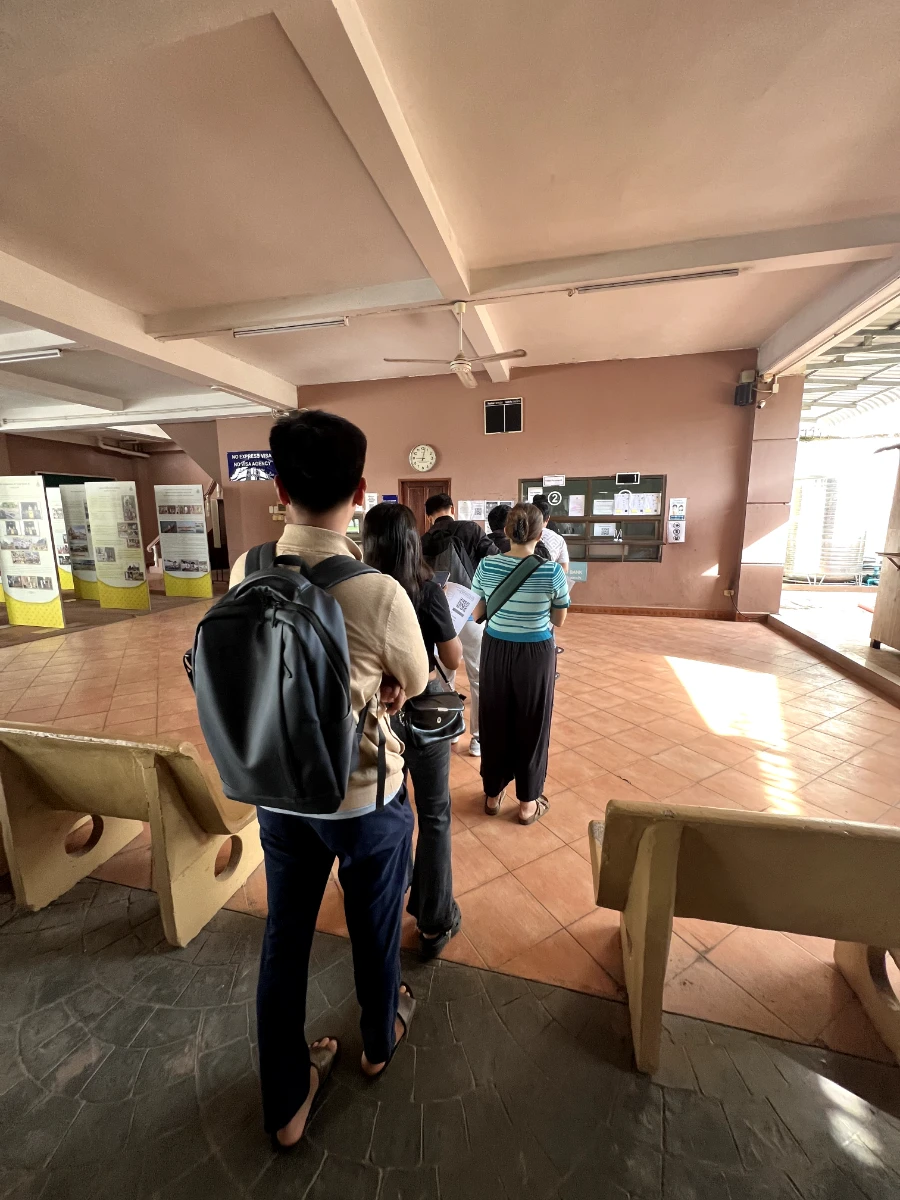
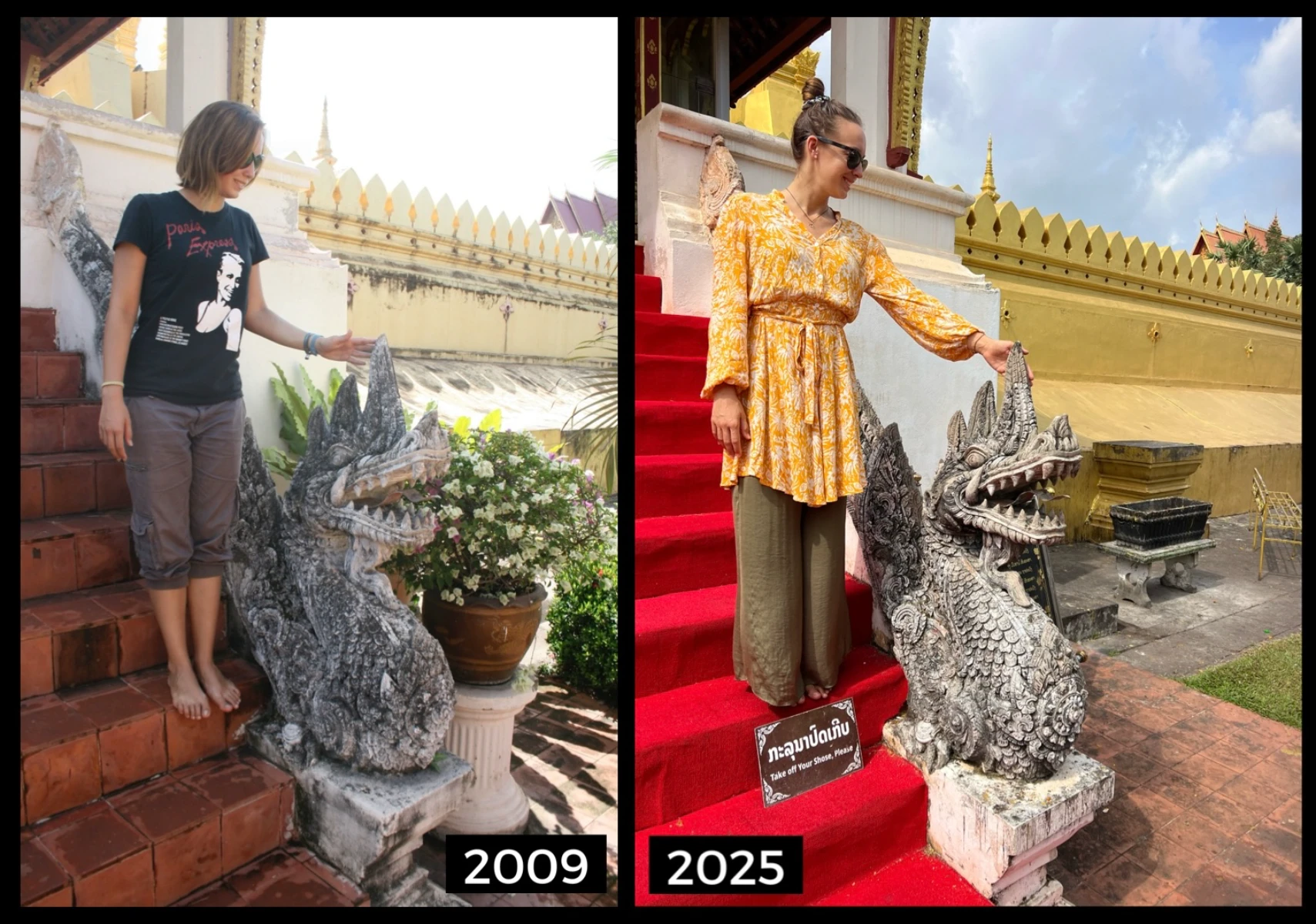
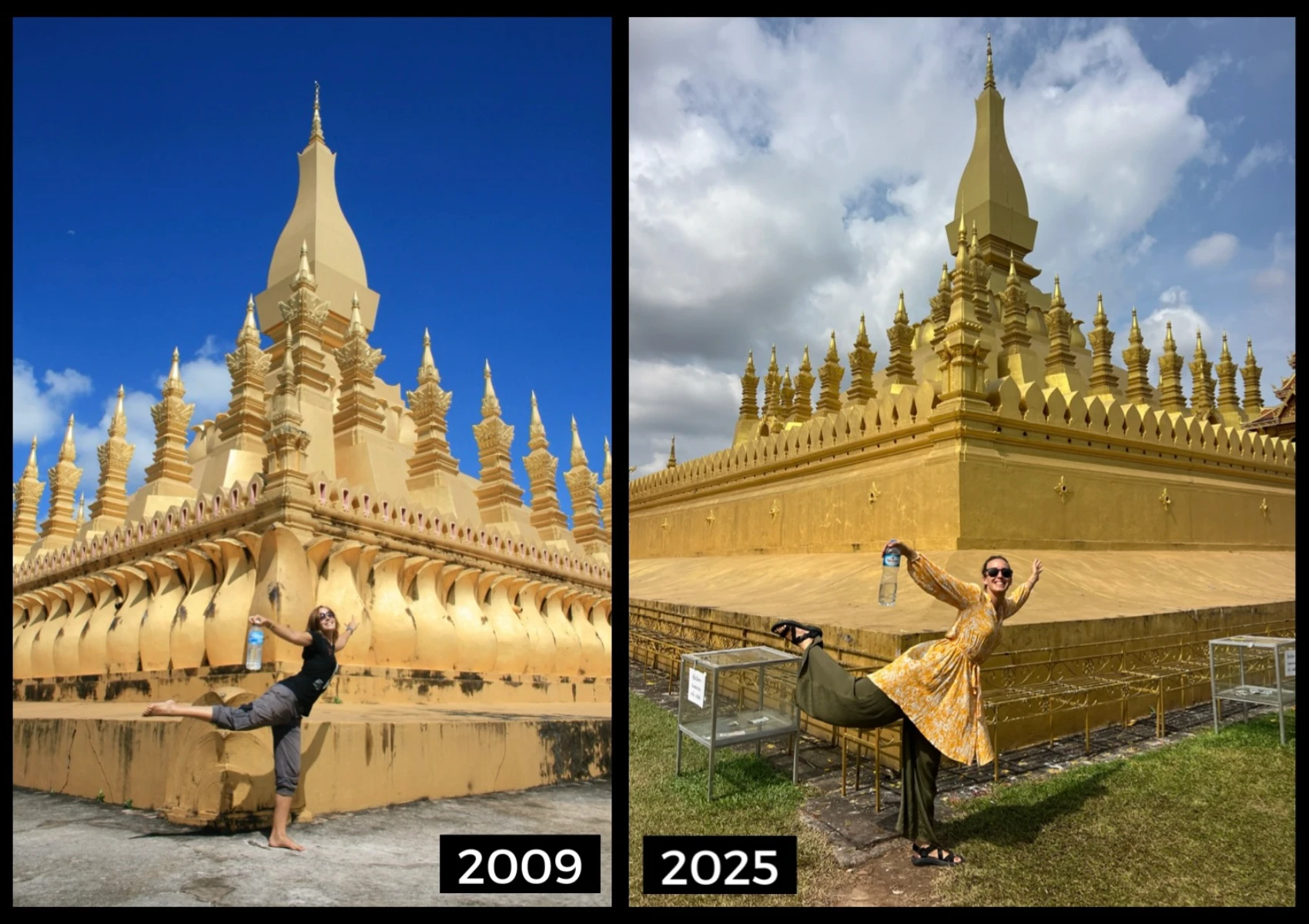
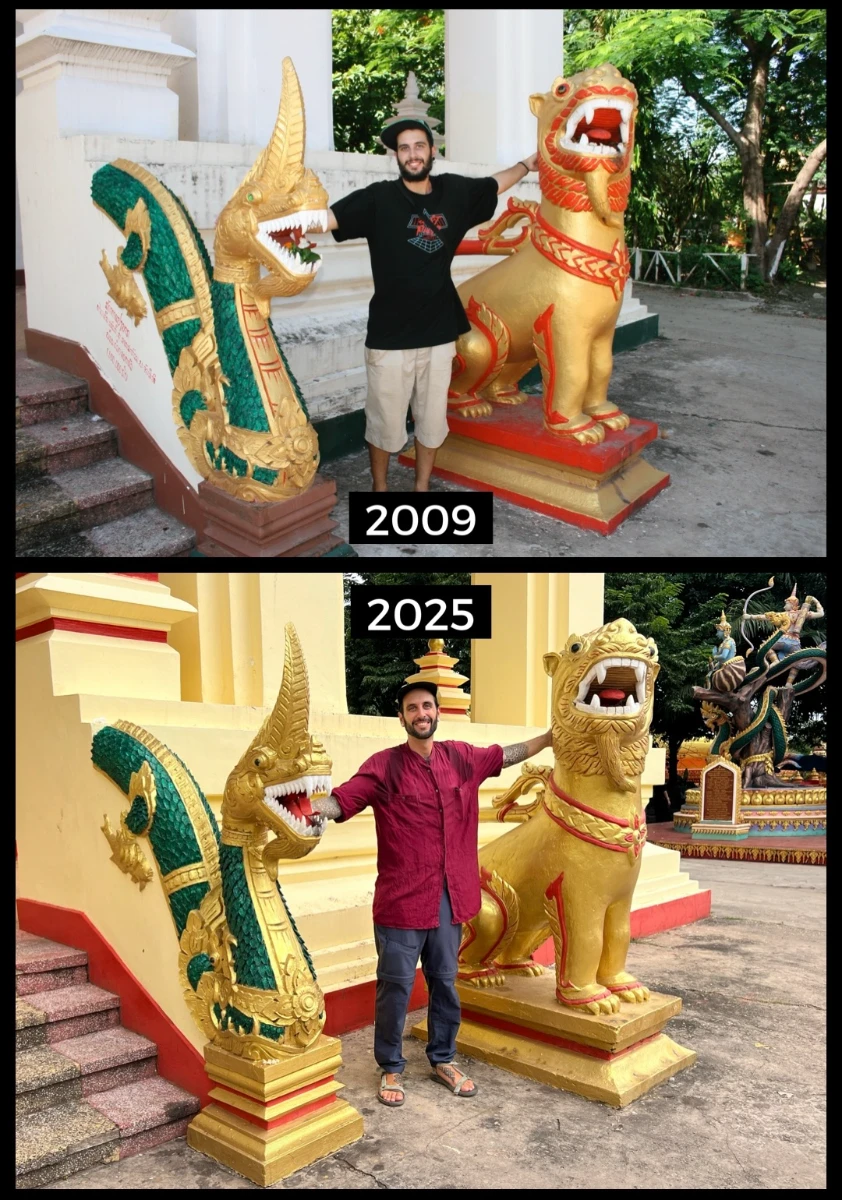
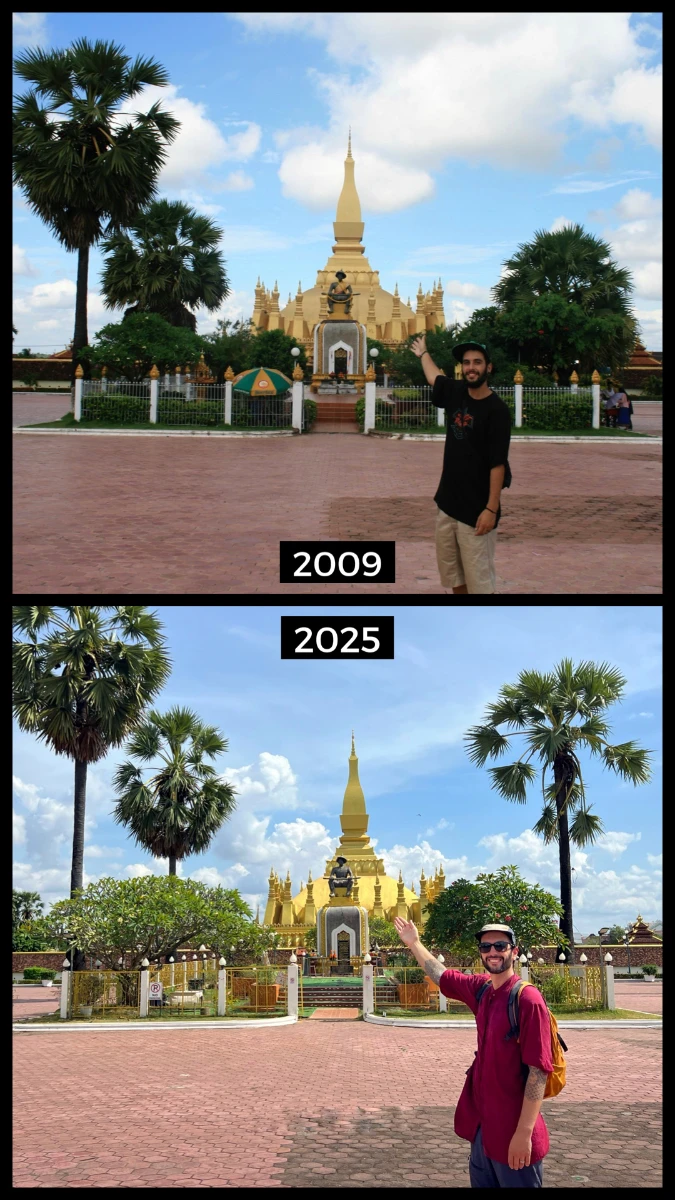
Vientiane, 2009 vs. 2025
We had actually been to Laos once before, back in 2009, on our very first round-the-world trip. Waiting for the DTV visa Thailand approval gave us the perfect excuse to go find the same spots again — the same stupas, the same Buddhas, the same temple at Pha That Luang, one of Vientiane’s most iconic sites — sixteen years apart. A little outside the city, we also passed by the Buddha Park, a place we loved in 2009 — though this time around, we didn’t make it back there. Click any photo below to see it full-size.
Entering Thailand and the 90-day report on a DTV visa
We entered Thailand for the first time overland, through the Thai–Lao Friendship Bridge No. IV. Later, we flew out of the country and back in through Bangkok with zero issues, so the entry point itself doesn’t seem to matter much once the visa is stamped.
The 90-day report
Next came a new experience for us: the « 90-day report » with Thai immigration. We did ours in Rayong. Nothing complicated, but for the first time you actually have to show up in person with your documents — TM30 and TM47 — and you’ll need details from whoever is hosting you: their house registration book, their passport, and their residence information. We were staying with a friend at the time, and she kindly provided everything we needed.
The one rule that really matters, above everything else: never overstay. We were housesitting a home and looking after five dogs through TrustedHouseSitters at the time, which meant we couldn’t both leave Thailand together. So Nathalia flew from Bangkok to Ho Chi Minh City for her visa run — the cheapest flight available at the time — and turned it into a proper 4-day city trip instead of a same-day dash back. She could have flown back within hours, but why not enjoy it?
« The border guard opens my passport, looks up, and simply asks: ‘DTV?’ ‘Yes.’ Bam. Stamp. 180 more days. » — from our Chong Mek visa run Vincent, solo run to the Lao border on Falkor
Meanwhile, while Nathalia was in Vietnam, Vincent rode Falkor solo to the Chong Mek border crossing. Exiting Thailand took about a minute. A short walk through an underground tunnel later, and it was Laos on the other side — where, thanks to a bilateral agreement between Switzerland and Laos, the border officers granted 15 days of free entry on the spot. First small victory. After half an hour hanging around on the Laotian side, it was time to turn back: exiting Laos took barely a minute too. Then came the moment that mattered — the Thai officer opened the passport, asked « DTV? », got a « Yes, » and stamped in 180 more days. Relief, joy, and exhaustion all landed at once.
The DTV visa Thailand gives us the time. Workaway and TrustedHouseSitters give us the way to actually use it without burning through savings — trading a few hours of help, or looking after a home and some very good dogs, for a real place to land.
TrustedHouseSitters
How we ended up housesitting in Rayong in the first place. Free accommodation in exchange for looking after a home and pets.
🏡 -25% on Annual Membership →Workaway
Our go-to for exchanging a few hours of help per day for accommodation and meals, all along the road.
🎁 Get 3 Free Months on Workaway →DTV visa Thailand tips if you have a low or irregular income
- Don’t panic before you’ve even tried — we almost talked ourselves out of applying.
- Build a simple portfolio PDF: who you work for, since when, proof you’re genuinely a remote worker or freelancer.
- Highlight the important numbers on your bank statements (name, balance, income, dates) and add a THB conversion — make the officer’s job easy.
- Follow the official photo and document specs exactly. No creative shortcuts.
- Apply directly on the official e-Visa site. As of 1 January 2025, applicants in the Vientiane consular area must use it — no more appointment booking through the old system.
- You don’t need an agency for your DTV visa Thailand application. It costs more, and it won’t change what the officer sees in your bank statement.
DTV visa Thailand: the honest bottom line
- We’re not a visa agency, and we’re not immigration specialists — just two nomads who followed the official process to the letter.
- We had real doubts about our low, irregular income. In the end, it changed nothing about the outcome.
- Having to leave Thailand every 180 days isn’t a problem for us — it’s a reason to keep exploring the neighboring countries.
So, don’t let internet horror stories scare you out of applying. We’re happy to add our own small stone to the pile of positive experiences about this visa. Five years of validity, 180 days at a time, and a whole region next door to explore in between — we honestly couldn’t ask for a better base to finally slow down.
Questions about your own DTV visa Thailand application?
We’re happy to share what we know from our own experience — drop us a message on Instagram, or follow the day-to-day on Polarsteps.