Riding Kazakhstan’s Last Wilderness:
A Motorcycle Guide to the Mangystau Desert
7 days · 400+ km of piste · 42°C · zero infrastructure · infinite beauty
The Desert Every Overlander Dreams About
The Mangystau Desert. Even the name sounds like it belongs to another world. Located in the remote southwestern corner of Kazakhstan — a forgotten wedge between the Caspian Sea and the Uzbek border — this geological wonderland has become one of the most coveted destinations on the entire Central Asian overlanding circuit. Chalk-white canyon formations that rival Monument Valley, an underground mosque carved into cliffsides centuries ago, lunar plateaus that stretch to the horizon without a single soul in sight. All of this baked under a relentless 42°C sun, with zero fuel, zero signal, and whatever water you remembered to carry.
Mangystau is not an easy destination. That’s precisely why it’s legendary. The desert sits within the Mangystau Oblast on the ancient bed of the Tethys Sea, its floor shaped over 80 million years into a landscape that feels genuinely extraterrestrial: the white chalk pinnacles of Bozjyra, the mysterious spherical concretions of Torysh (Valley of the Balls), the solitary mesa of Sherkala, and the pilgrim caves of Beket Ata — an 18th-century underground mosque still visited by thousands of Kazakh faithful every year. Add the Karakiya depression plunging to −132 metres, and Mangystau becomes, geologically speaking, one of the most extraordinary places on earth.
For motorcyclists and overlanders, it represents something even more specific: a genuine test. There are no fuel stations inside the desert. No restaurants, no hotels, no cell signal, no shade. The pistes mix hard-packed gravel, ankle-deep chalk dust, sand and brutal washboard. Distances between any kind of supply point can exceed 150–200 km. And yet, every year more riders make the pilgrimage — because nowhere else in Central Asia offers this combination of remoteness, beauty and raw adventure in such a concentrated space.
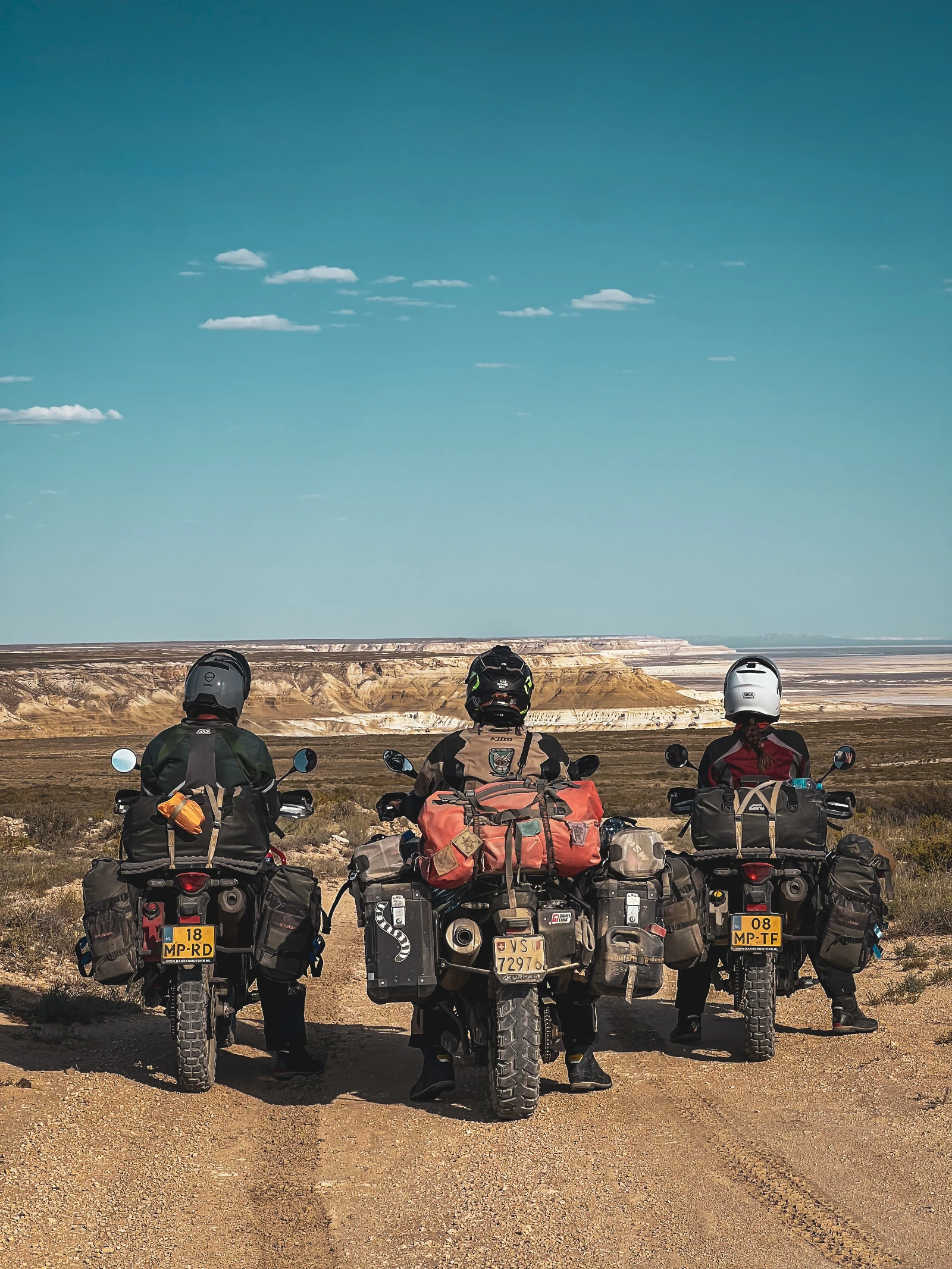
We crossed Mangystau in July 2024, on Day 1,072 of our never-ending journey, aboard Falkor — our trusty BMW F800 GS. We were four riders: Vins & Naya, and our Dutch friends Sander & Iris (@backto2ndgear), who had been riding alongside us since we met at MotoCamp Bulgaria, and who had since become two of our closest companions through the Caucasus, Russia and deep into Central Asia. What followed was seven of the most spectacular, exhausting and genuinely surreal riding days of our lives. This is both our personal story, and a practical guide for anyone who wants to ride Mangystau independently.
Atyrau — Flooding, Pelicans & a Caspian Friday Prayer
Before Mangystau, there is Atyrau — a Caspian oil city that serves as the last major urban stop before you commit to the southwest. The road in was extraordinary in itself: Kazakhstan had just suffered serious flooding, and the highway leading into the city was essentially a raised plank over an inland sea. We even spotted a pelican wading along what used to be a roadside verge.
We stayed at the Green Hotel — a good find, with an Indian kitchen and a morning buffet full of flavours we’d been missing for weeks. We also used the time here to do something we’d never actually done before: properly plan the next section of our route. True to form, we’d been riding for months without a fixed itinerary, living by our mantra — « when nothing is planned, everything is possible ». But 400 kilometres of waterless desert demands at least a rough outline.
The highlight came without warning. Walking through the city centre, we found ourselves outside the Blue Mosque at the exact moment of Friday afternoon prayer. Men were arriving from all directions, prayer rugs tucked under their arms, filling the square in a quiet, flowing tide. It was one of those unremarkable moments that somehow stays with you.
Here we also crossed paths with Jérôme Hubert, a French motorcyclist riding the opposite direction, who gave us his freshest intel on the Pamir Highway and conditions in the south. The Central Asian overlanding community is small and generous like that — and encounters like these are worth more than any guidebook. Speaking of which, if you’re planning the Pamir Highway after Mangystau (as we were), don’t miss our dedicated guide: Pamir Highway by Motorcycle →
Béïnou — Your Last Chance for Everything
Six hours and 436 kilometres of dead-straight road from Atyrau, Béïnou (Beyneu) sits at a crossroads in the middle of nowhere: go south and you hit Uzbekistan, go west and you enter Mangystau. It’s not a beautiful town, not a comfortable town, but it is an essential town — and every overlander passing through owes it a respectful overnight stay.
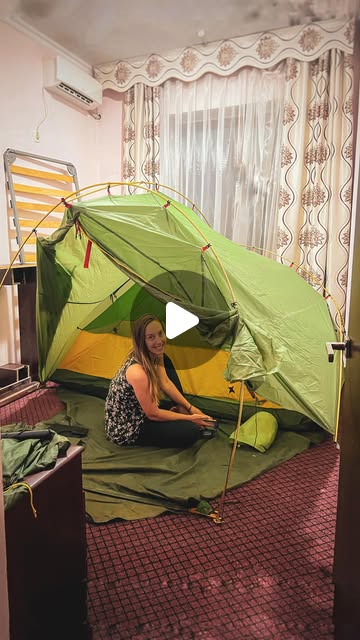
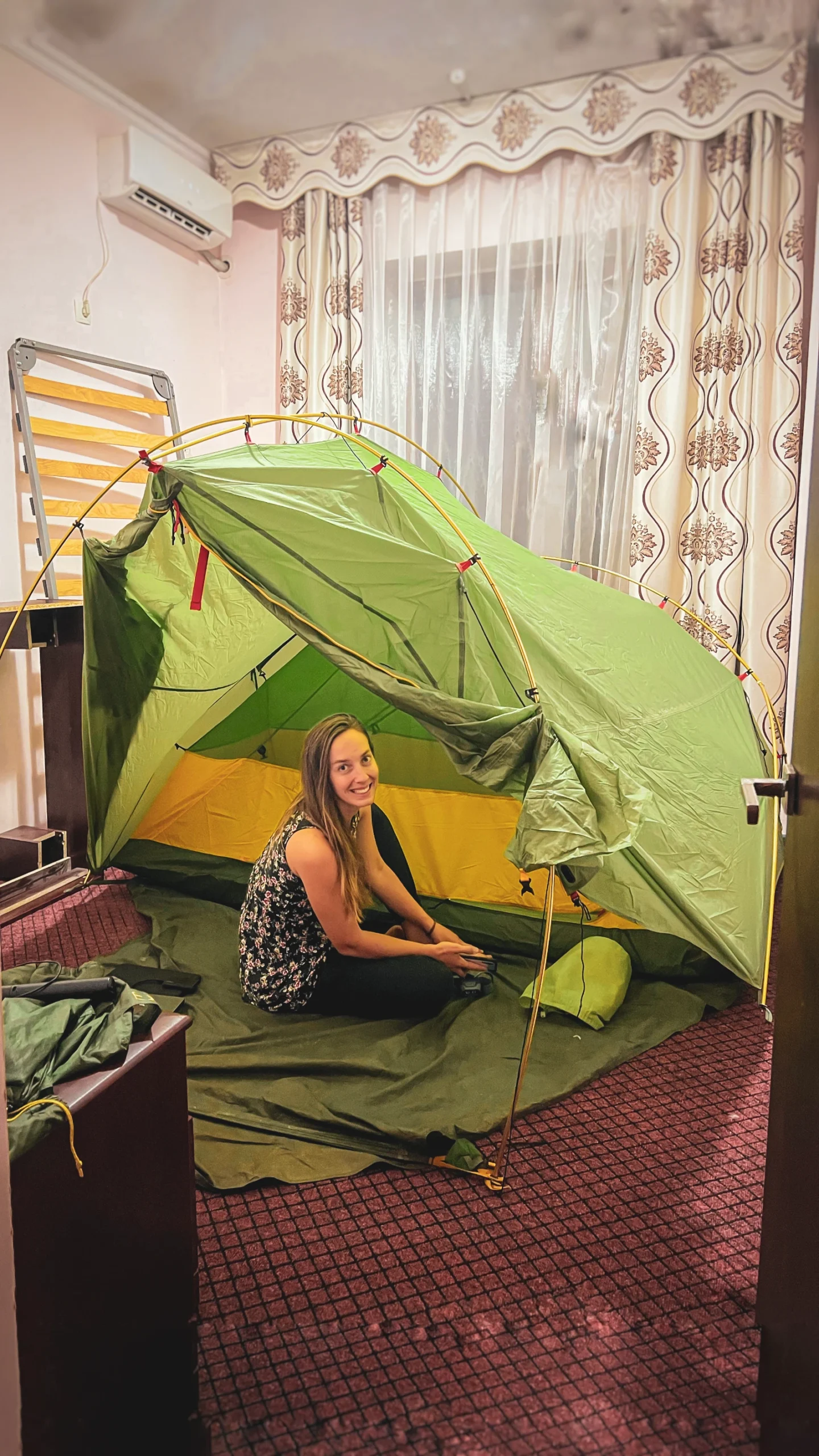
We spent two nights here before the desert, and two nights after. In the heat of July, the streets only come alive after sunset. The city feels arid right down to its bones. We visited three hotels, all of which had receptionists who seemed personally offended by our arrival — and all three were comprehensively infested with mosquitoes. Our solution? We pitched our tent inside the hotel room. Three nights out of four. A tent inside a room, in a hotel, in a desert city. Travel is strange.
On our first evening, we found a small pizza restaurant. At the end of the meal, the owner asked us to record a feedback video for their Instagram — then cut us off after two words while every customer in the place stared at us. We would encounter this kind of situation repeatedly across Central Asia, and it never got less surreal. Later that same night, we followed the sound of music to a packed open-air stadium where the entire city seemed to be attending a live concert. A man handed Naya his baby to hold; the poor child was terrified of this unfamiliar European face. We were clearly the most foreign things to arrive in Béïnou in some time.
🛒 What to Do in Béïnou Before the Desert
- Fuel: Fill your tank AND your jerry cans completely. There is no fuel inside Mangystau. Kassian 95 is widely available and cheap (~45 cents/litre).
- Water: Buy a minimum of 8–10 litres per person. More is better. Summer temperatures make 2–3 litres per hour a reality while riding.
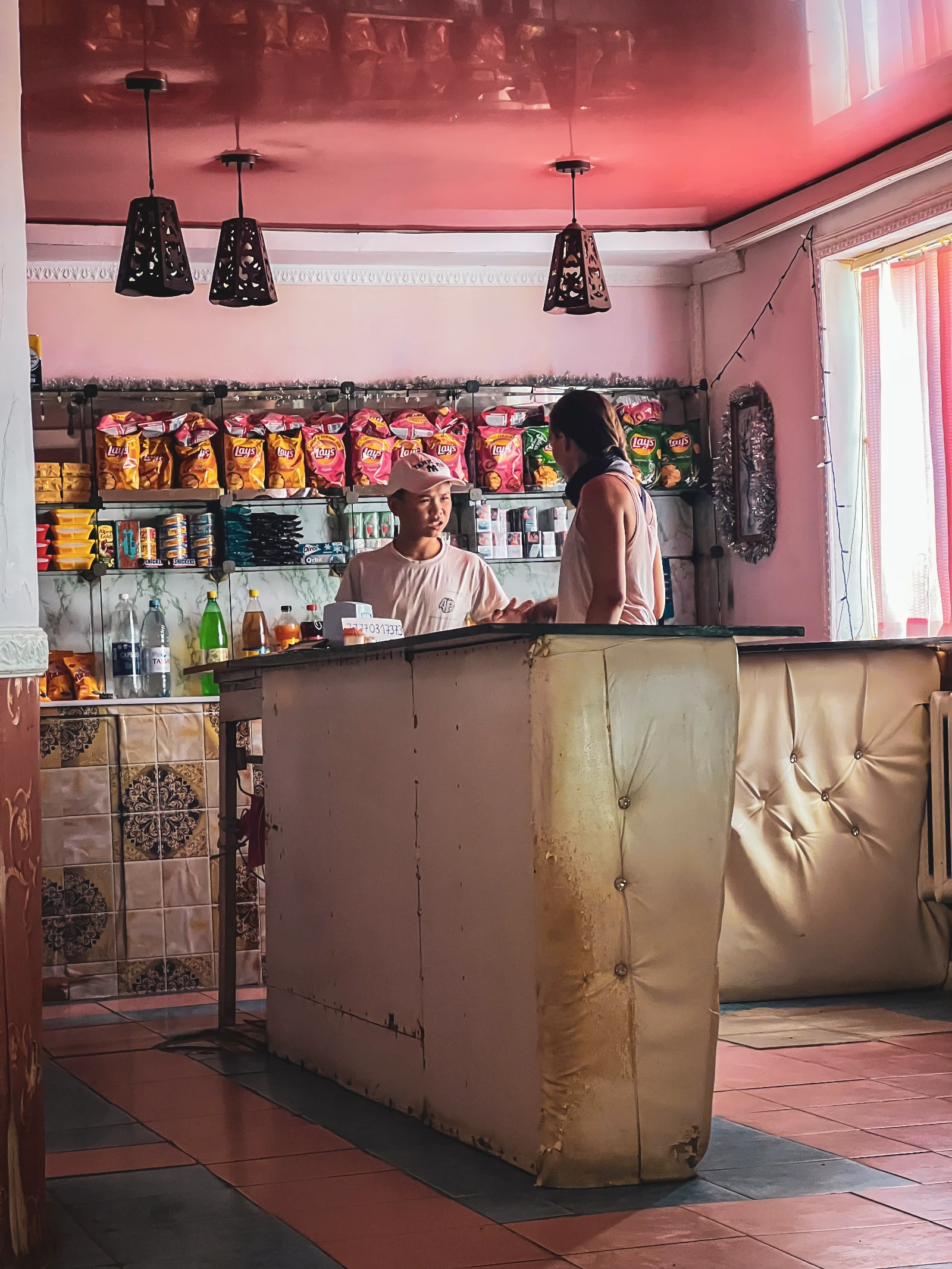
- Food: Stock up on anything that doesn’t need refrigeration — instant noodles, energy bars, bread, nuts. There are small shops on the main drag.
- GPS tracks: Download IOverlander offline before you leave. Mobile signal inside the desert is essentially zero.
- Accommodation: Three basic hotels. Expect minimal welcome and maximum mosquitoes. Bring a tent for sleeping inside.
Into Mangystau — The Plateau Tears Open
Day 1,072 of the journey. After stocking up on fuel, water and a frankly excessive amount of garlic bread, we rolled south out of Béïnou. The road stretches 200 kilometres in a ruler-straight line through scenery that offers nothing — flat steppe, bleached earth, zero shade. After ninety minutes we found a roadside hut selling cold drinks and met an unexpected surprise: Heidi and Jame, a Spanish cycling couple making their way from Malaysia to Barcelona. Nine months on the road, pedalling through 42°C heat. They only rode after sunset. We felt a profound, humbling respect.
Thirty minutes further south, we turned off the tarmac. And just like that, everything changed.
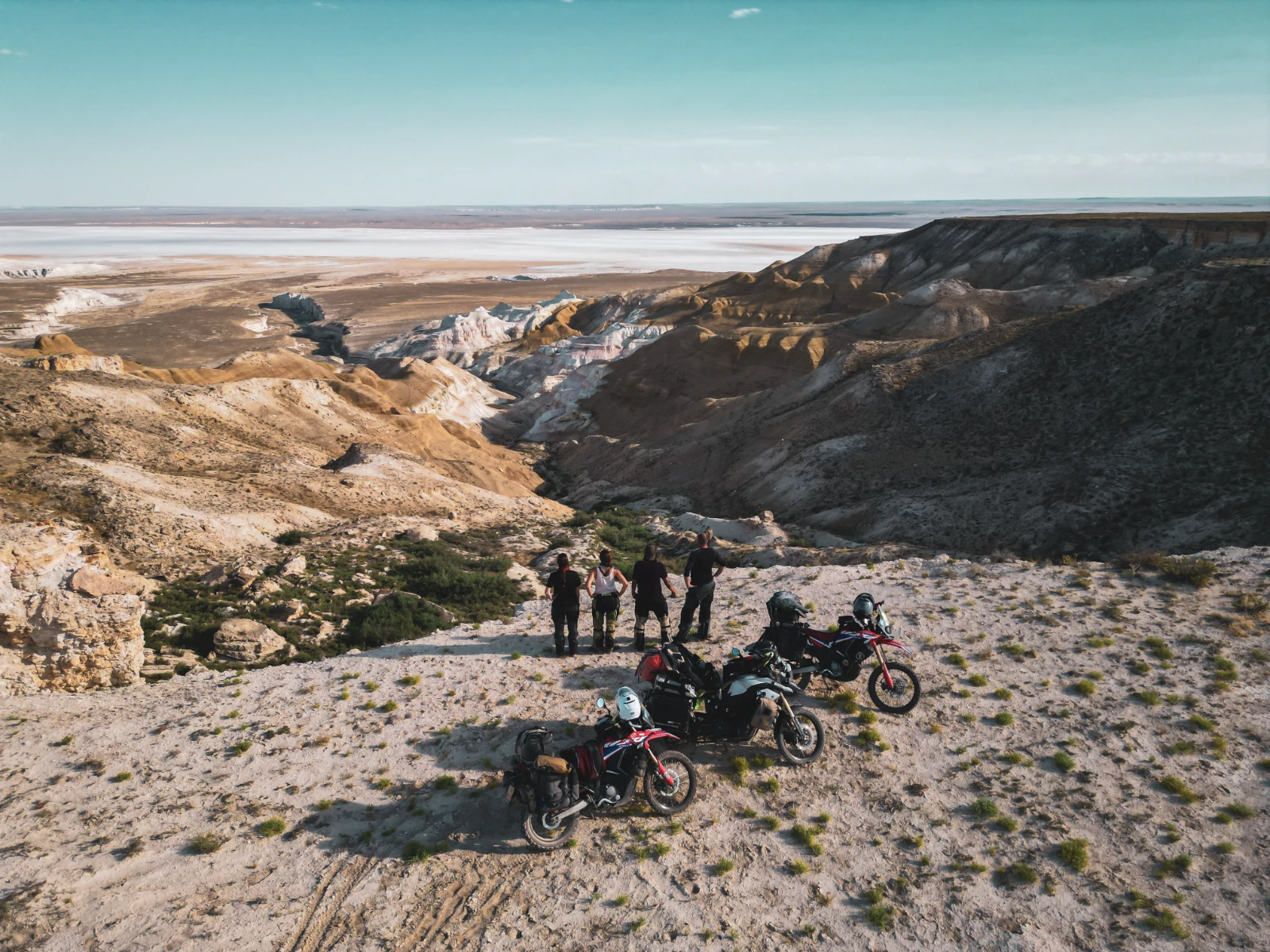
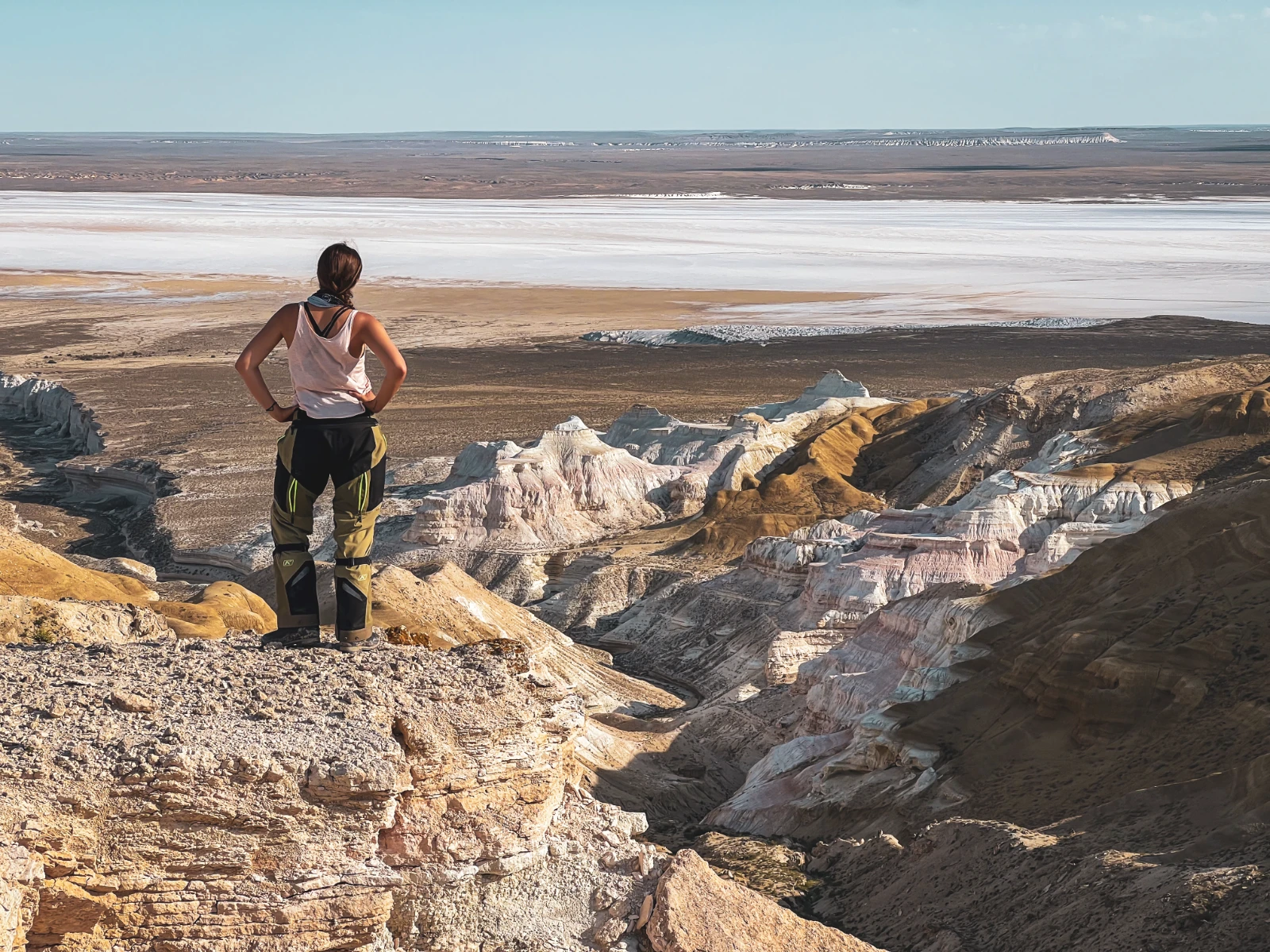
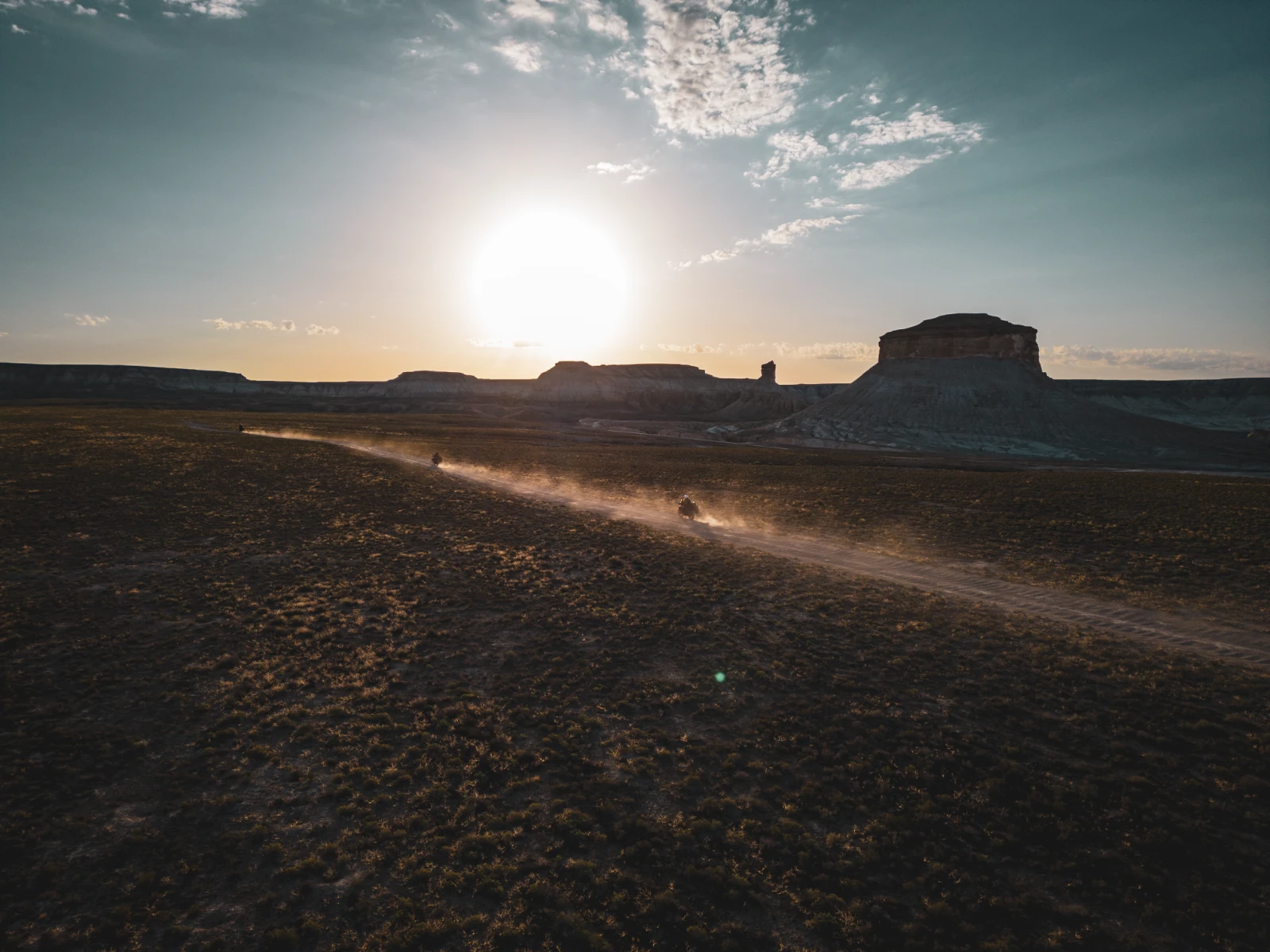
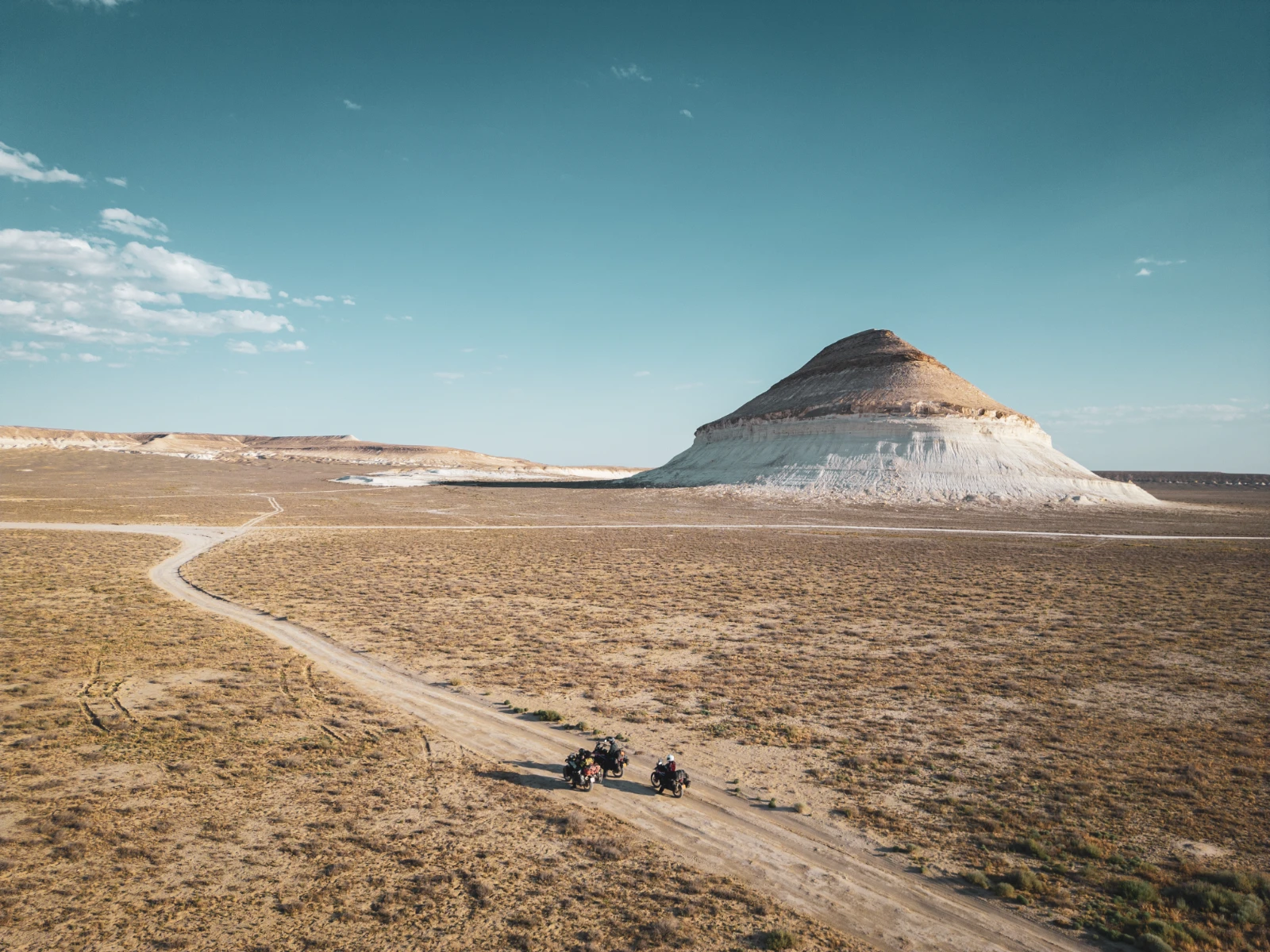
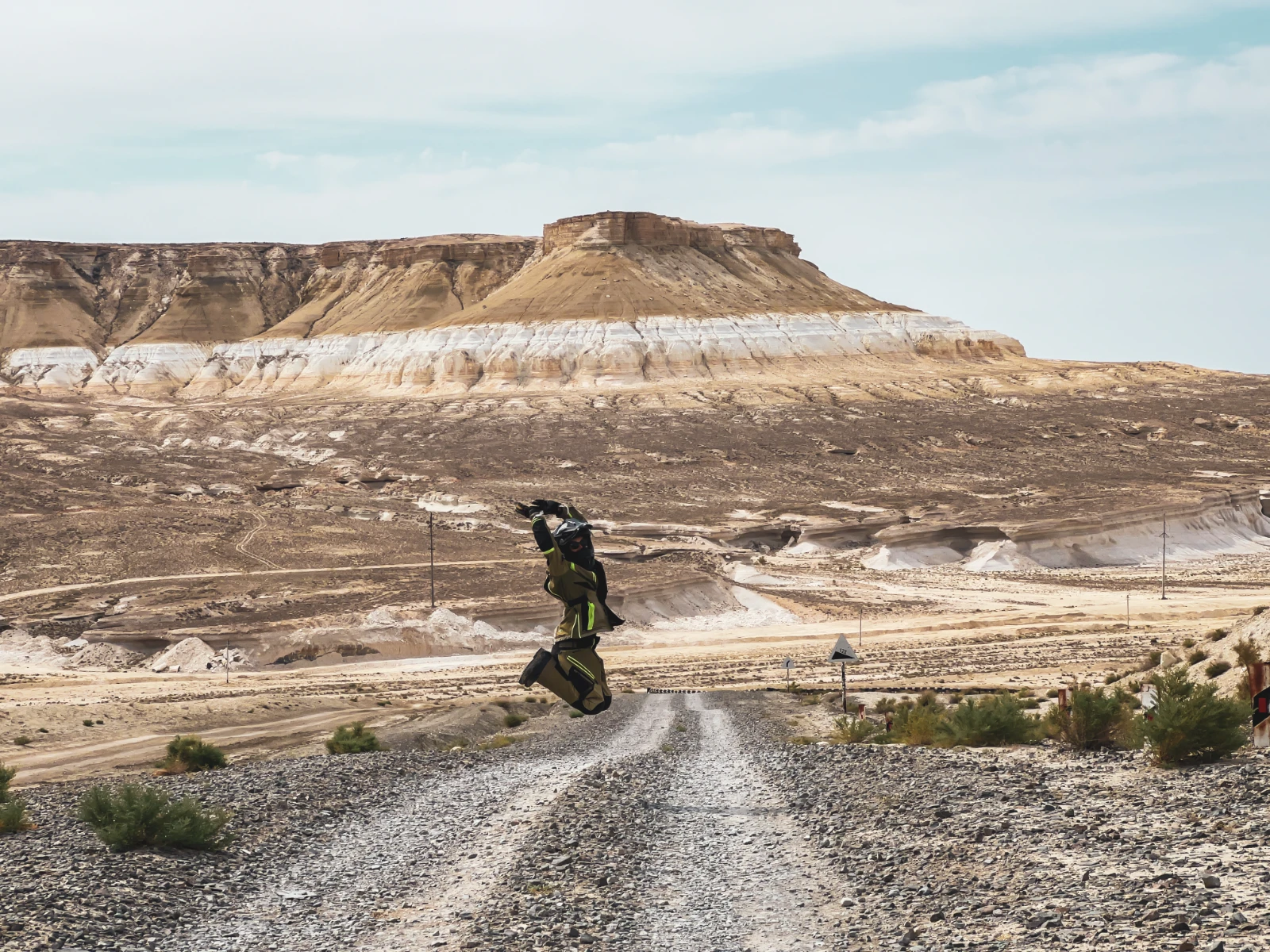
The unremarkable steppe of the last 200 kilometres simply ceased to exist. In its place: craters, canyon walls, ridgelines of layered chalk that looked as if they’d been sliced by a giant knife and left to bleach in the sun. We felt as though we’d ridden onto another planet. The plateau was firm and fast — a pure joy to ride at speed — and the four of us sliced through this immensity like we owned it, which, for a few glorious hours, we sort of did.
We followed the canyon rim for much of the afternoon, the void dropping away to our right with no barrier between us and a long fall. We raced a helicopter. We watched tornadoes form and dissolve along the roadside. We scared a camel into a full sprint. Standard Tuesday in Kazakhstan.
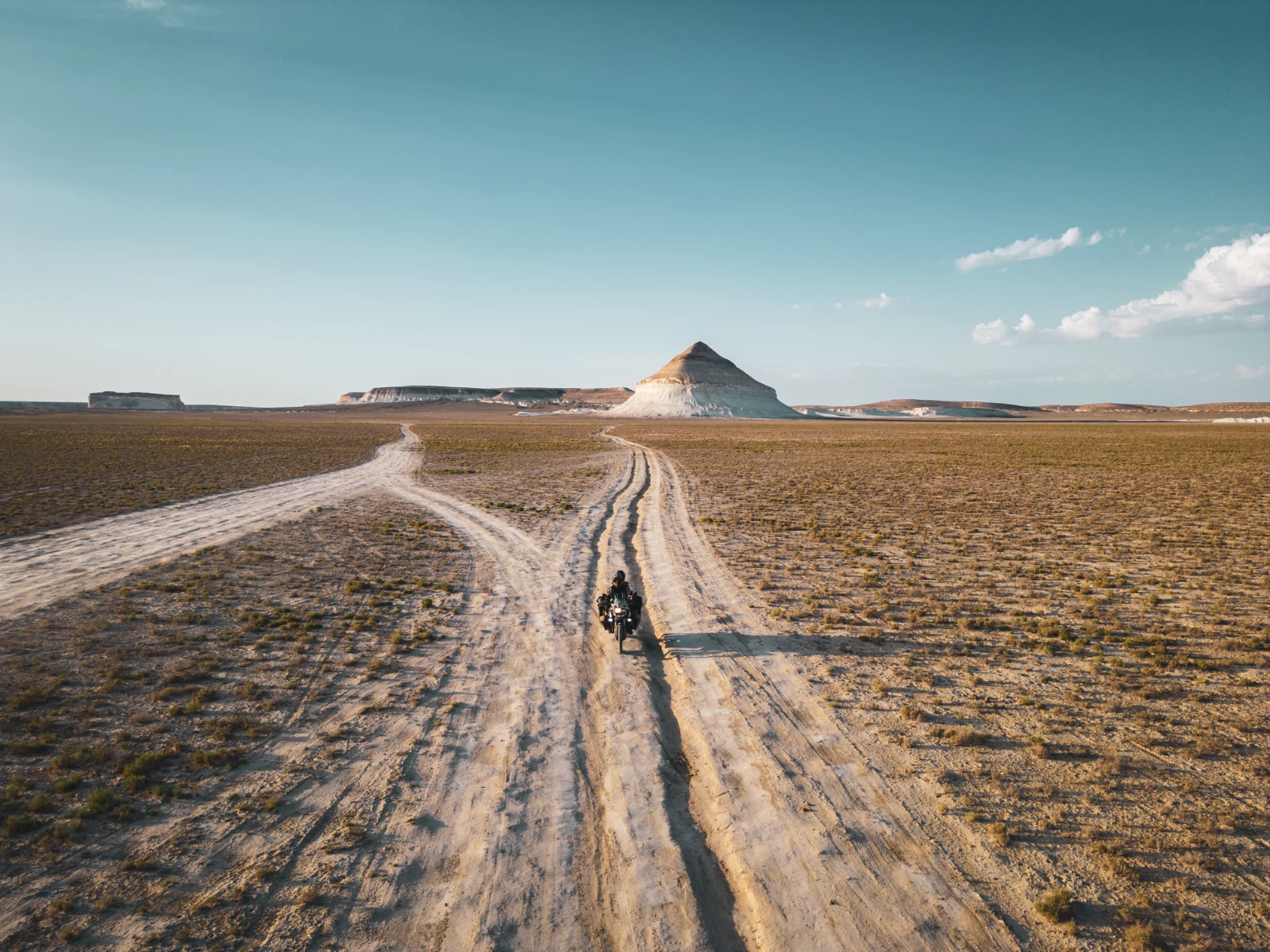
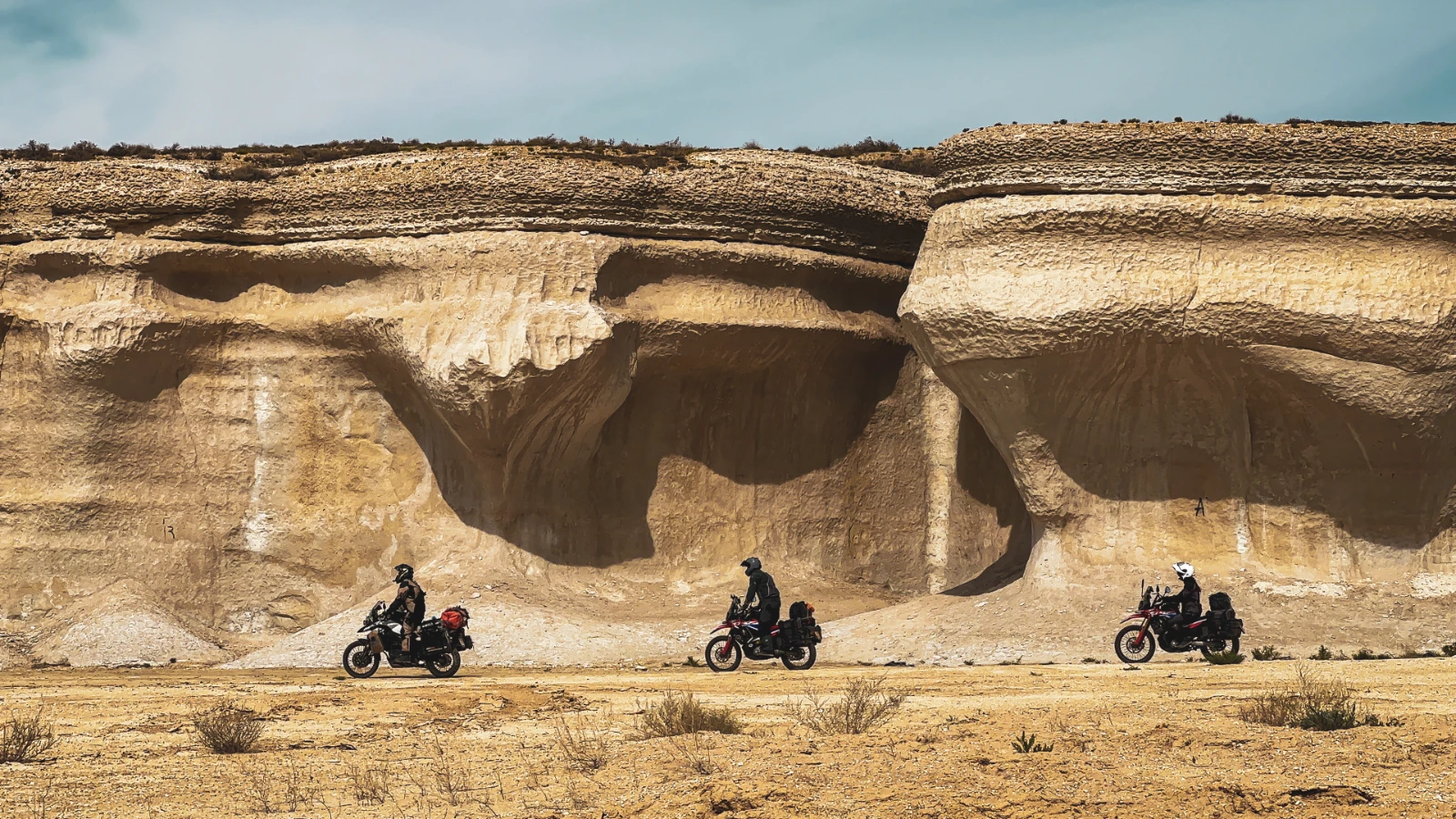
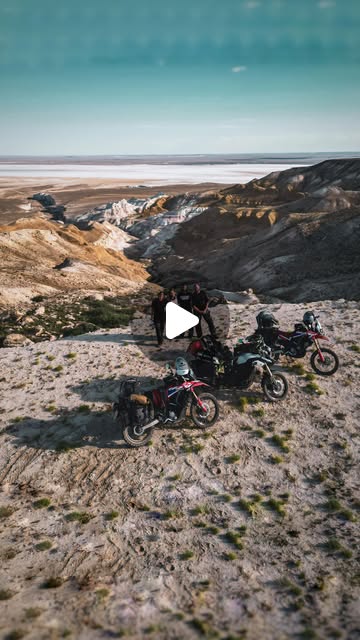
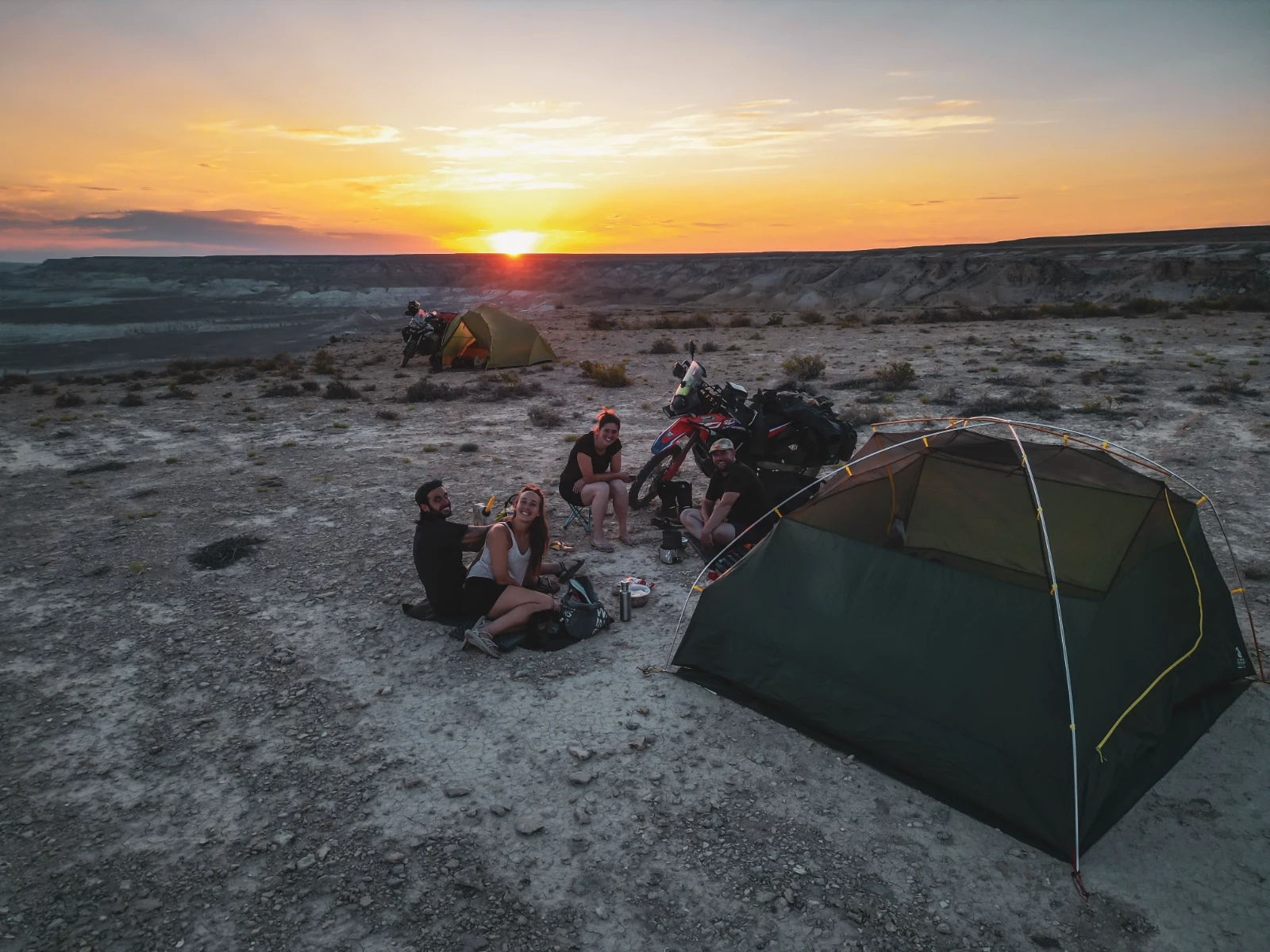
Around 19:30, we found a spot that looked idyllic — a flat patch of earth on the canyon’s edge, views in every direction, no sign of human life for as far as a drone could see. We set up camp, cooked instant noodles, watched the sun set in shades we don’t have names for. Perfect, right? Almost. Around midnight, the wind arrived. Not a gentle breeze — a sustained, howling gale that tested every tent peg we owned. Nobody slept. The desert giveth with one hand and taketh with the other.
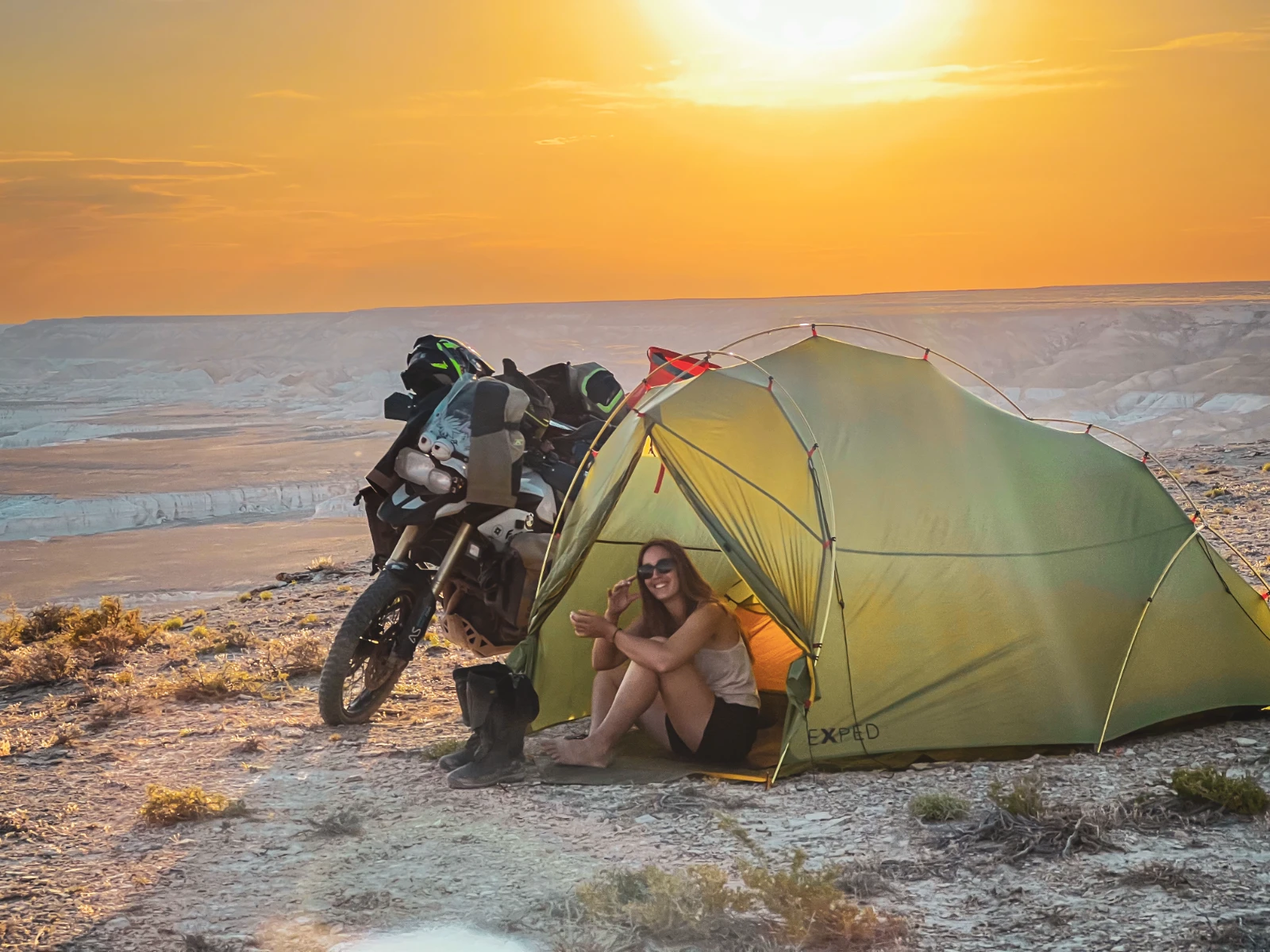
The next morning brought softer pistes — briefly. We descended from the plateau into the deeper desert, and the terrain quickly remembered its personality. Sand banks, corrugated washboard, steep climbs with loose surfaces — not what a heavily loaded two-up adventure bike loves, and our friends Sander and Iris on their Honda CRF 450 disappeared into the distance with unnerving ease.
Moreover, our water reserves were looking less comfortable than we’d hoped. There is nothing out here — and we mean nothing. No buildings, no wells, no roads. Then, through the heat shimmer, a mirage became real: an enormous truck, stationary on the piste, with three Kazakh workers having their lunch. After a brief, highly photogenic exchange involving much gesturing, pointing at our bottles and enthusiastic nodding, they handed us 20 litres of cool water and asked for nothing but photos. The absolute dream.
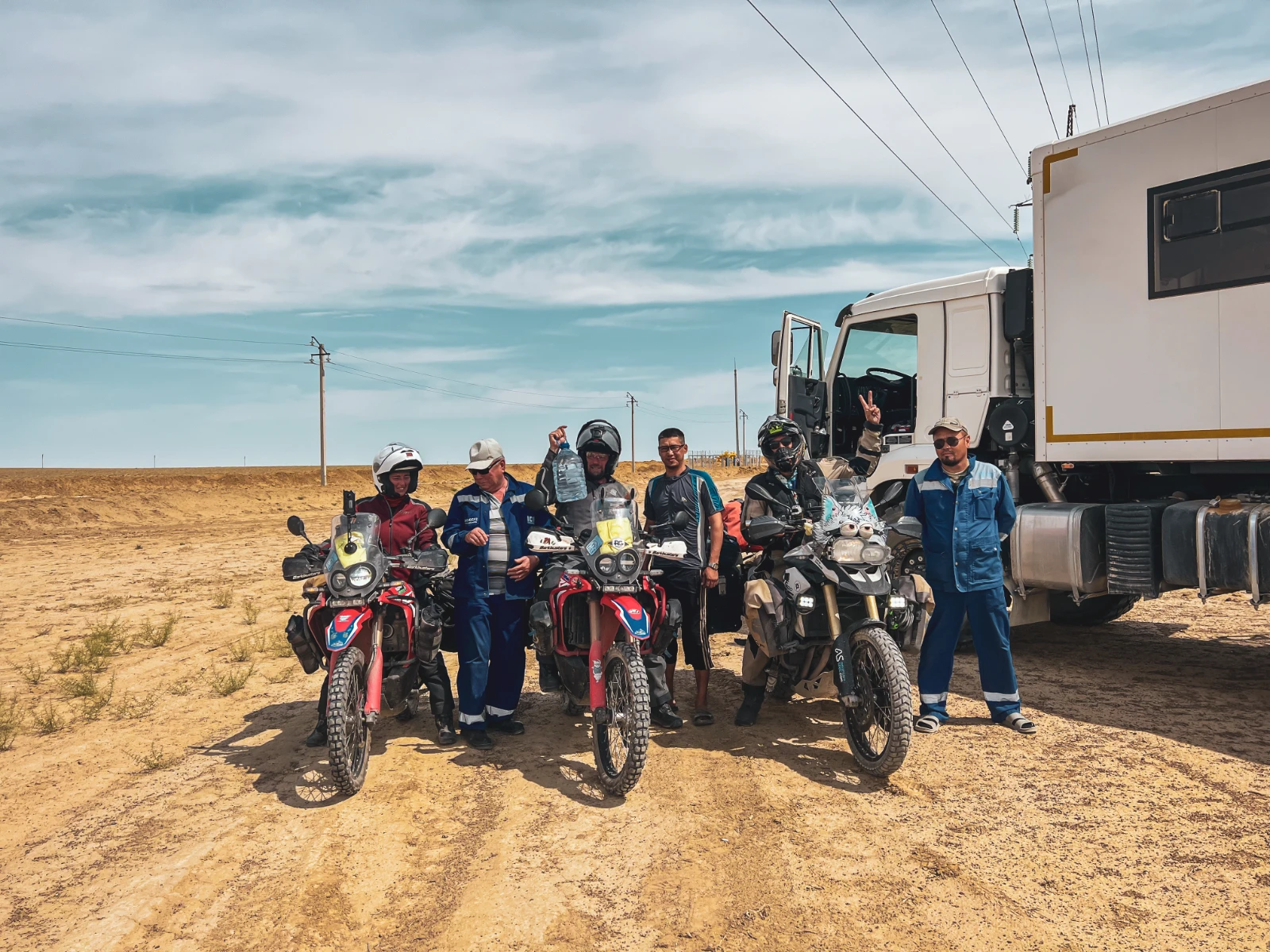
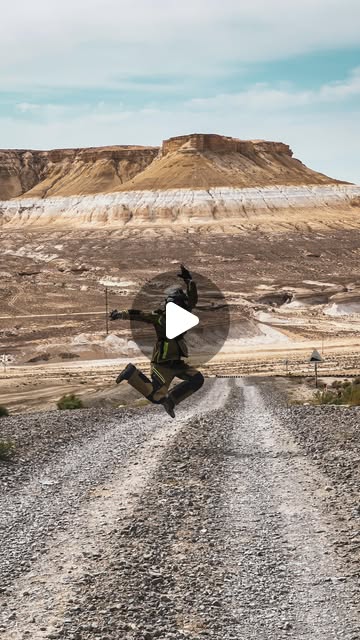
The day continued in the same rhythm: tôle ondulée, sand, camels wandering across the piste, and the occasional herd of wild horses appearing from nowhere and vanishing just as quickly. There are moments in this desert when you genuinely forget you are on Earth. This was one of them. Around 14:00, after thoroughly earning it, we reached the outskirts of Zhanaozen — our first contact with civilisation since leaving the tarmac.
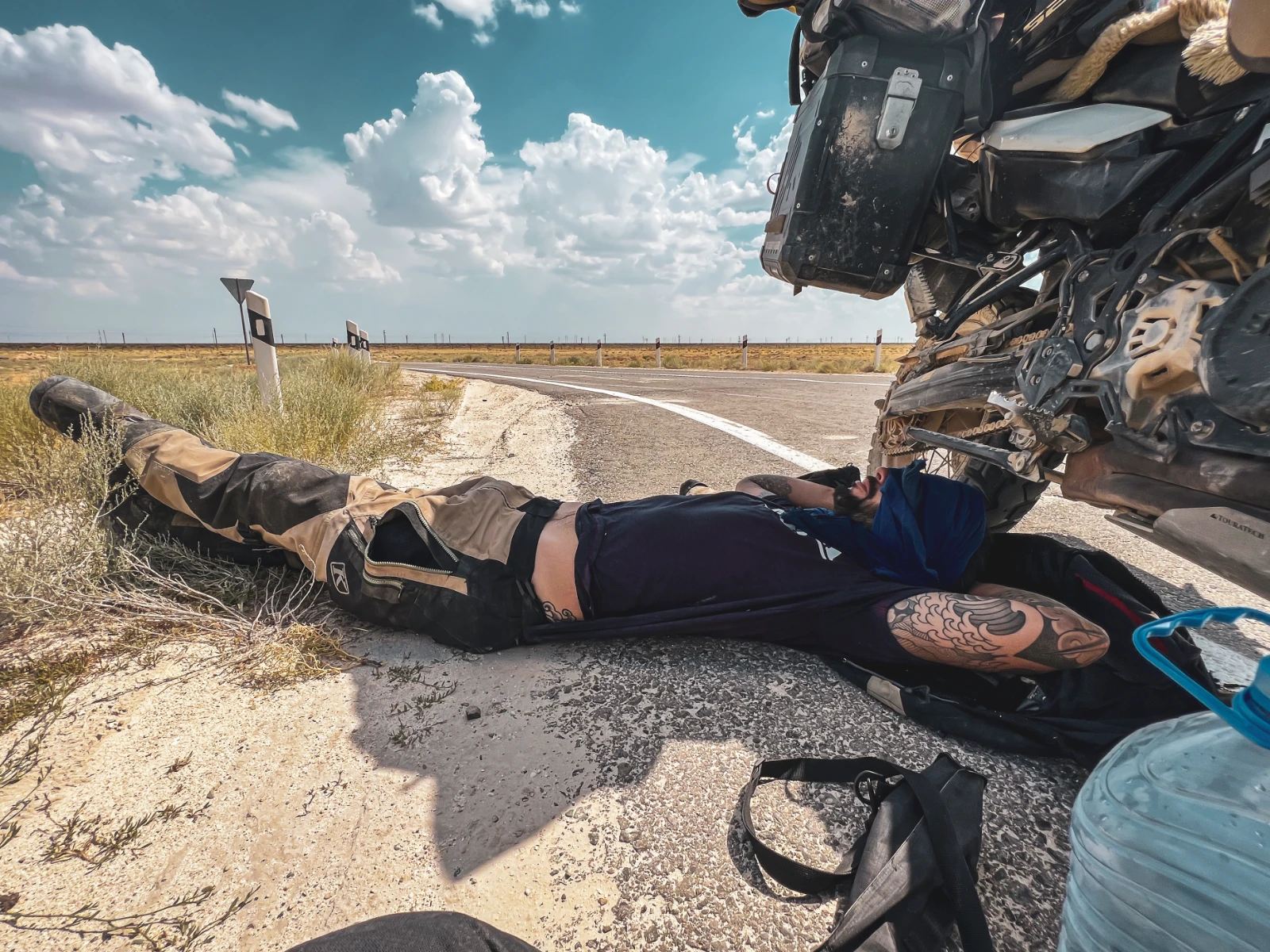
One final drama: Iris’s CRF refused to start at the city entrance. We parked outside the fire station (a solid choice for mechanical emergencies), found shade under a tree, and waited for the engine to cool down. Overheating in 42°C air. The moto eventually started again, confirming what we’d suspected: even machines have limits out here.
Zhanaozen — Oil Wells, Showers & a Mandatory Rest Day
On the approach to Zhanaozen, you understand immediately why Kazakhstan keeps its fuel prices so low: hundreds of oil derricks fill the horizon in every direction, pumping steadily from the Mangystau basin. The price we paid at the pump — about 45 cents per litre — suddenly made complete sense.
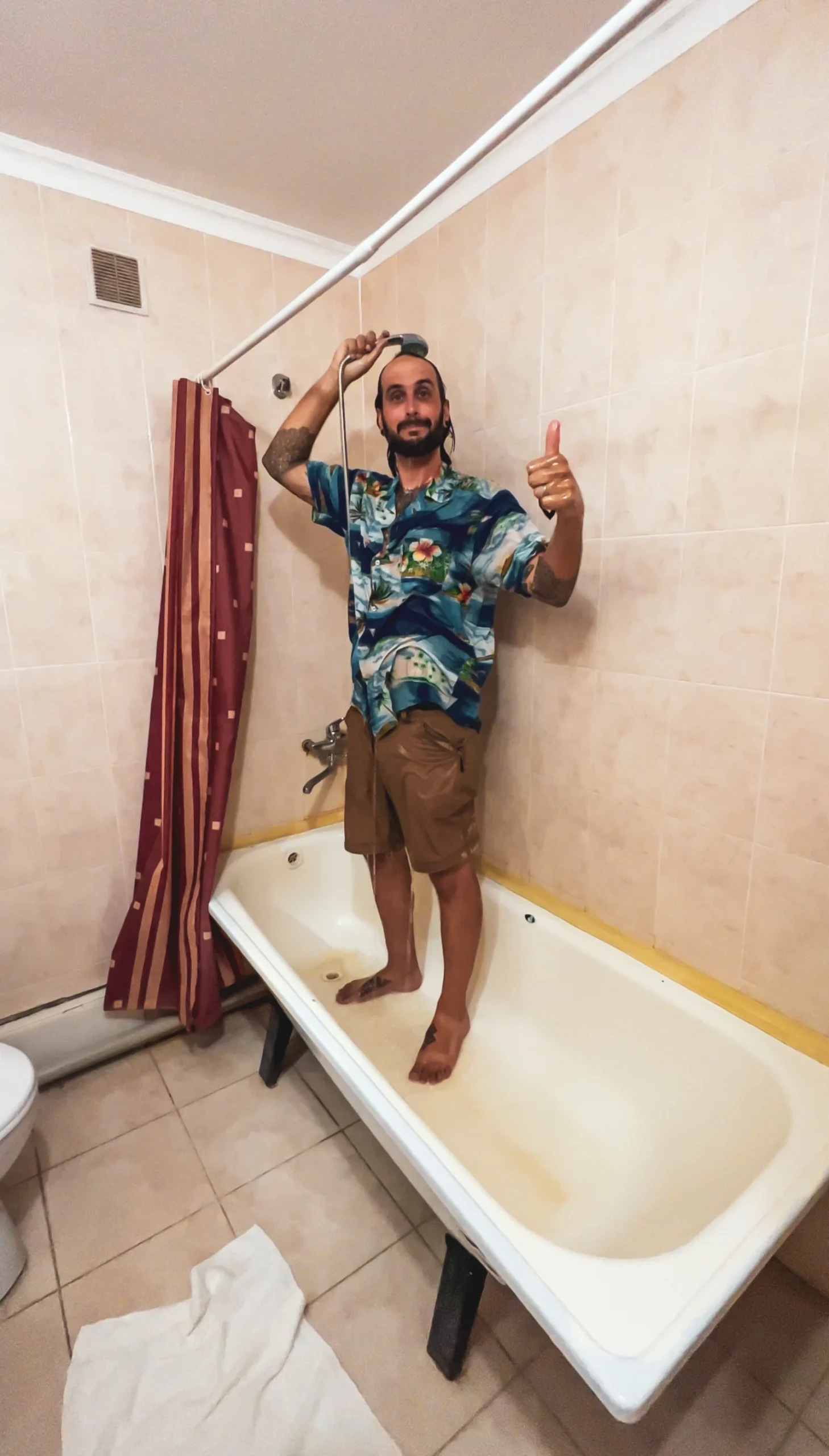
We spent a forced rest day in the city. Naya’s body demanded it, and frankly, so did all of ours. We recharged every battery — human and electronic — filled up the tanks and jerry cans, and mentally prepared for what the forecast promised: 50–72 km/h winds and 40°C+ for the next section. The day was not without entertainment: we were asked to record another feedback video in a café (again, barely two words before it was over), and Vins filmed a shower scene that thoroughly confused the hotel owner.
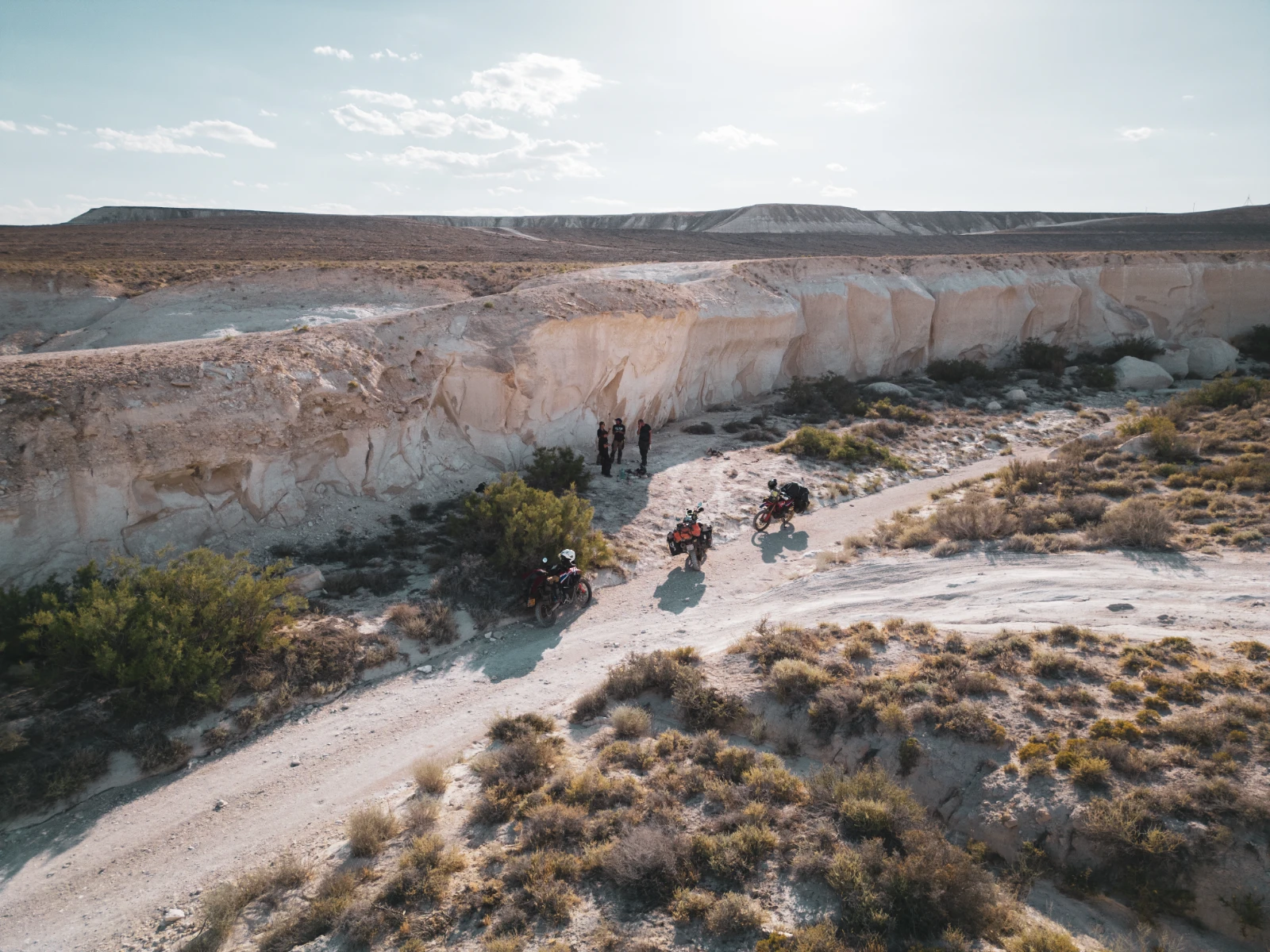
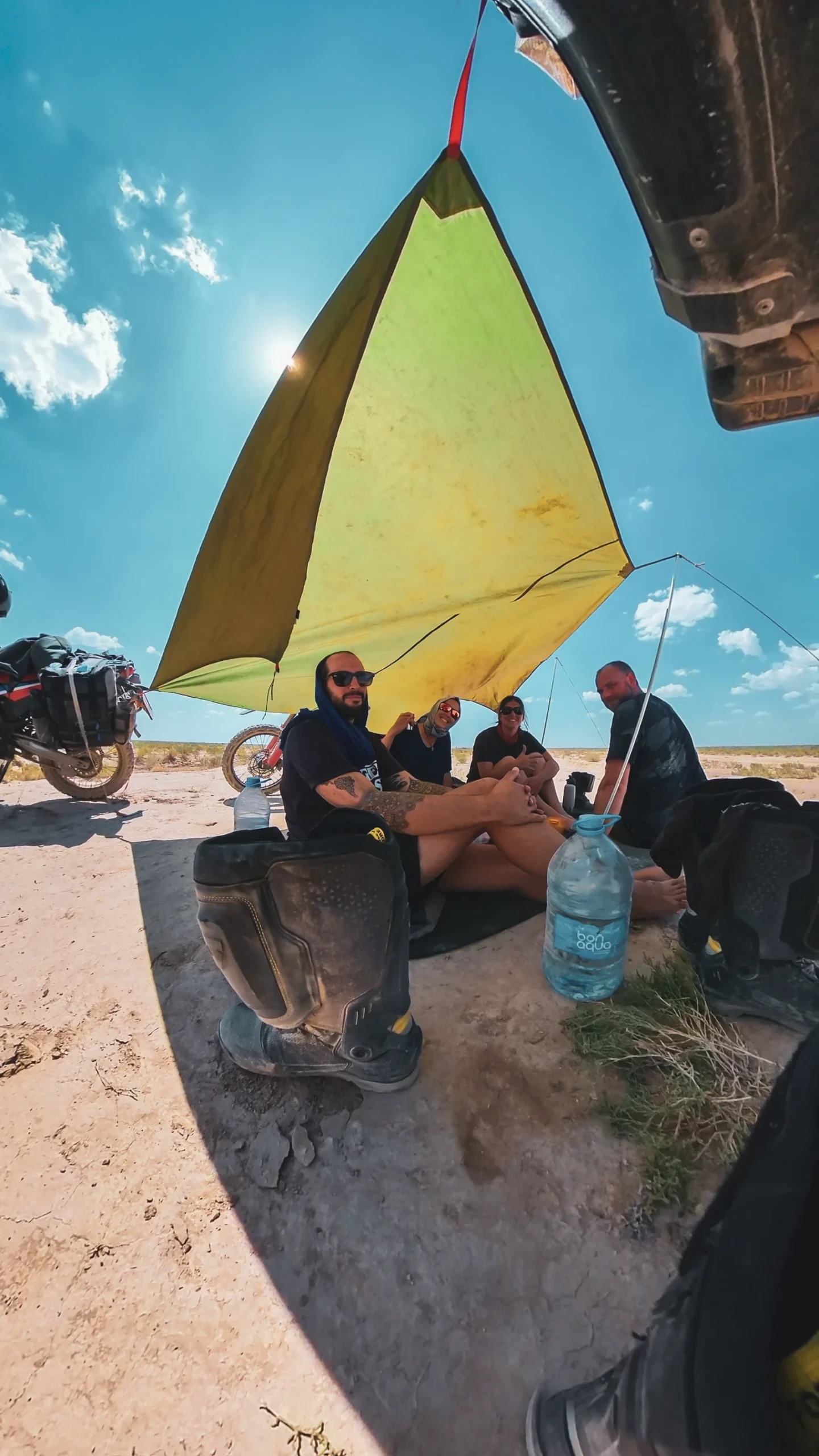
The shadow question, by the way, is not trivial in Mangystau. When the mercury hits 42°C and there are no trees, no buildings, no natural shade for kilometres — the ability to create your own shelter becomes crucial. Sander and Iris had brought a lightweight tarp that could be strung between the two motorcycles, making a surprisingly effective canopy. Invaluable. If you’re planning this route, consider bringing one.
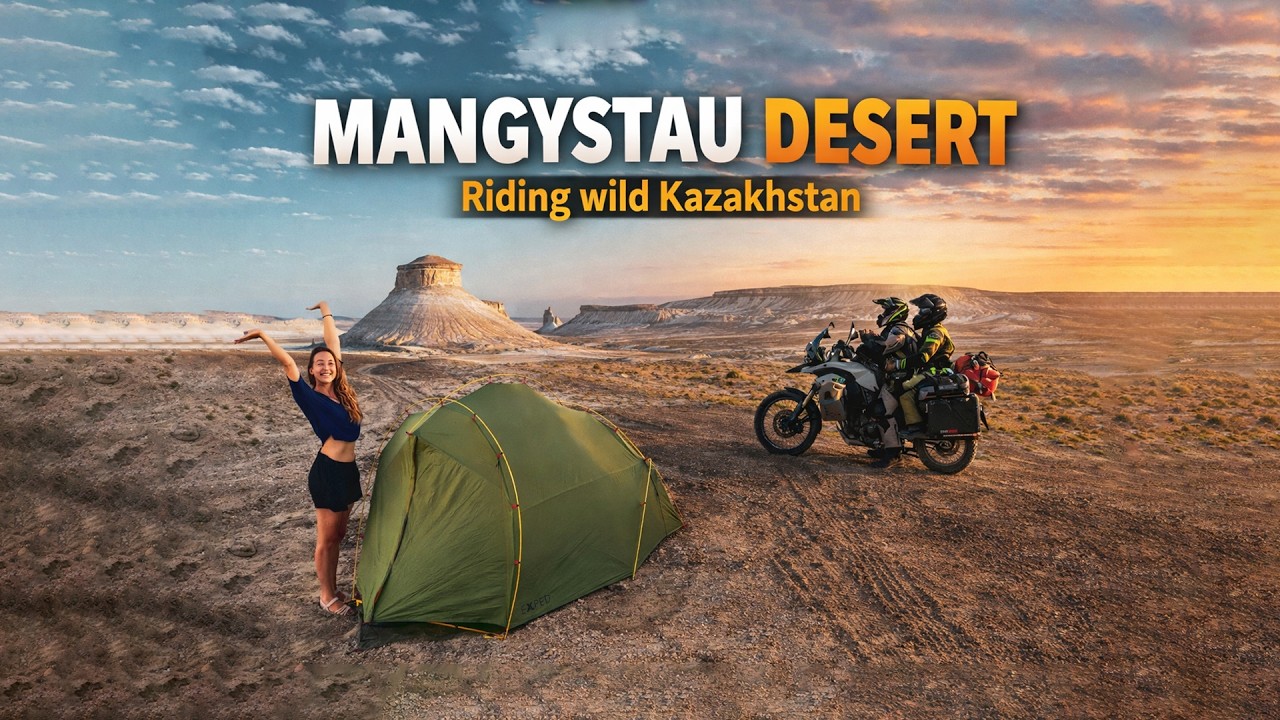
7 Days in the Mangystau Desert — The Complete Story
Everything you’re reading here — the bivouacs, the breakdowns, the sunrise at Bozjyra — is in the vlog. Watch it, then come back to read the guide.
Mangystau Part 2 — Enter Bozjyra
We left Zhanaozen heading east — back into the desert, but deeper this time, targeting the section of Mangystau that riders talk about in hushed tones. The plan was to reach the geological formation of Bozjyra (Urochishche Bozzhyra), wild camp there, and continue the following morning to the underground mosque of Beket Ata before pushing back to Béïnou. Simple enough on paper. 100 kilometres of off-road each way, in 42°C heat, with limited fuel and water. Easy.
We departed in the late afternoon to avoid the worst of the heat — a decision that would, in retrospect, both help and hurt us. The piste immediately revealed its character: chalk-white dust, steep canyon descents, surfaces that felt like powdered bone. The GPS tracks from IOverlander kept us roughly honest, but « roughly » covers a lot of ground out here.

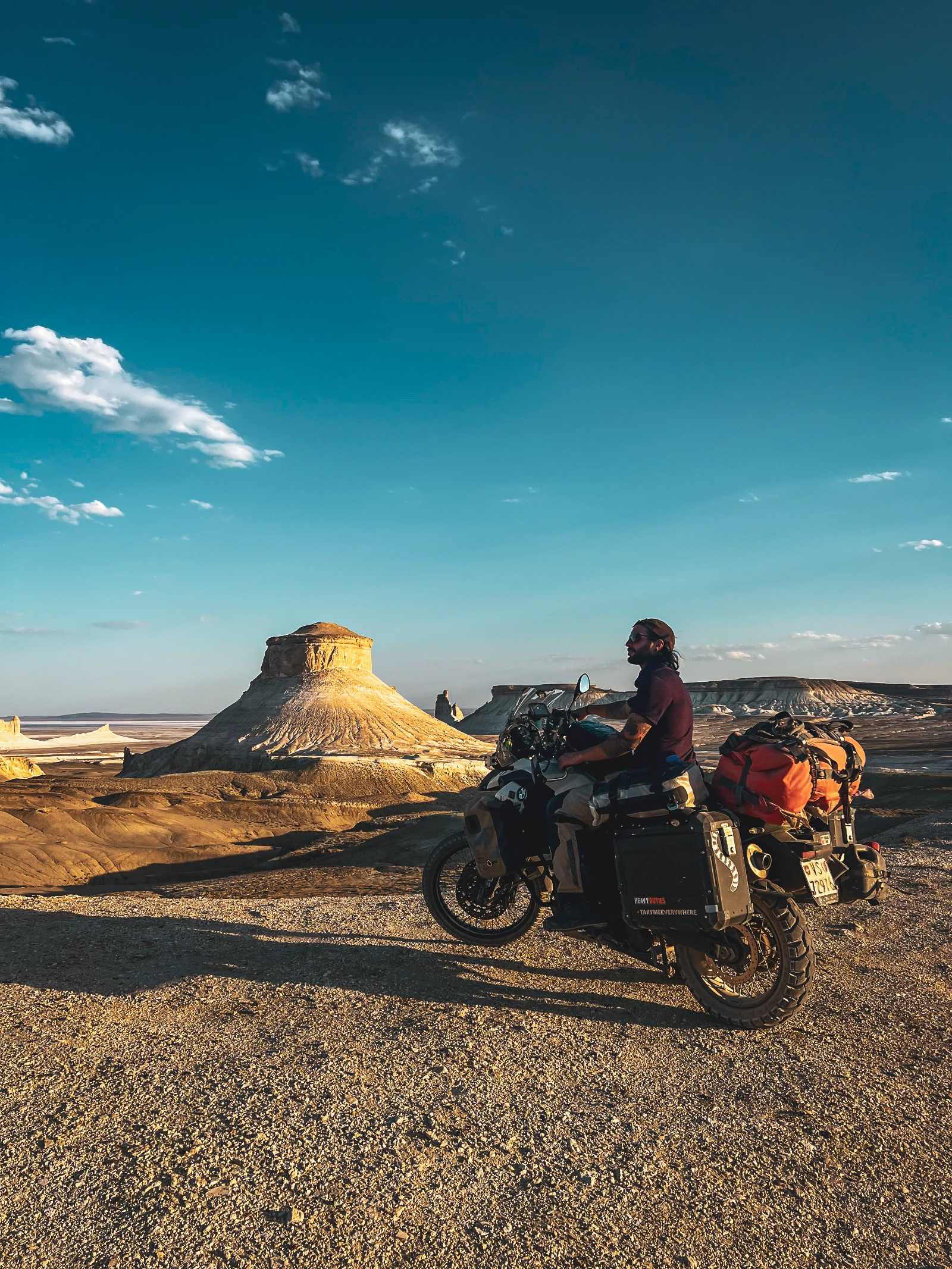
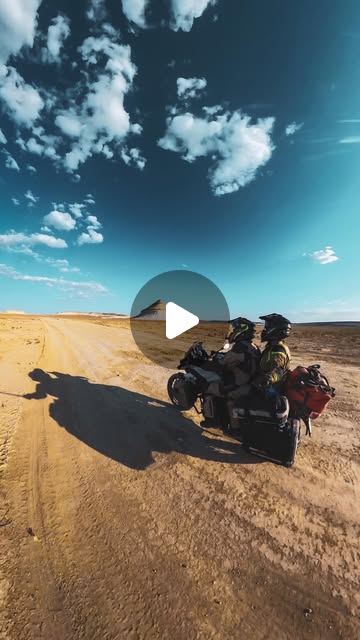
Around 18:30, Iris’s bike stopped again. We were on a slope — fortunately a downward one — and coasted to a patch of shadow between two boulders to let the CRF cool. At this point we faced a real decision: we were unsure whether the piste ahead was rideable, our fuel margin was finite, and the light was starting to fade. We sent the drone on a reconnaissance mission, hovering it above the canyon to scout what we couldn’t see from the ground. The answer was reassuring: after a steep technical section, the piste flattened onto a plateau. We recalculated our fuel, confirmed we had enough, and committed.
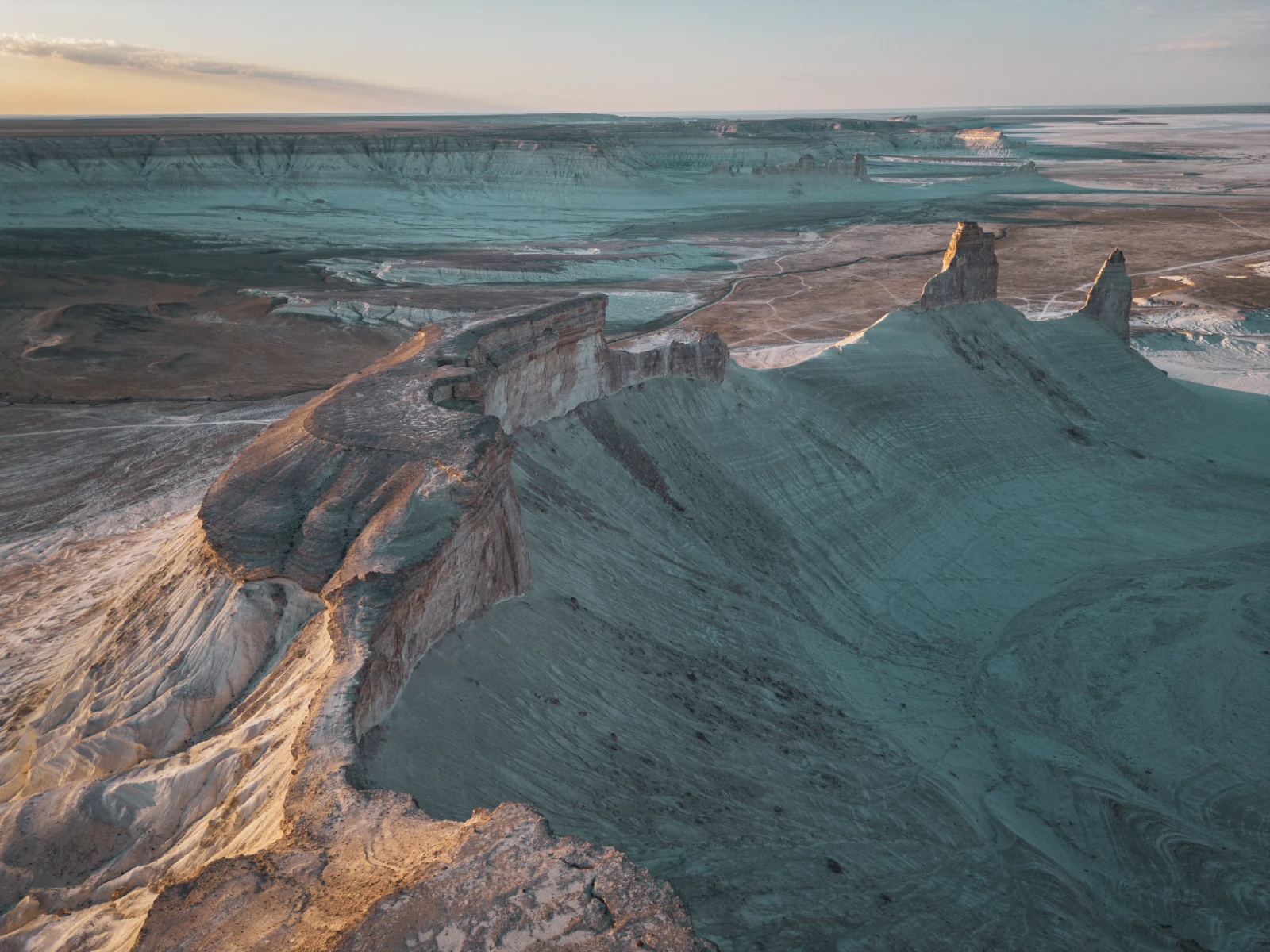
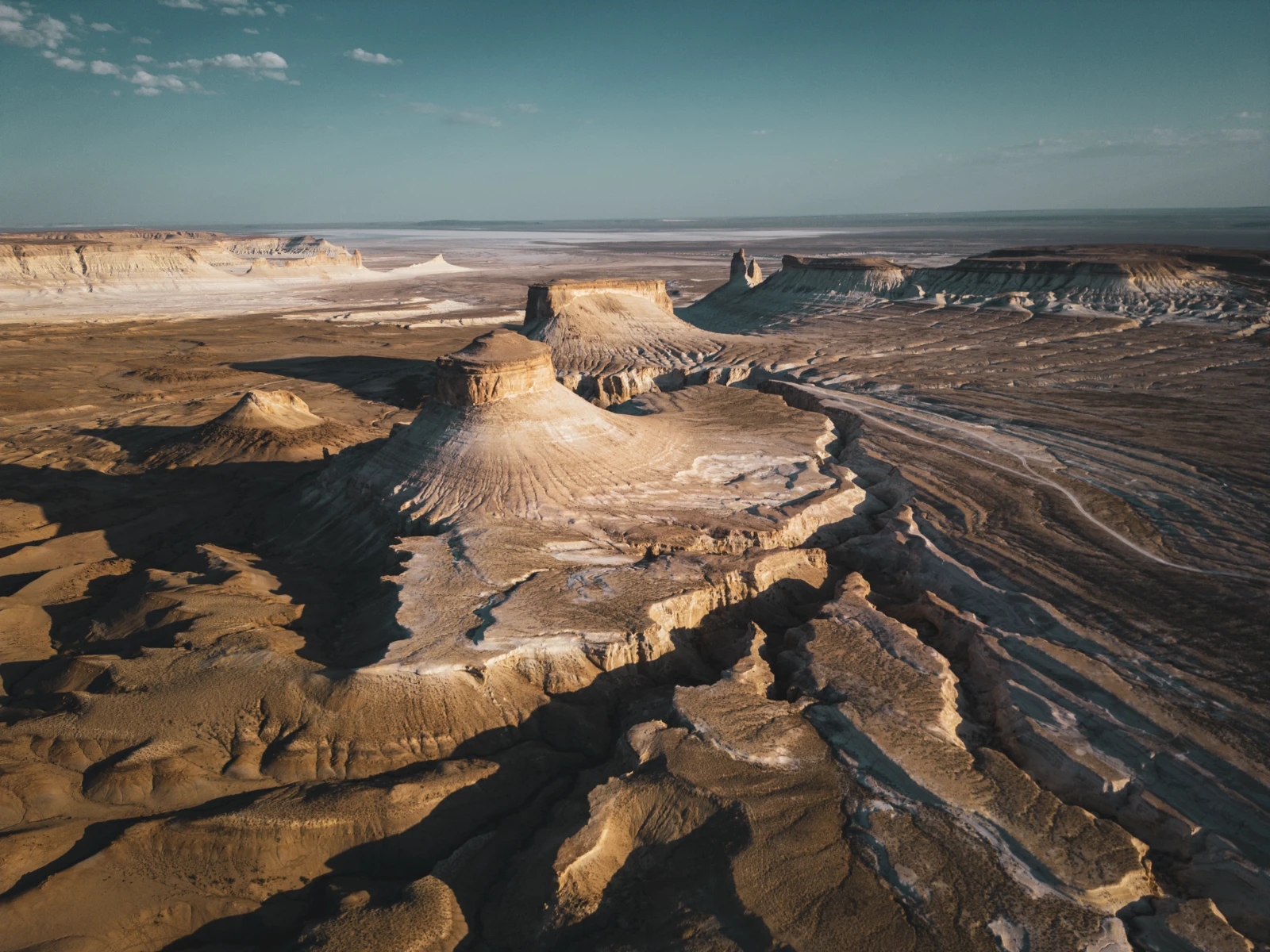
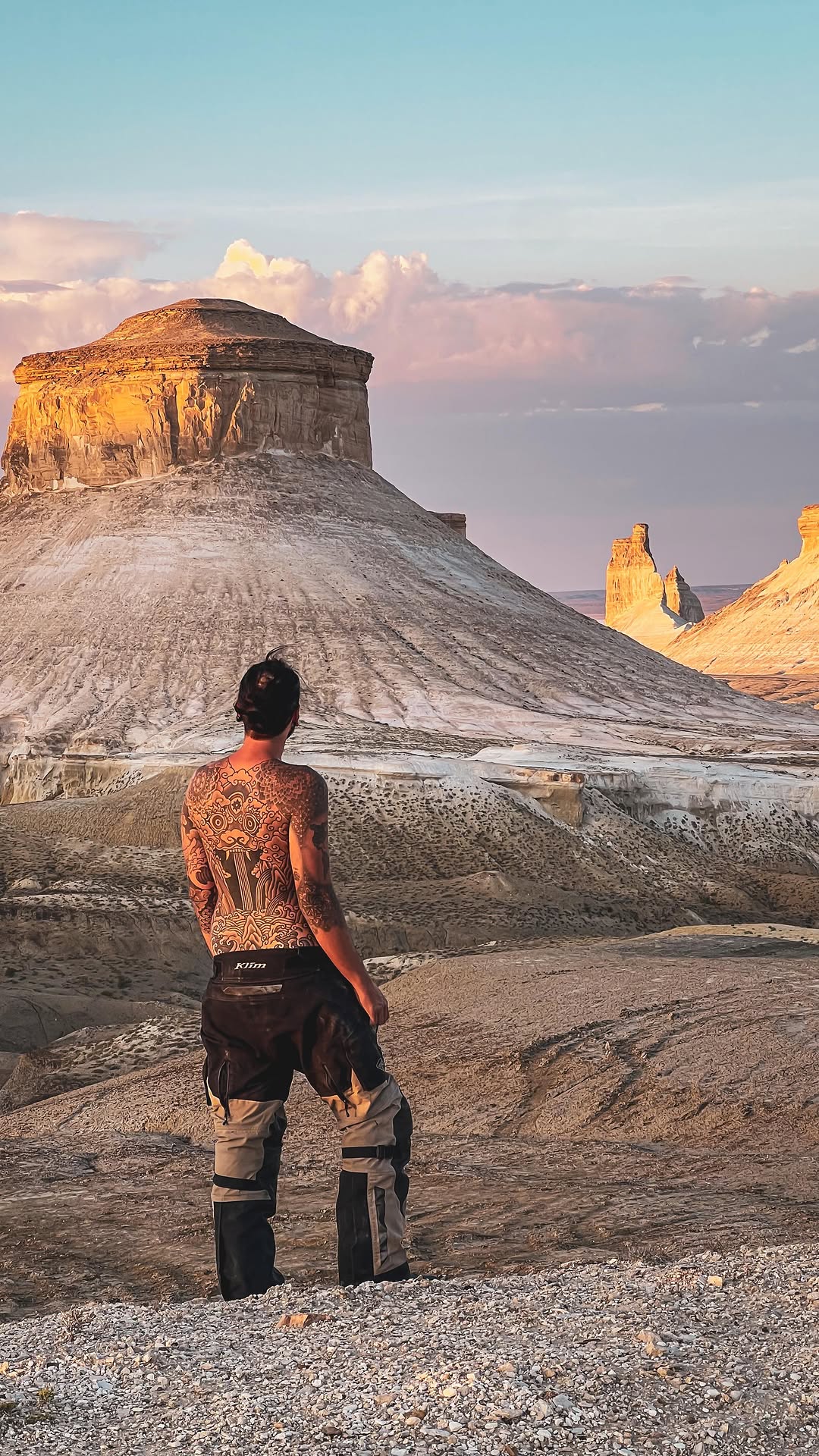
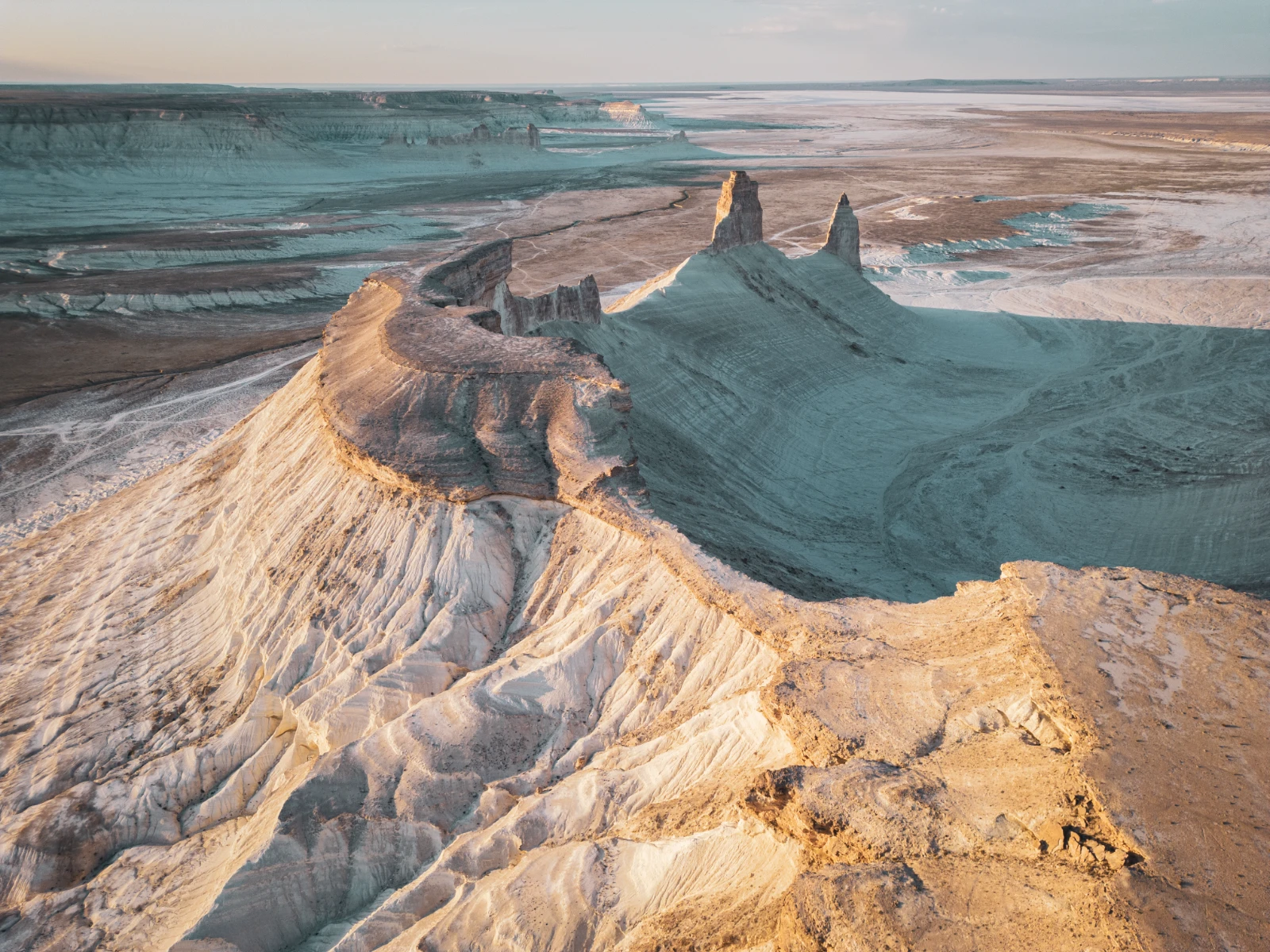
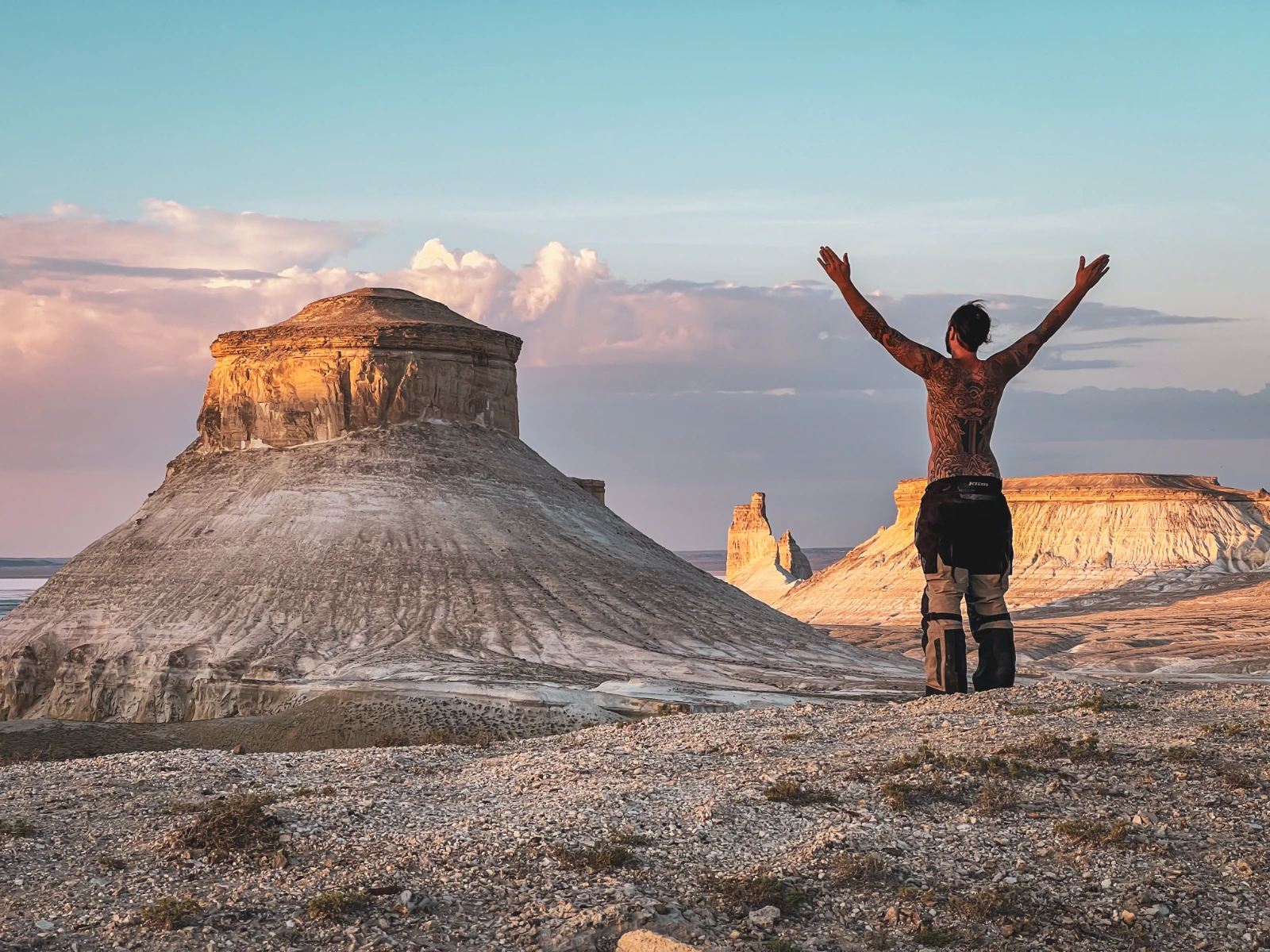
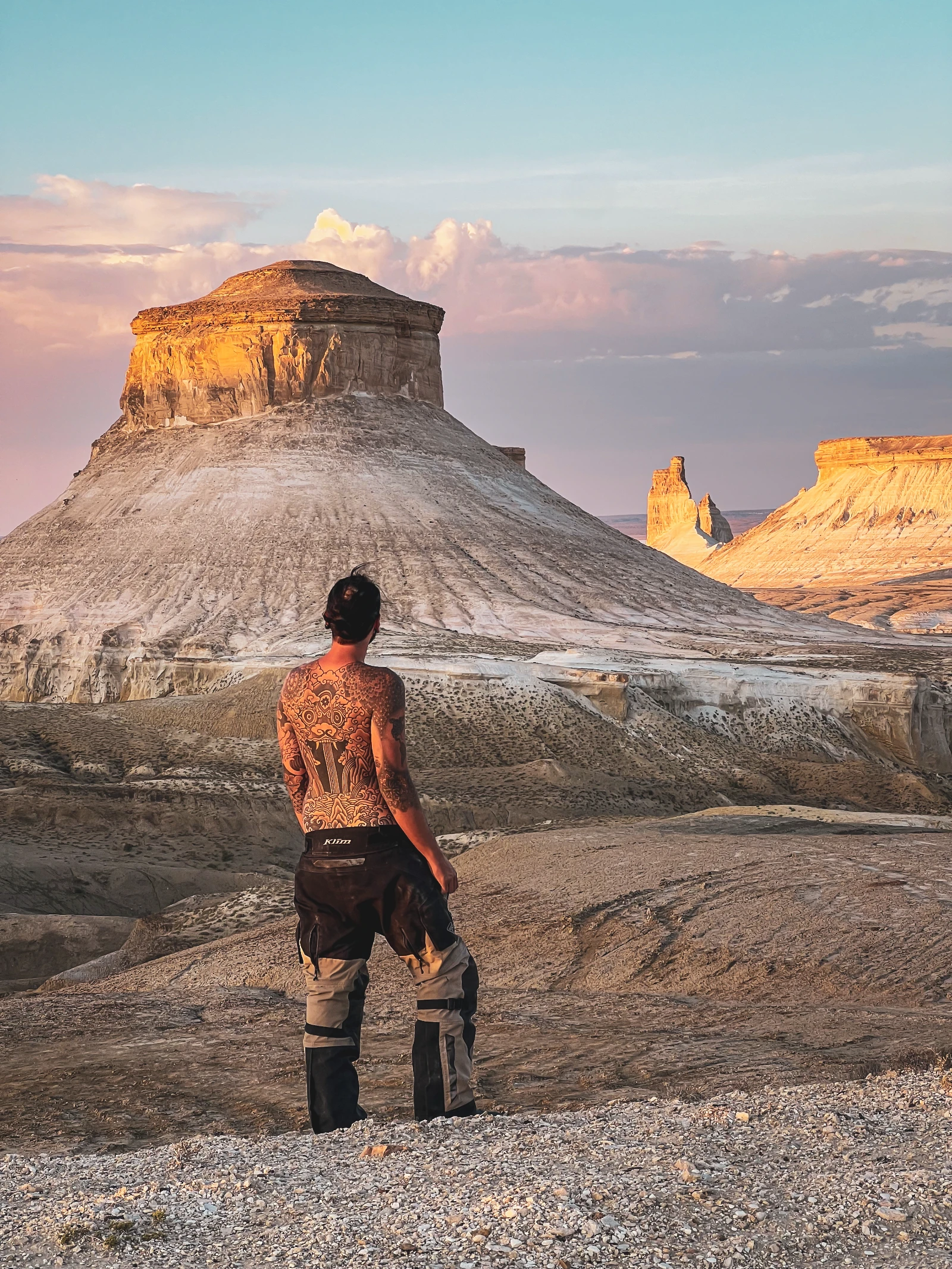
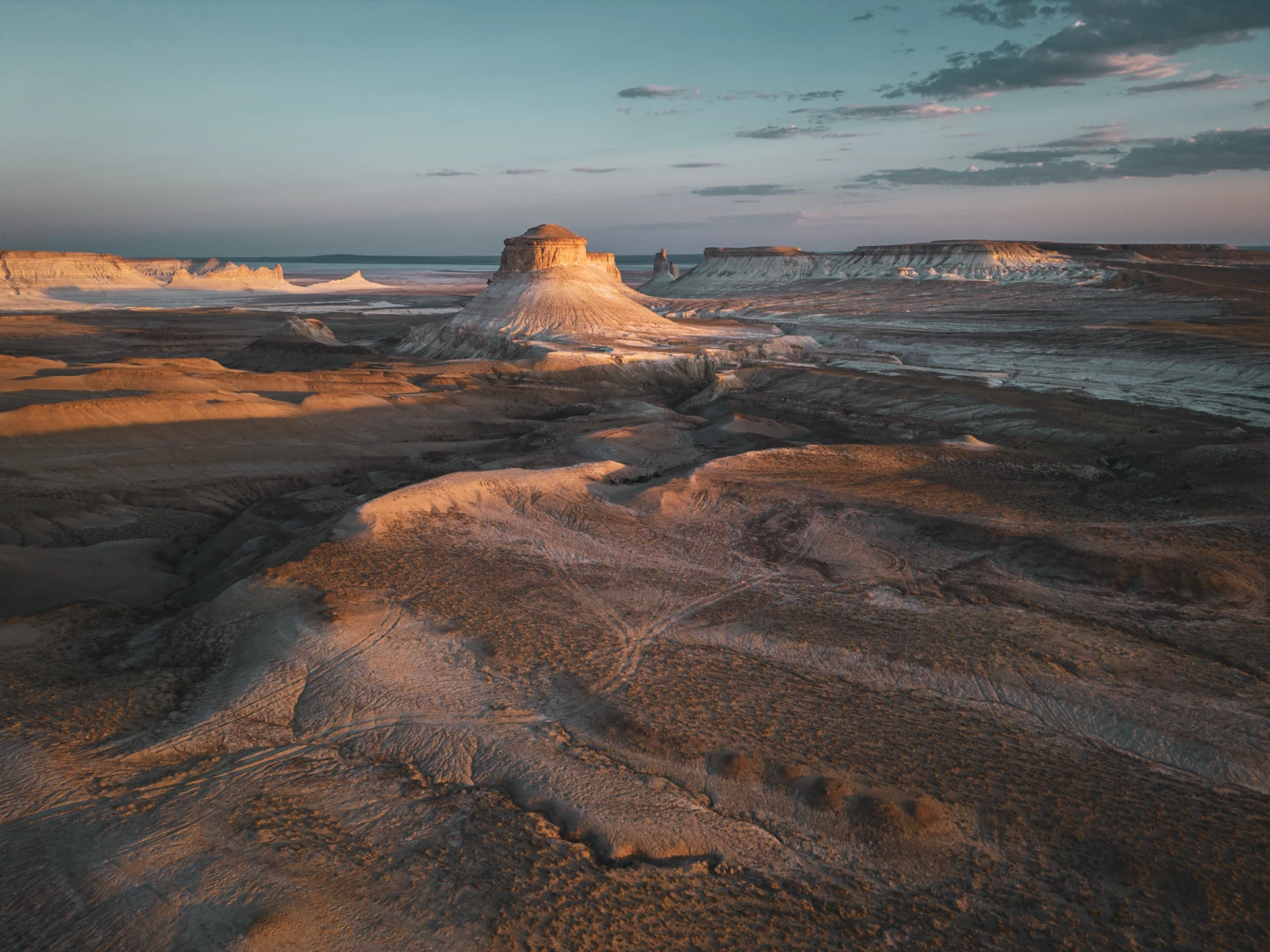
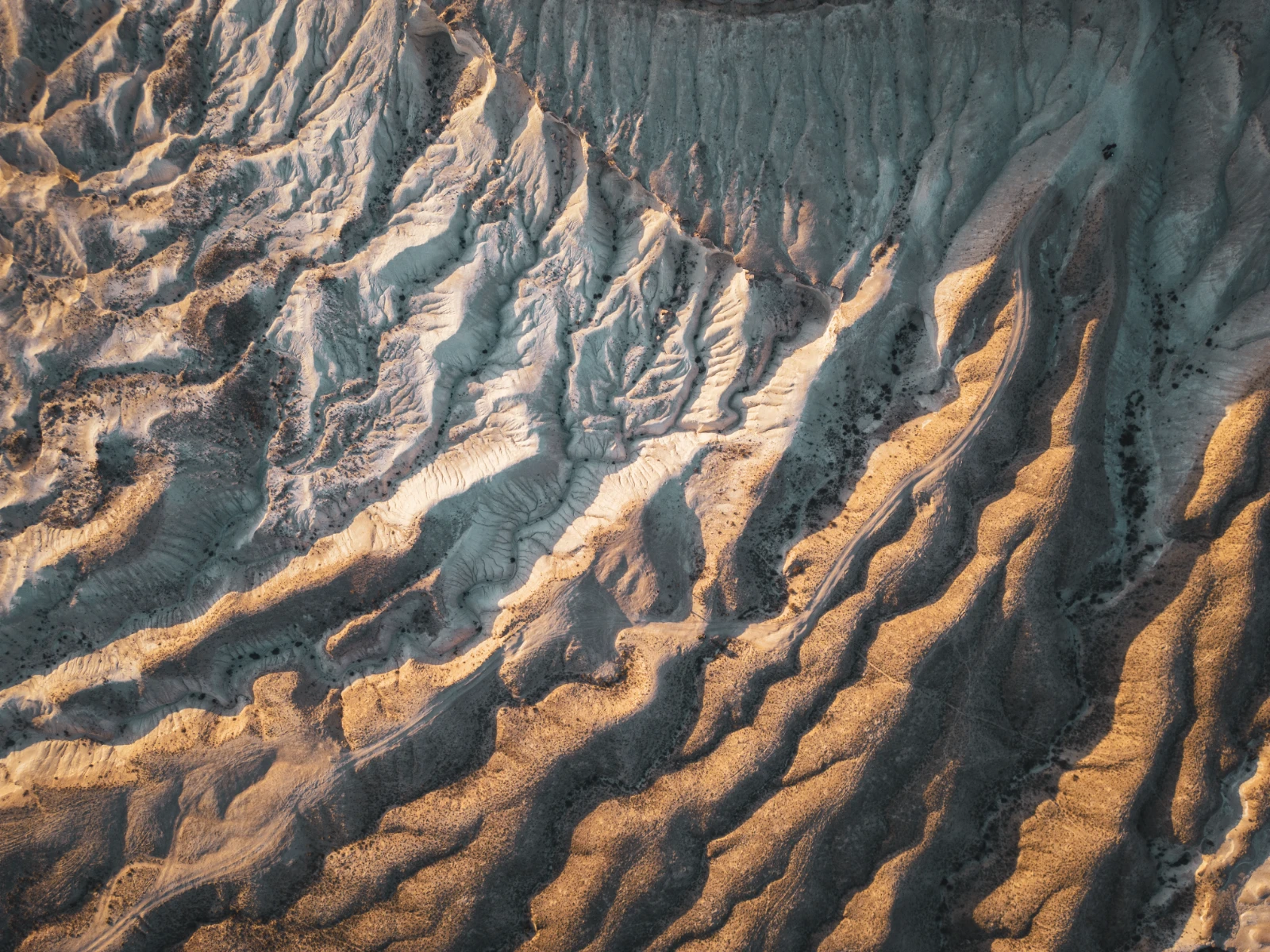
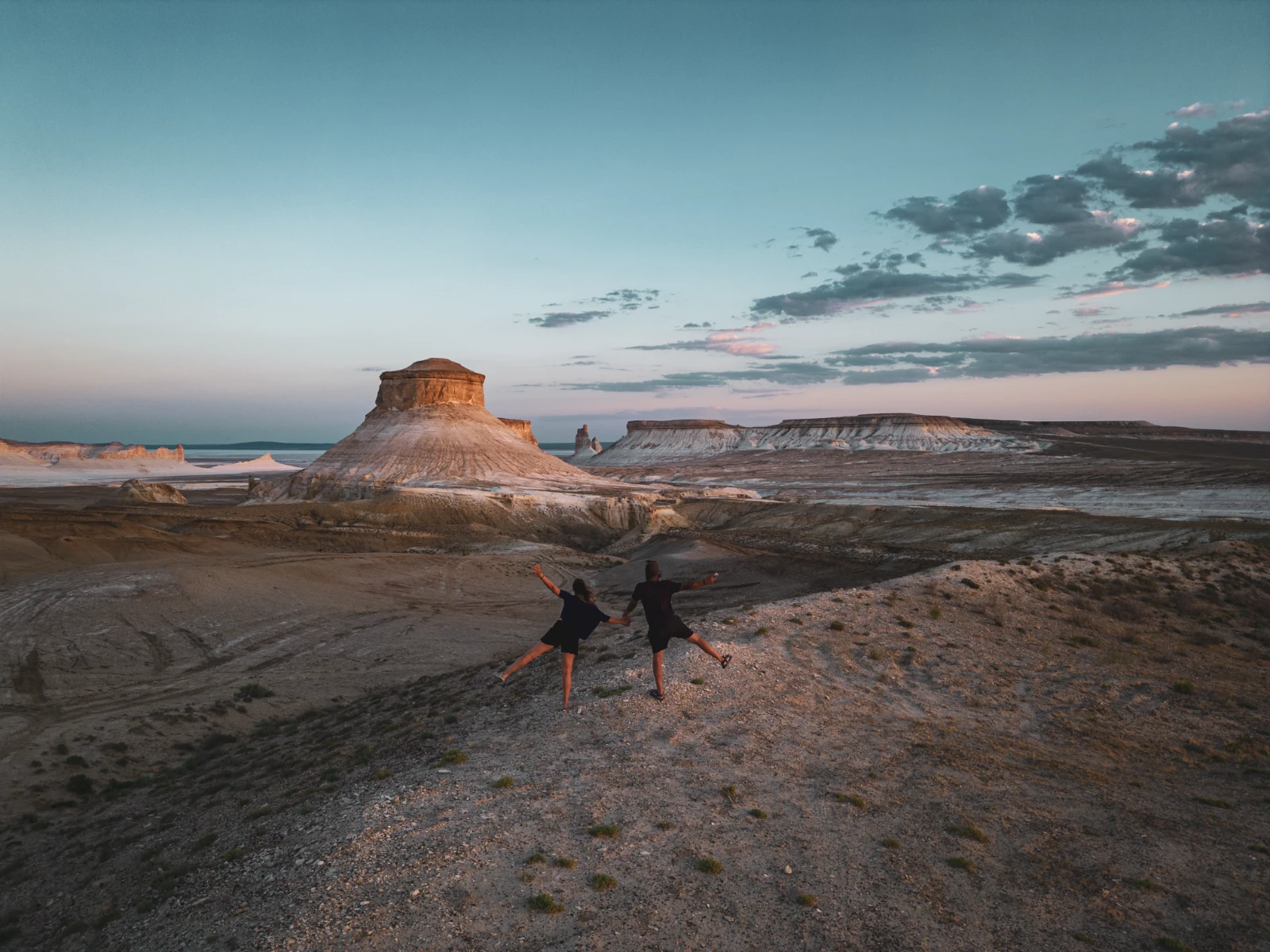
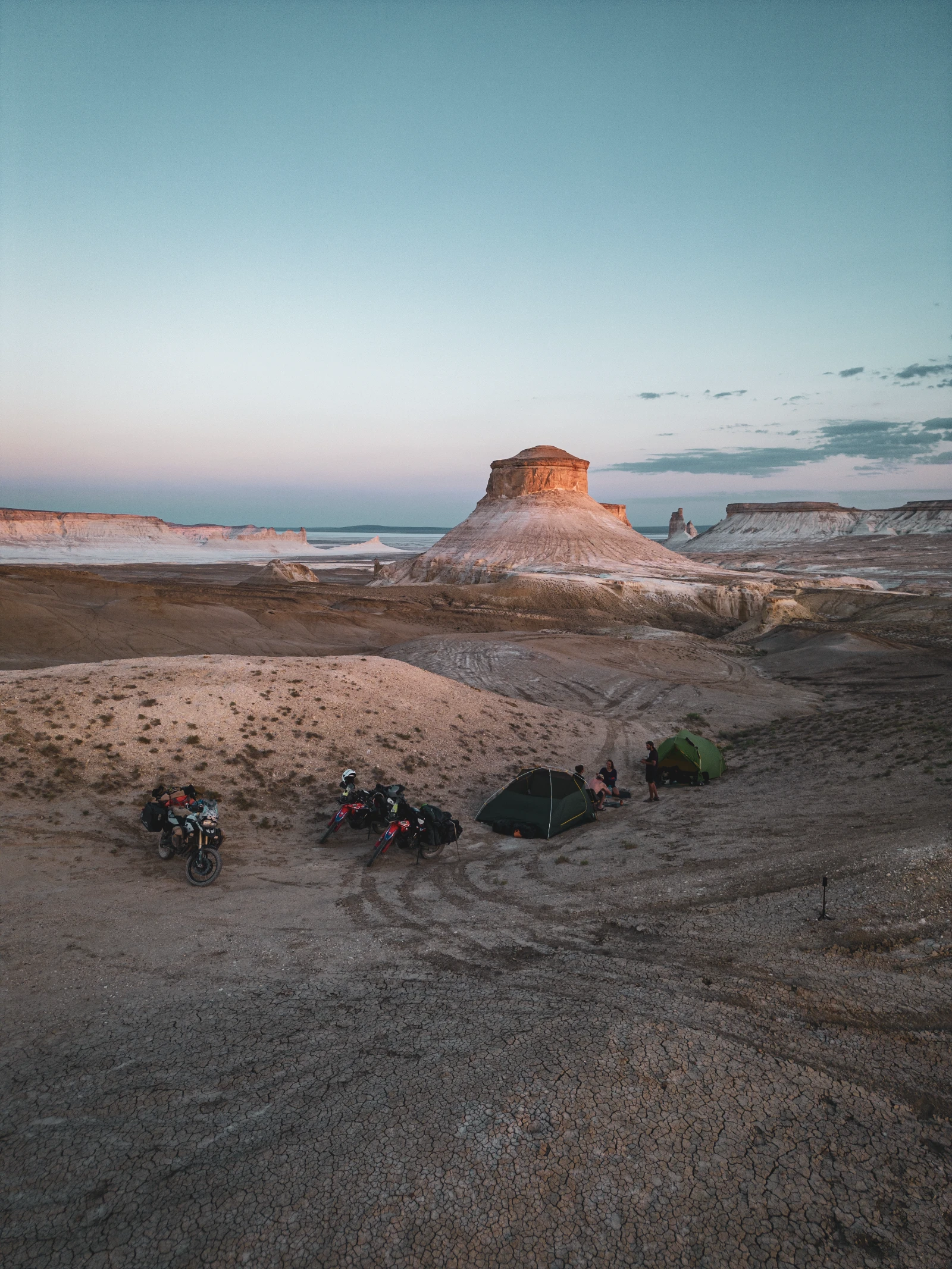
What followed was one of the most memorable rides of our entire journey. The chalk dust turned the air white around us. The descents were long and sweeping. And then — slowly, as if the landscape was holding its breath before the reveal — the formations of Bozjyra appeared. White pinnacles rising from a canyon floor like the teeth of something enormous. Tiers of rock in colours that had no business being in a desert: ochre, bone, pale gold. A mix of Bolivia’s Altiplano, Arizona’s Monument Valley, and something that had no name in any landscape we’d seen before.
The Most Beautiful Bivouac of Our Lives
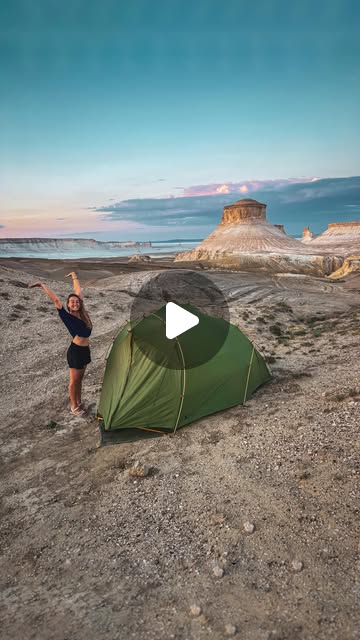
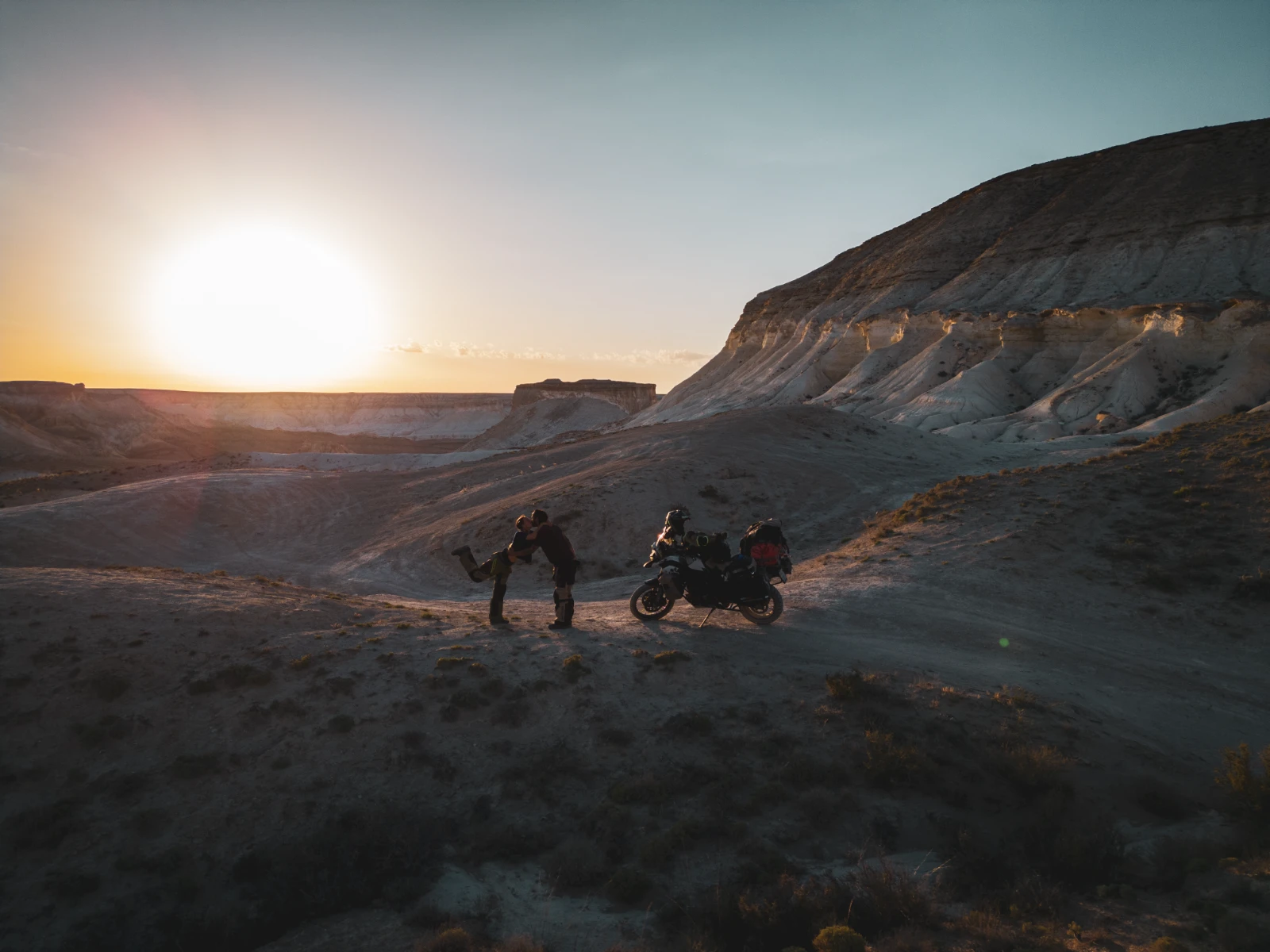
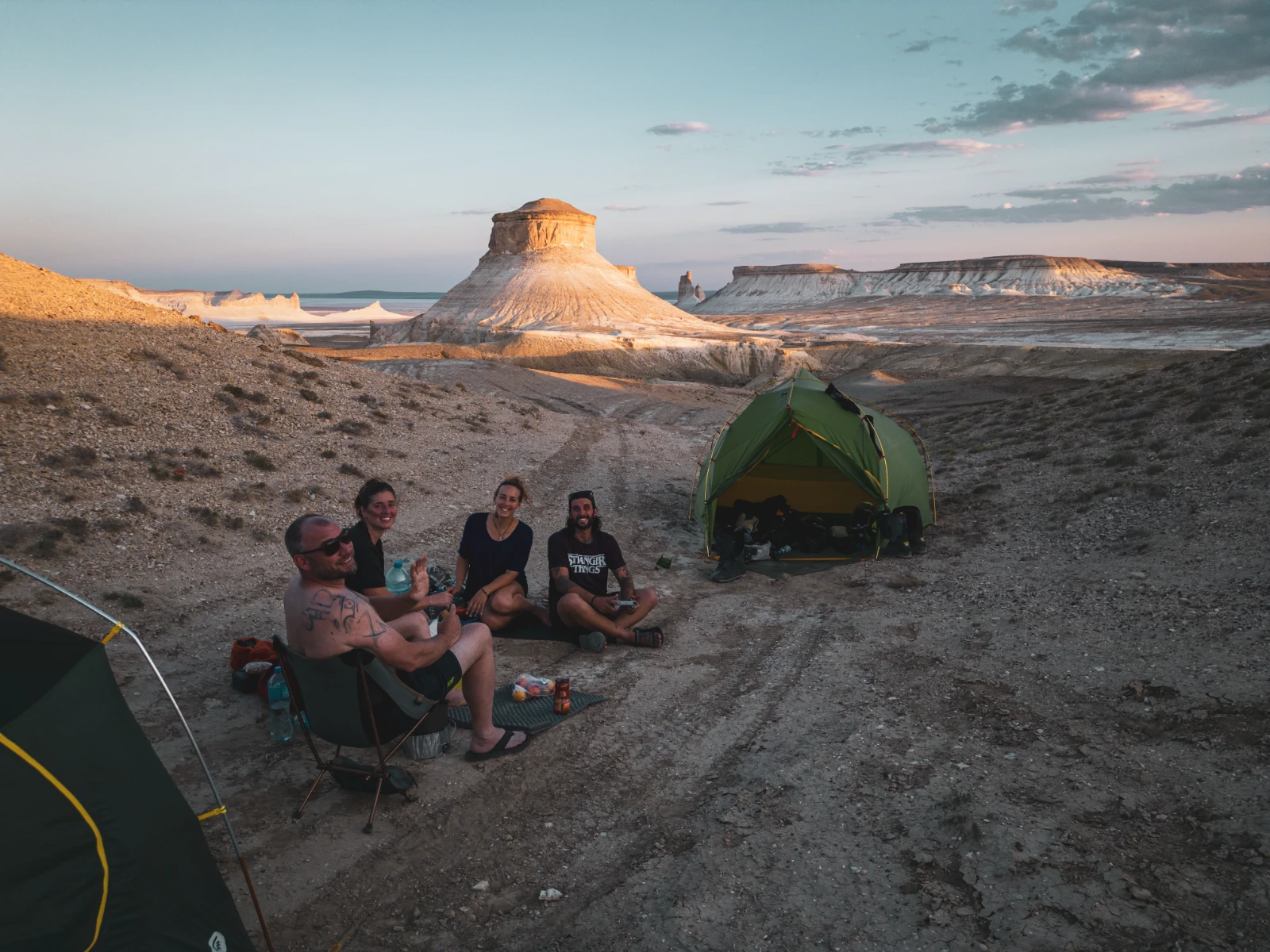
At around 20:00 we found our spot. Sheltered from the wind by a rocky outcrop, perched at the edge of the canyon with Bozjyra spread out below us, the sky beginning its slow transition from blue to copper. We planted our tents, lit Sander’s camp stove, and cooked a real meal for the first time in days. At 22:00, the last light disappeared and the stars came out — not city stars, not highway stars, but desert stars: the full inventory, every single one of them, undimmed by any human light source within fifty kilometres.
We have slept in some extraordinary places over the years. But this bivouac at Bozjyra is — without any competition — in the top two or three of our lives. If you ever have the chance to spend a night in Mangystau, make it this one.
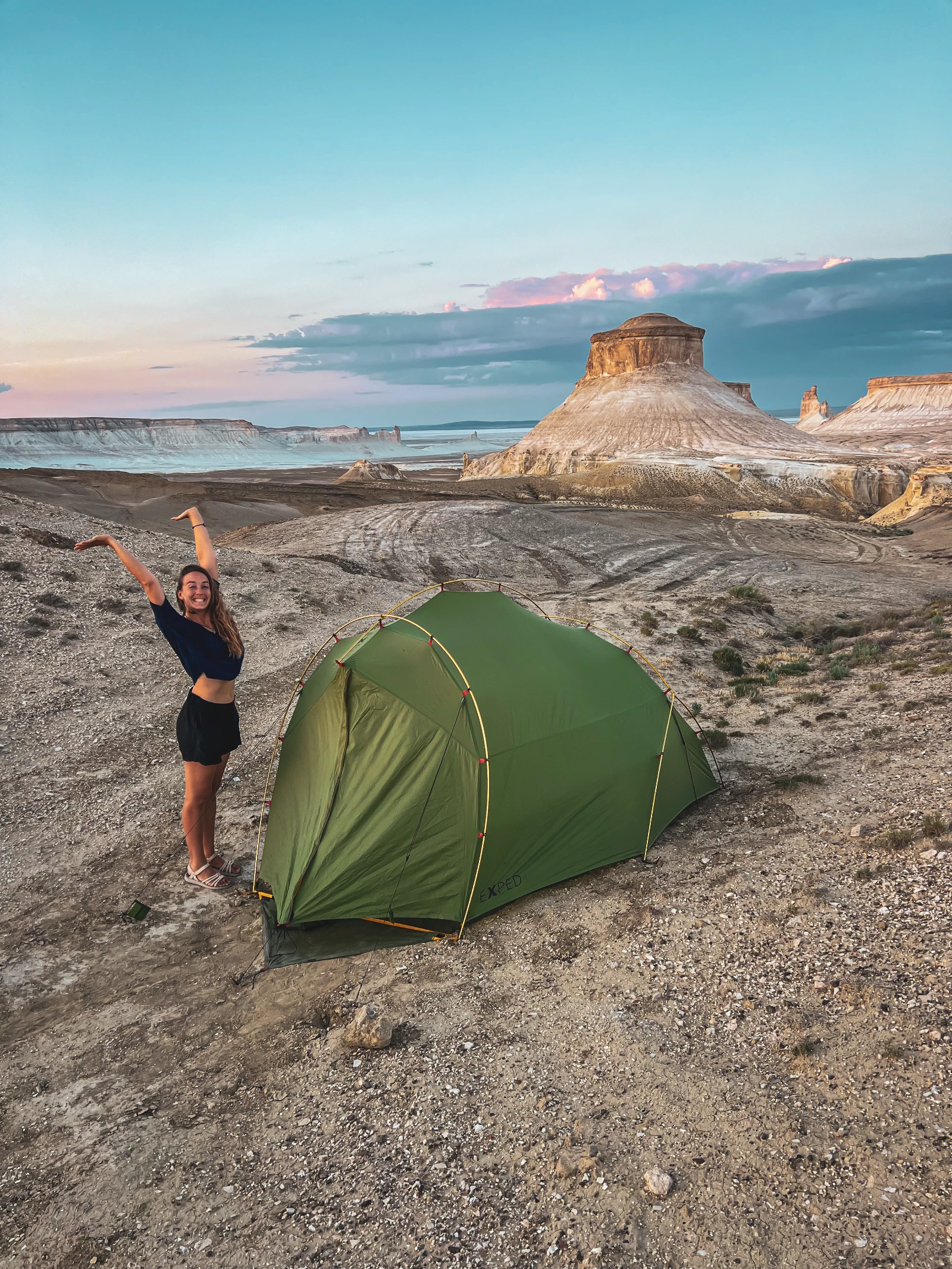
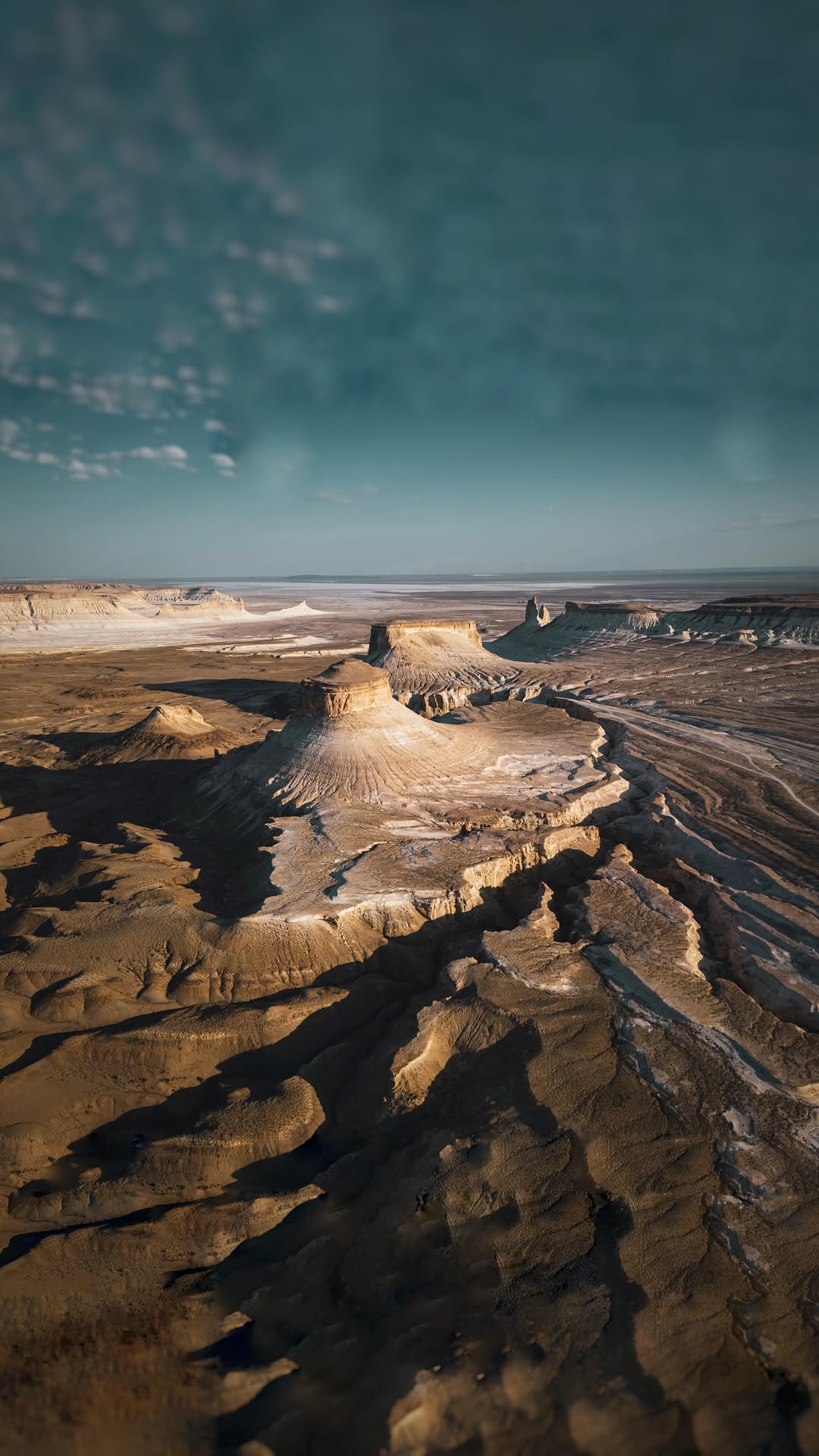
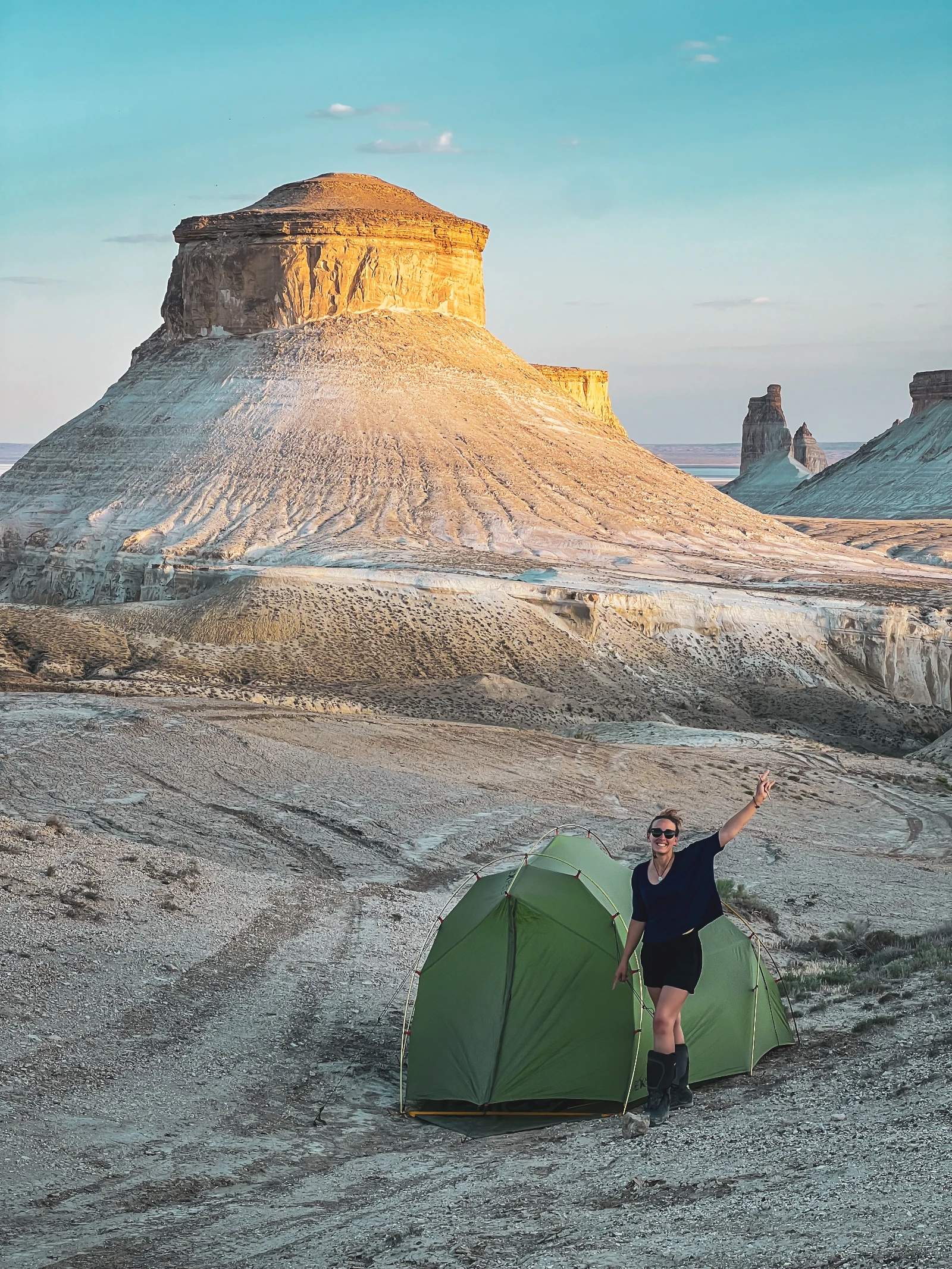
We set an alarm for 05:30 to catch the sunrise. This is, we will admit, not a natural state for us. But the light at Bozjyra at dawn is among the most extraordinary things we’ve ever seen. The canyon glowed. The Insta360 earned its keep. We spent the early morning photographing, filming, and simply standing in silence because there was absolutely nothing intelligent left to say.
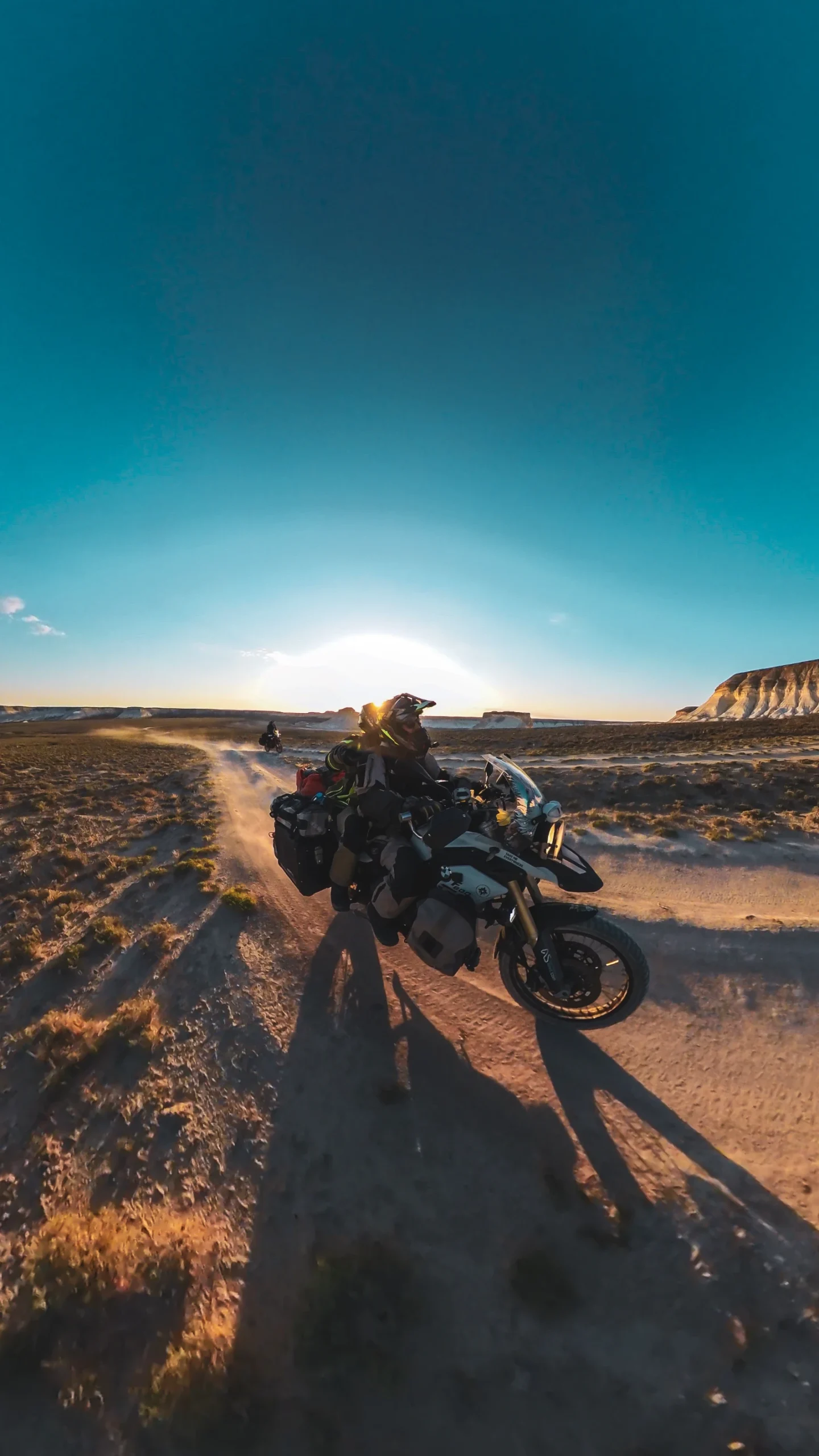
Beket Ata & the 135 km of Hell
The morning after the bivouac, we attempted to ride to a viewpoint. The slope was simply too steep for two-up on Falkor, so we turned around and used the drone instead. Then came the inevitable reckoning: everything we’d descended the previous evening, we now had to climb back in full sunlight. Falkor handled it in trial mode, picking our way up switchbacks that made us grip the bars a little harder than usual.
Back on the plateau, we made for Beket Ata — the underground mosque of the Sufi saint, one of the most sacred sites in Kazakhstan, and a practical last water stop before the final push. The site is remarkable: a complex of caves and carved rooms descending into the earth, still used as an active place of pilgrimage. Modest dress is required; visitors of all backgrounds are welcome. After filling our bottles at the site’s water point, we braced ourselves for what the map was showing: 135 kilometres of open steppe piste, with nothing on either side, to reach the road back to Béïnou.
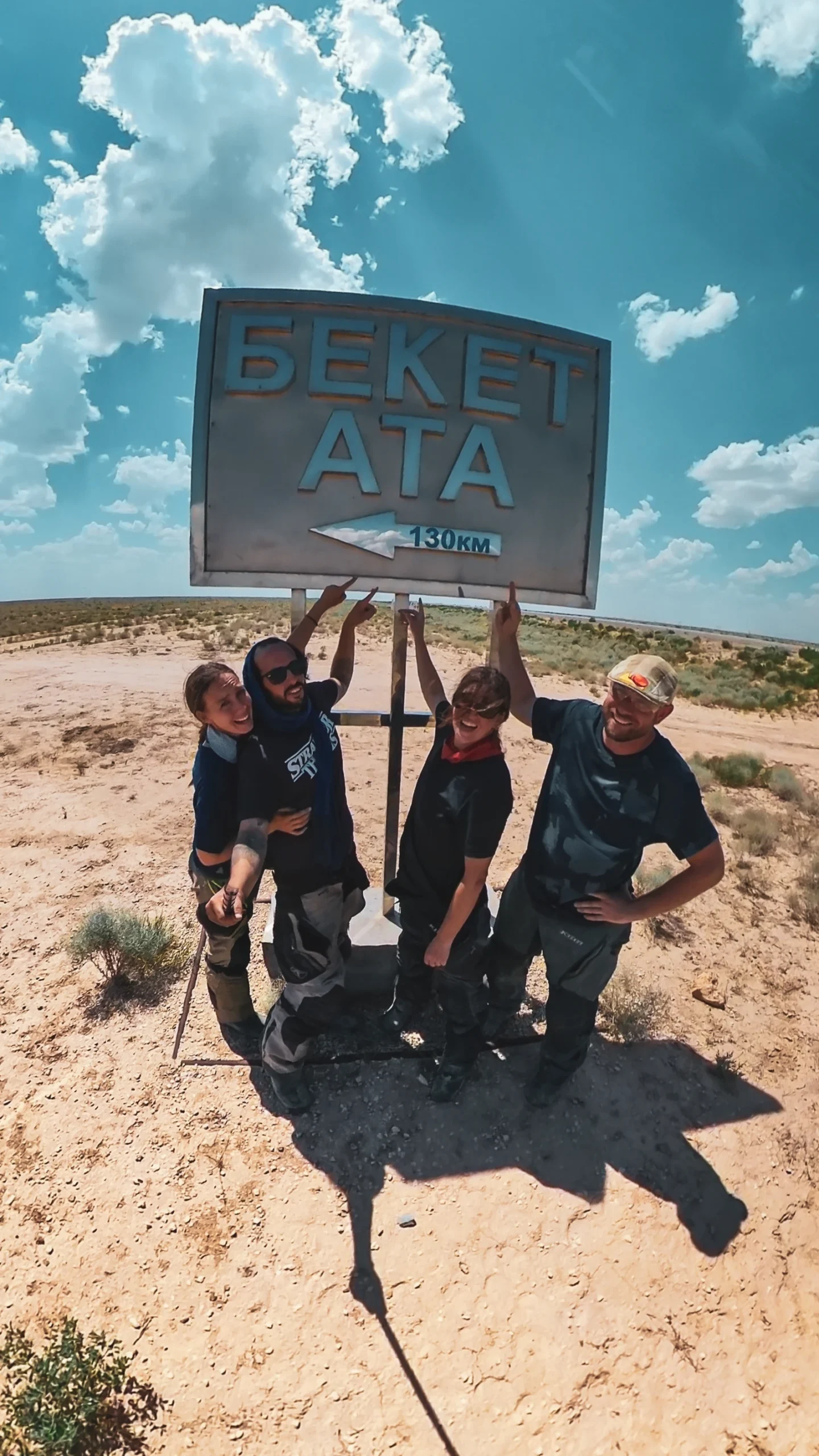
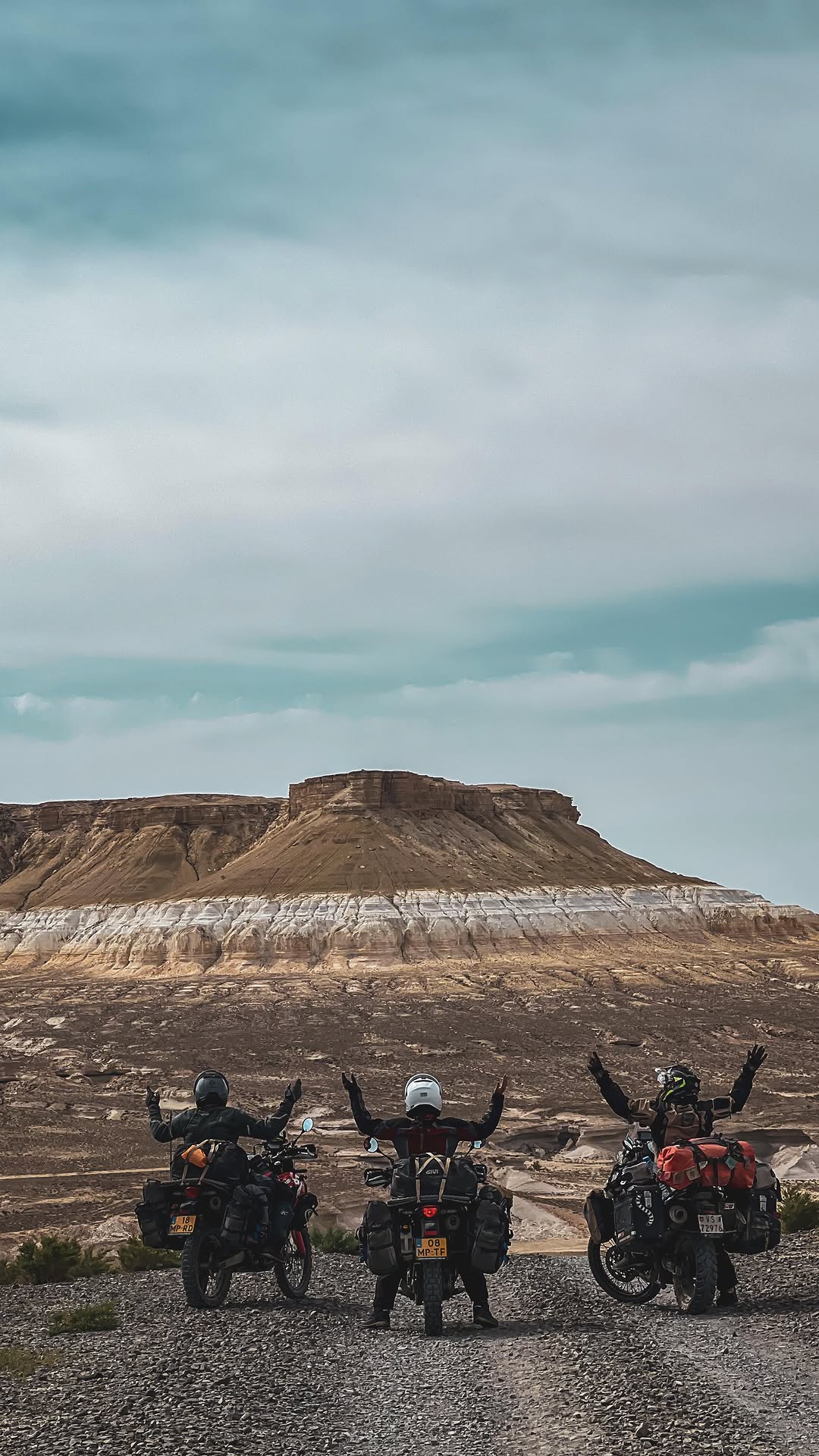
Spoiler: it was long. It was hard. It was tiring. And we did it anyway, which is the only important fact. From 08:00 to 14:00 — six hours — we rode through the same blank, endless piste. Sand sections that swallowed the front wheel, corrugated tracks that rattled every bolt we owned, passages where large trucks had churned the surface into clouds of chalk dust so thick we rode blind for seconds at a time. Navigation became guesswork when the GPS tracks and the actual ground disagreed, which was often.
We stopped every 30 minutes: to drink, to cool down, to check the map, and to give each other the kind of quiet, wordless encouragement that only makes sense when you’re in the middle of nowhere at 41°C and the end is invisible. We lost our front headlight mounting to the vibrations. We found it fifty metres back on the piste. It was that kind of day.
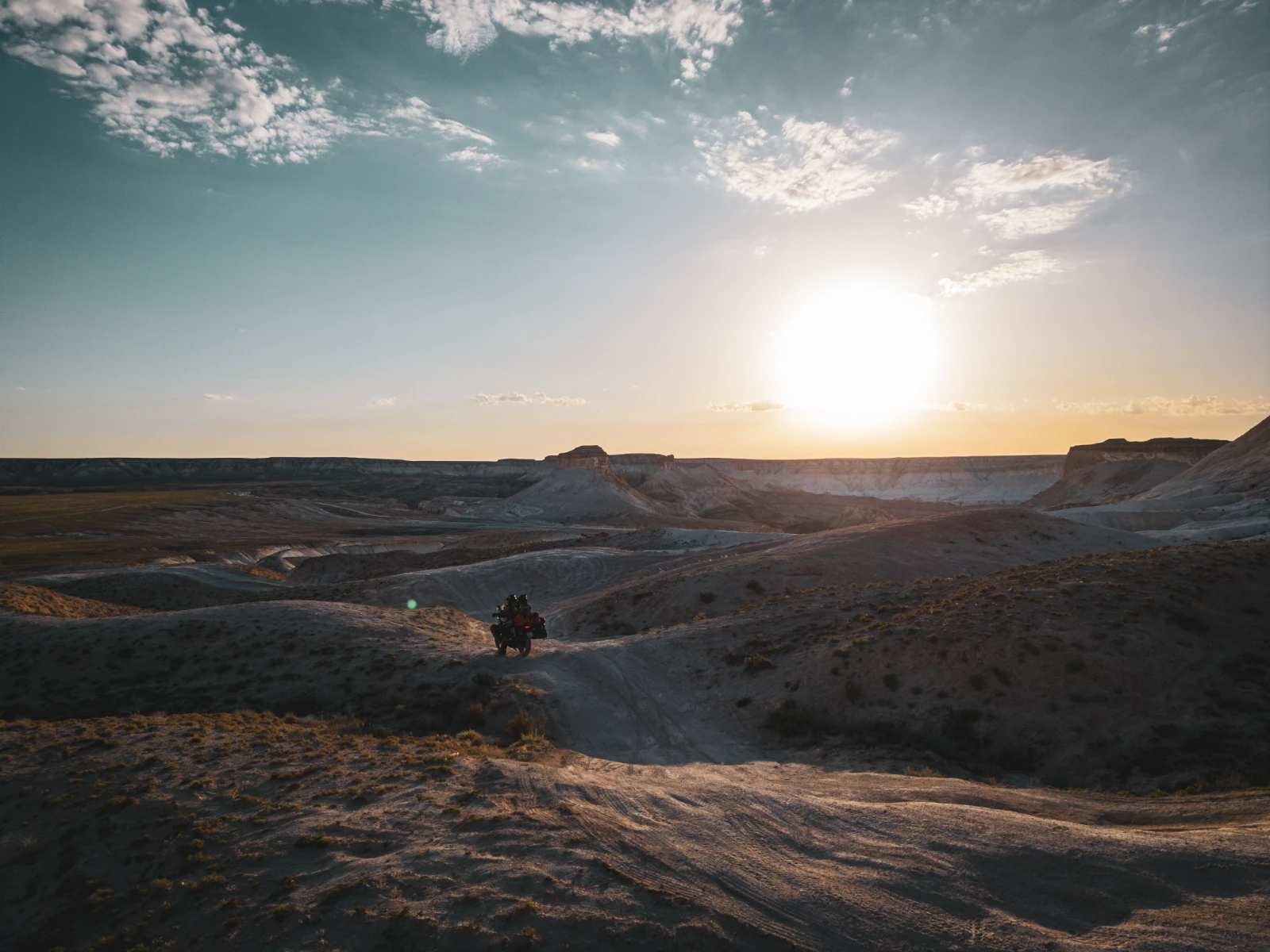
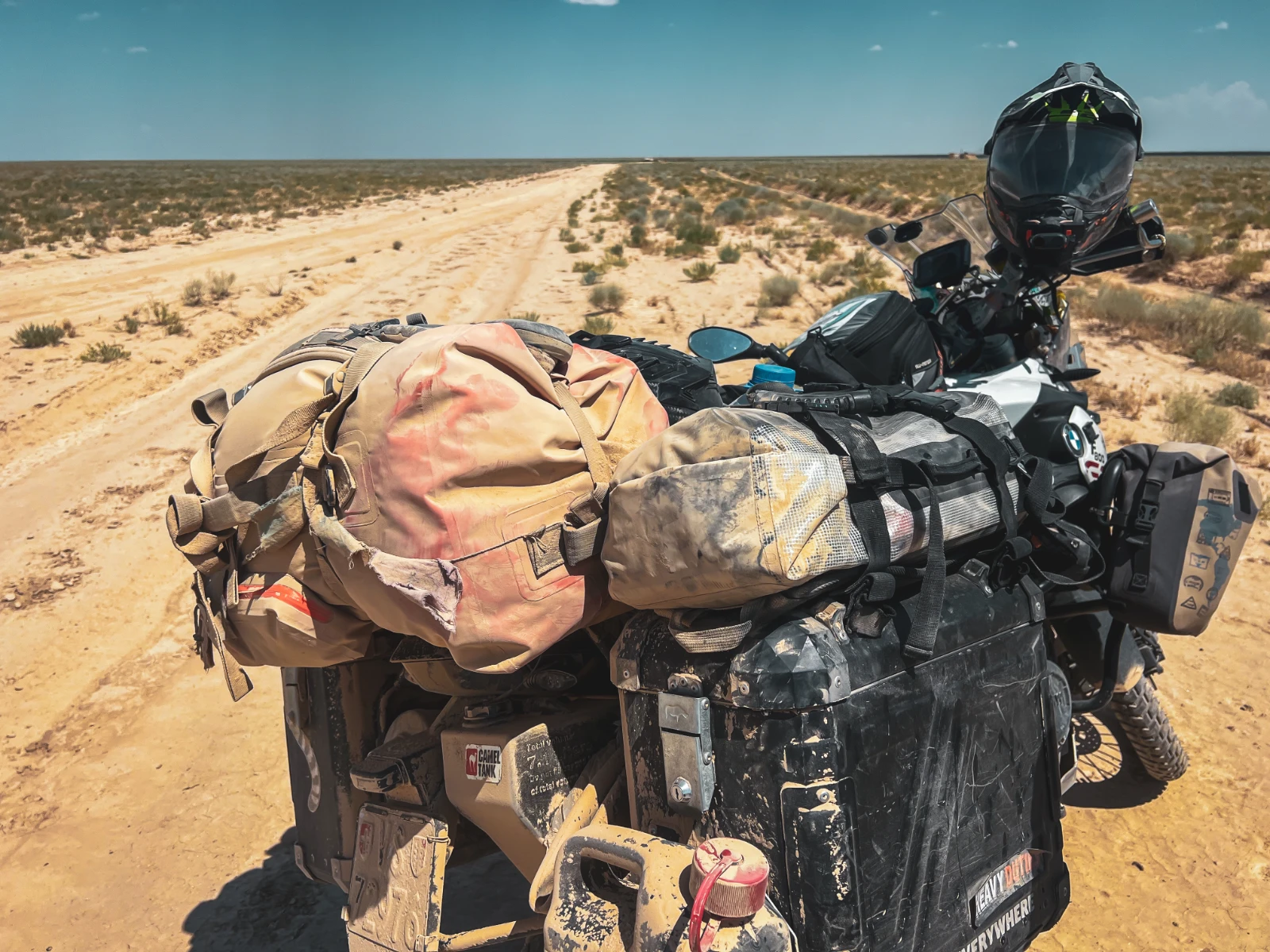
When the tarmac finally reappeared under our wheels, we nearly stopped to photograph it. However, Mangystau had one last act: 100 kilometres of arrow-straight asphalt back to Béïnou, into sustained 50–70 km/h crosswinds that arrived from the left like a slow-motion wall. We rode leaning into it, jaws set, for over an hour. When we finally checked the day’s stats — 7h09, 266 km, average 36 km/h — we sat in silence for a moment, then someone (probably Sander) made a terrible joke, and we all laughed.
Back to Béïnou — Mosquitoes, Tents & the Open Road Ahead
We arrived back in Béïnou coated in dust, drained in ways that take a good night’s sleep and two meals to even begin to address. We checked back into one of the same mosquito-infested hotels — because in Béïnou, you don’t choose your hotel so much as accept your fate — and once again, without discussion, we pitched our tent inside the room.
Looking back now, those two Béïnou nights — before and after — frame the desert experience perfectly. The discomfort of a bad hotel makes the bivouac under Bozjyra’s stars feel even more extraordinary by contrast. The mosquito net of your tent, pitched on a hotel floor, might be the most honest metaphor for adventure travel we know: you find solutions, you adapt, you sleep well enough to ride tomorrow.
The road ahead was Uzbekistan — specifically the infamous pothole highway to Kungrad, 400 kilometres of road surface that had apparently been used as a test site for demolition vehicles. But that’s another story. For now, the desert was behind us. We’d done it. Together.
Navigation in Mangystau: What We Learned the Hard Way
In the Mangystau Desert, navigation is everything — and in July 2024, we were doing it the hard way. Our GPS tracks from IOverlander were downloaded in advance, but when the piste and the map disagreed (which happened more than once), we found ourselves squinting at a phone clamped to the handlebar in blinding sunlight, sweating over which fork to take. Zero signal. No corrections possible. Just the track, the sun, and hope.
After Mangystau, we made an upgrade we should have made years earlier: the Carpuride W702 Pro. A dedicated motorcycle navigator with a sunlight-readable screen, TPMS integration, wireless charging, and offline map capability. If we’d had it on the Bozjyra piste when the GPS and the chalk dust were conspiring against us, those moments of doubt wouldn’t have existed. Read our full review if you’re considering it.
Use code TAKEMEEVERYWHERE at checkout for 30% off everything on the site. Affiliate link — thanks for supporting our journey.
Everything You Need to Know Before Riding Mangystau
🏍️ Best Time to Visit
- April–May: Ideal. Warm but not brutal. Wildflowers in the steppe. Days are long.
- September–October: Excellent. Cooler temperatures, stable conditions, fewer tourists.
- June–August: Doable but demanding. Heat regularly exceeds 42°C. Start before 8h, stop by midday, rest and continue after 17h. Carry extra water (3L/hr per person in peak heat).
- November–March: Not recommended. Temperatures drop below −20°C. Most pistes become impassable.
⛽ Fuel Strategy
- Fill completely in Béïnou (Beyneu) before the northern loop. In Zhanaozen before the southern loop.
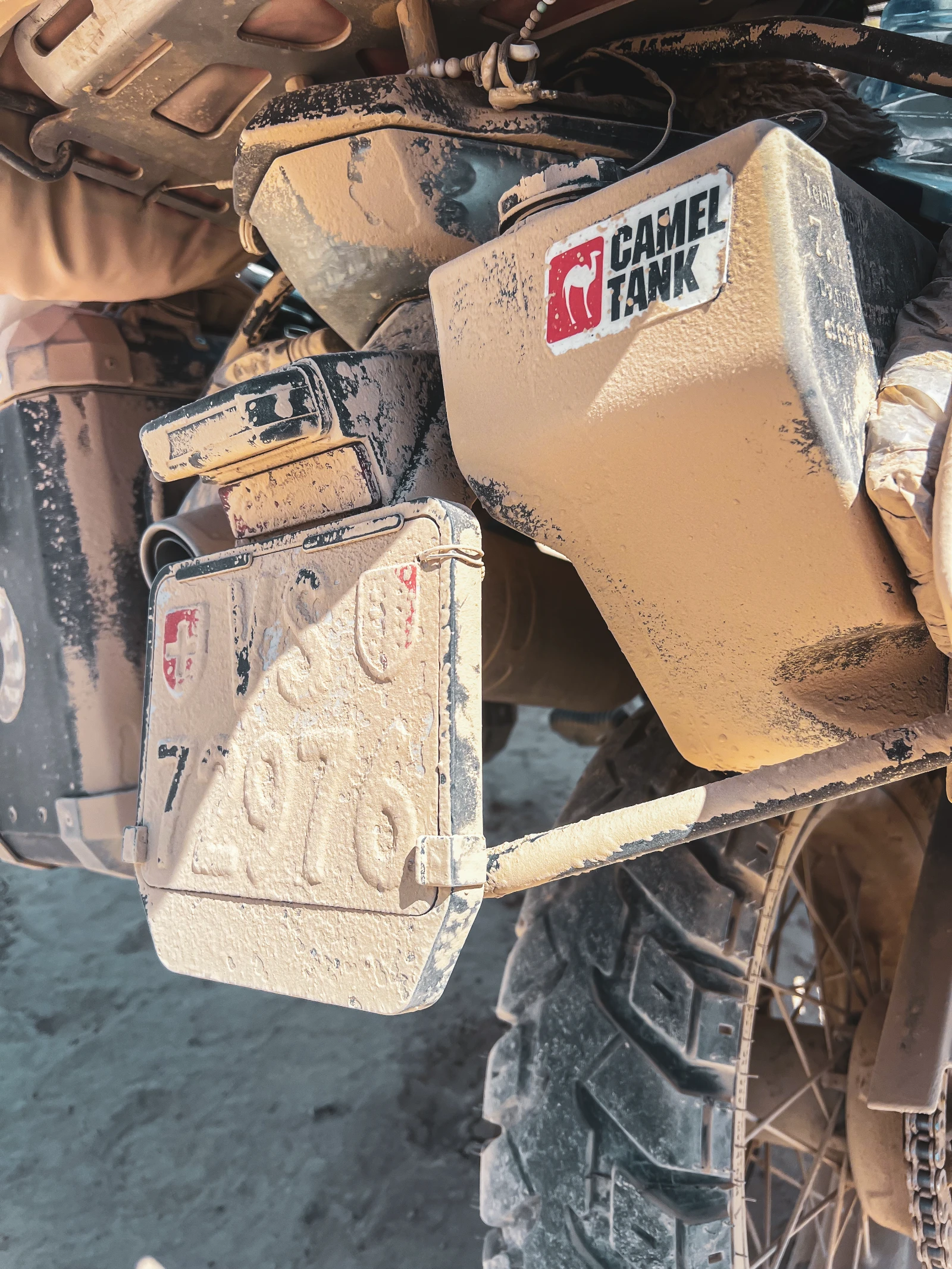
- You need a minimum of 350–400 km range. A supplementary tank (Camel Tank, Rotopax or jerry can) is strongly recommended for two-up bikes with heavy loads.
- Fuel is cheap: Kazakhstan 95 octane averages ~238 Tenge/litre (~€0.45). Stock up without guilt.
- There is zero fuel available anywhere between the entry piste and Zhanaozen (northern loop) or between Beket Ata and Béïnou (southern loop).
💧 Water is Everything
- Carry a minimum of 10L per person for a full day’s riding in summer. More is better.
- Beket Ata has a reliable water point — fill everything here on the southern loop.
- Do not rely on finding water in the desert. It doesn’t exist, unless a passing truck decides to save your day.
- Hydration pack (CamelBak or similar) under your jacket is far better than stopping to open panniers in the heat.
🗺️ Navigation
- Download IOverlander tracks before you leave. The app has community-sourced GPS tracks for both loops that are reasonably accurate.
- GAIA GPS and Maps.me with offline Kazakhstan maps are useful backups.
- Mobile signal inside the desert: essentially zero. Plan as if it doesn’t exist.
- A dedicated motorcycle GPS (like the Carpuride W702 Pro) with offline maps makes route-finding dramatically easier.
- When in doubt at a fork, the wider track is almost always the correct one.
🏕️ Wild Camping
- There are no official campsites in Mangystau. Wild camping is the only option once you’re on the piste.
- Use IOverlander to find pre-scouted bivouac spots. The Bozjyra canyon rim spots are exceptional.
- Wind is a serious issue — most nights. Scout for natural windbreaks (boulders, canyon walls). A freestanding tent rated for high wind is essential.
- A tarp stretched between bikes creates valuable daytime shade for rest stops.
- Leave no trace. This landscape is irreplaceable.
🏍️ Bikes & Riding Two-Up
- Any capable ADV bike handles Mangystau well as a solo rider. Two-up on a loaded bike (like our BMW F800 GS) is manageable but noticeably harder on sand sections.
- Reduce tyre pressure on sandy/soft sections. Sander’s portable compressor was shared among the group and invaluable.
- Lighter bikes (Honda CRF 300/450, KTM 390/500 Adventure) are objectively faster and easier here. But heavy bikes get through too — slowly and carefully.
- Group riding is strongly recommended. A solo breakdown in this desert, in summer, is a serious situation.
📍 Key Sites
- Bozjyra (Urochishche Bozzhyra): White chalk pinnacles. The absolute highlight. Camp here.
- Beket Ata: Underground mosque, active pilgrimage site. Dress modestly. Water refill available.
- Sherkala: Isolated mesa resembling a Kazakh yurt. Striking at sunset.
- Torysh (Valley of the Balls): Mysterious spherical rock formations. North of Zhanaozen.
- Tuzbair: Salt flats with white/turquoise colour contrast.
7 Days, 7 Lessons
Water is more valuable than fuel
You can push a bike. You cannot push a dehydrated human. Carry more water than you think you need. Always.
The best sleep is outside
After the mosquito hotel, the windy canyon bivouac felt like paradise. It’s all relative — and the stars are worth every tent peg.
Group riding changes everything
Solo, we might have turned back twice. With Sander and Iris beside us, every scary section became a shared problem with four brains to solve it.
Heat is a tactical problem
Leave early. Stop between 12:00 and 16:00. Ride late. Eat at night. The desert doesn’t punish effort — it punishes poor timing.
Navigation is not a backup skill
In a place with zero signal and zero landmarks, the ability to read a GPS track is survival infrastructure, not a luxury.
Strangers are angels in disguise
The Kazakh workers who handed us 20 litres of cold water in the middle of nowhere asked for nothing. Kindness scales with remoteness.
The Desert in Pictures
Should You Ride the Mangystau Desert?
The honest answer: yes, if you’re ready for it.
- Mangystau rewards preparation. Fuel, water, offline GPS tracks and a reliable bike are not optional.
- The heat of July is brutal. If you can go in spring or autumn, do it. If you can’t, go anyway — just plan your day around the temperature, not the distance.
- Riding two-up on a loaded bike is harder on the sand sections, but absolutely doable. Allow extra time and carry extra fuel range.
- Group riding is not just more fun — in this context, it’s genuinely safer. One breakdown in 42°C heat 80km from the nearest road is not a situation you want to solve alone.
- The bivouac at Bozjyra canyon is one of the most extraordinary nights you will ever spend on this planet. Plan for it. Stay for it.
- The 7h09 for 266km day will be hard. Do it anyway. You’ll talk about it for years.
For us, Mangystau occupies a permanent place in the handful of experiences that genuinely changed how we see the world — and how we see ourselves in it. It sits alongside the Pamir Highway, our transatlantic crossing, and that first winter in Crete: experiences that are made up of equal parts beauty, difficulty, and the company of people you trust.
Sander and Iris — thank you. The desert was better because you were in it. And to anyone reading this while planning their own Central Asia route: read about our full Year 3 journey, follow your tracks, carry your water, and don’t skip the night under the stars at Bozjyra. You’ll thank yourself.
Follow our full trip diary on Polarsteps — every step, every stop, every landscape. It’s all there.
1,761 Days on the Road & Counting
We’re Vins & Naya. We’ve been riding Falkor across the world since 2021 — and we share everything: the stunning spots, the mechanical nightmares, the real cost of it all. Follow along if you want proof that this life is possible for you too.