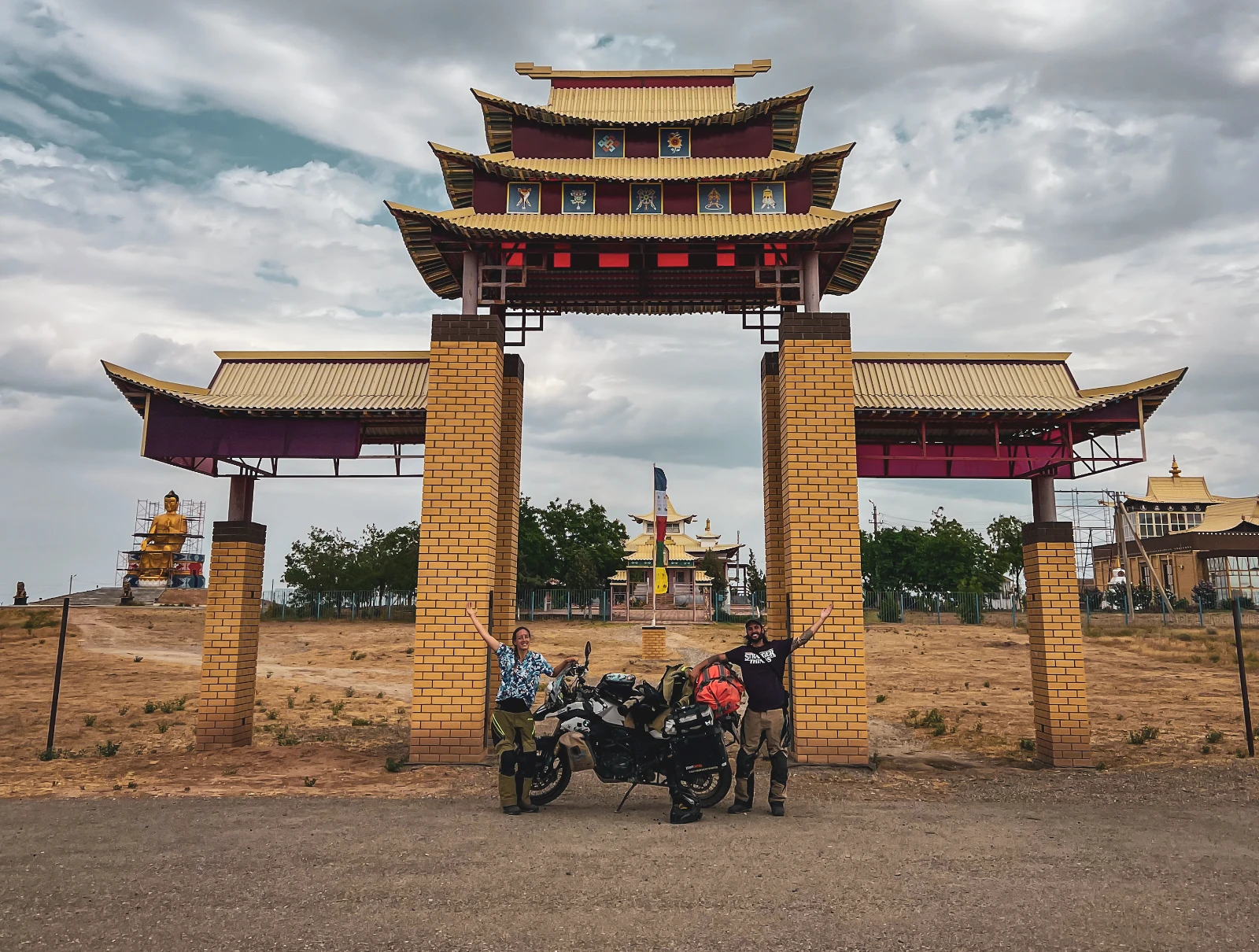
Russia Overland Transit by Motorcycle: Georgia to Kazakhstan on a 7-Day Visa
Chechnya, Dagestan, the Caspian Sea and a Buddhist town nobody expects. The real story behind the overland border crossing most travelers are too scared to attempt.
Why We Chose an Overland Transit Through Russia (and Why You Might Too)
After two months riding through Türkiye, Falkor’s front wheel was pointed toward one thing: the Silk Road. To get there from the Caucasus, there are really only two options. Fly the bikes over, or ride an overland transit straight through Russia. Most overlanders we met chose the first option, a Baku-to-Aktau ferry across the Caspian Sea, dodging a Russia transit entirely because of the war in Ukraine. We understood why. But geography, curiosity and a very specific visa loophole pulled us the other way.
Let’s be clear from the start: we do not support this war. It is senseless and it has cost lives on all sides. But somewhere between the headlines and the checkpoints, we’ve learned to separate a government from its people. Every single person we met during our six days in Russia, from a karate teacher in a Buddhist village to two police officers in the middle of nowhere, was warm, curious, and, when the subject came up, openly against the war. This article is both the story of what we saw and a practical guide for anyone weighing the same crossing.
It would be so wrong to reduce an entire population to the decisions of its government.From our Polarsteps journal, June 2024
How to Get a Russian Transit Visa: Yerevan vs Tbilisi
To ride through Russia you need either a standard tourist visa or a transit visa. A tourist visa has to be requested from your country of residence, usually through an agency, and it’s neither cheap nor fast, a poor fit for two nomads who never plan more than a few weeks ahead. The transit visa was the only realistic option for us, and where you apply for it matters more than you’d think.
We applied at the Russian embassy in Yerevan, Armenia, after crossing from Georgia. At the time of our passage, Yerevan issued transit visas valid for 7 to 10 days, asked for fewer supporting documents, and, unlike Tbilisi, didn’t require anything translated into Russian. The Tbilisi embassy, by comparison, only granted 3-day transit visas and demanded a longer, heavier paper trail. One caveat: visa rules change fast and without warning. We believe Yerevan may no longer issue this visa the way it did for us. Always verify directly with the embassy before planning your route around it.
| Embassy | Transit visa length | Documents required | Translation needed |
|---|---|---|---|
| Yerevan, Armenia | 7–10 days | Fewer, lighter process | No |
| Tbilisi, Georgia | 3 days | More documents, longer delay | Yes |
Quick checklist before you ride into Russia
- Confirm current transit visa rules directly with the embassy, this changes without notice.
- Vehicle import paperwork is filled out separately from your passport check; budget extra time for it.
- Border crossing from Georgia into Russia took us roughly 4.5 hours, split across immigration and vehicle import.
- A transit visa means exactly that: keep moving. We used every one of our 6 days to reach Kazakhstan.
- Download IOverlander before you go, it’s how we cross-checked reports on police stops and road conditions in Dagestan.
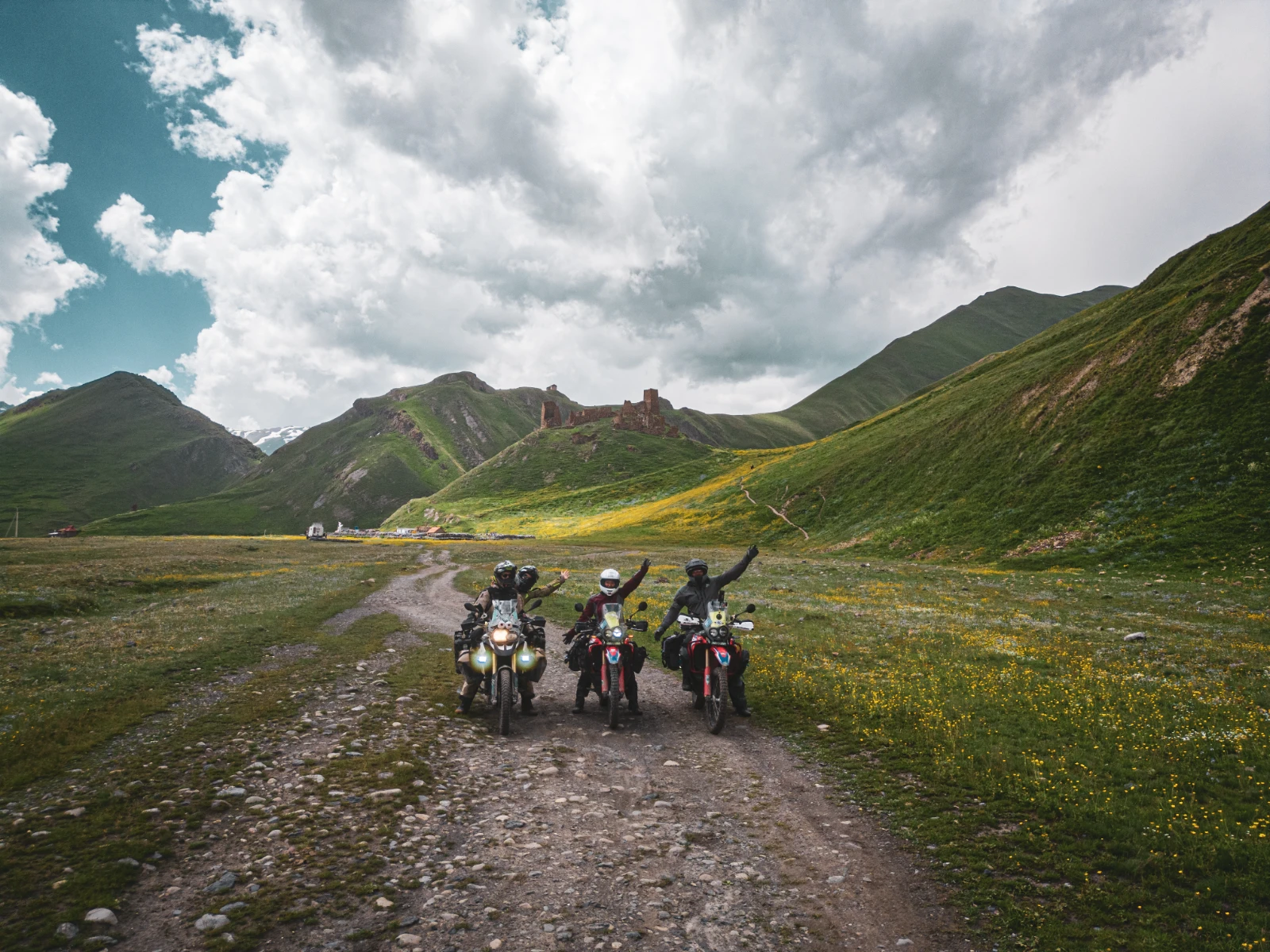
Truso Valley: The Send-Off We Didn’t Know We Needed
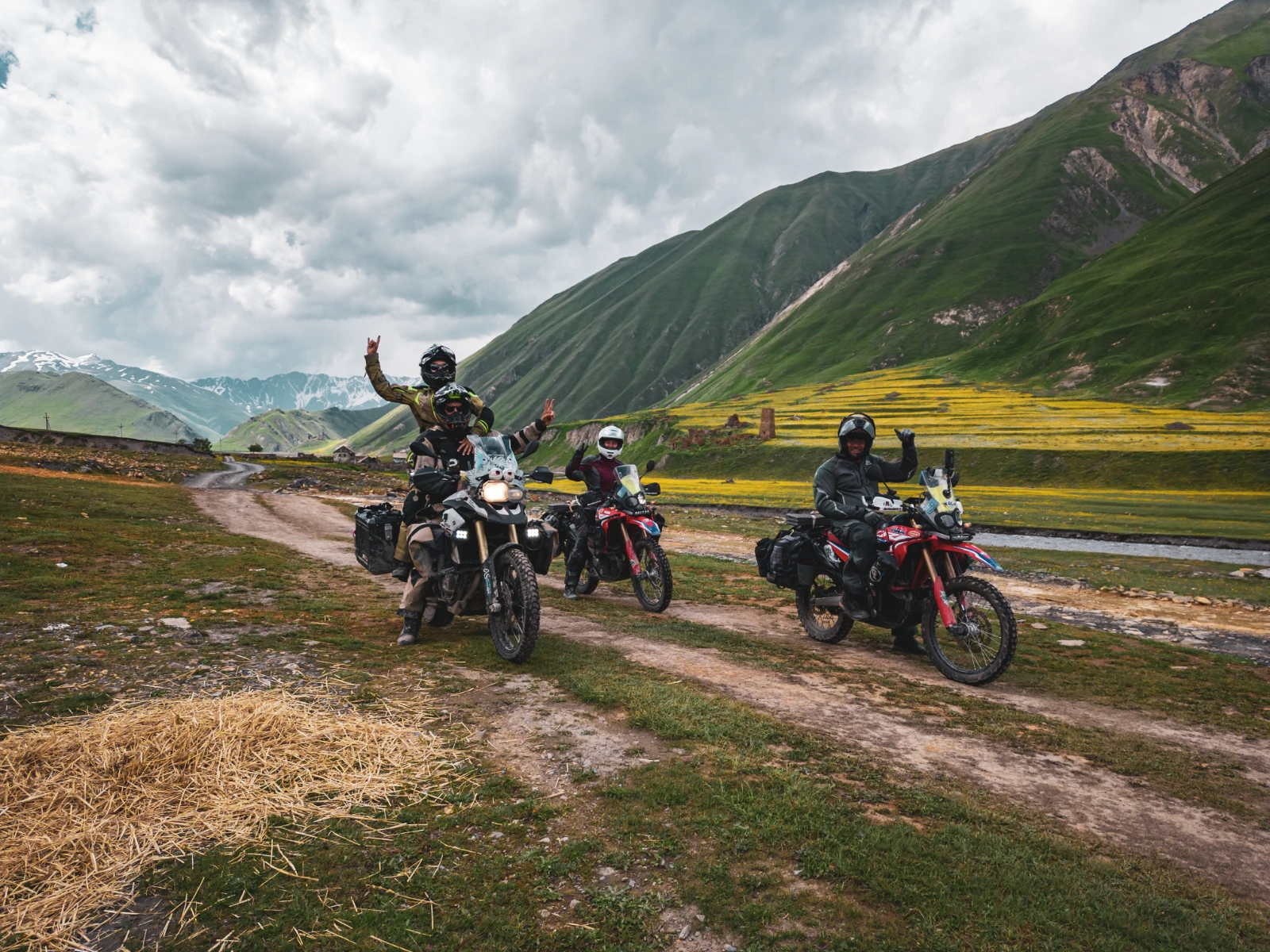
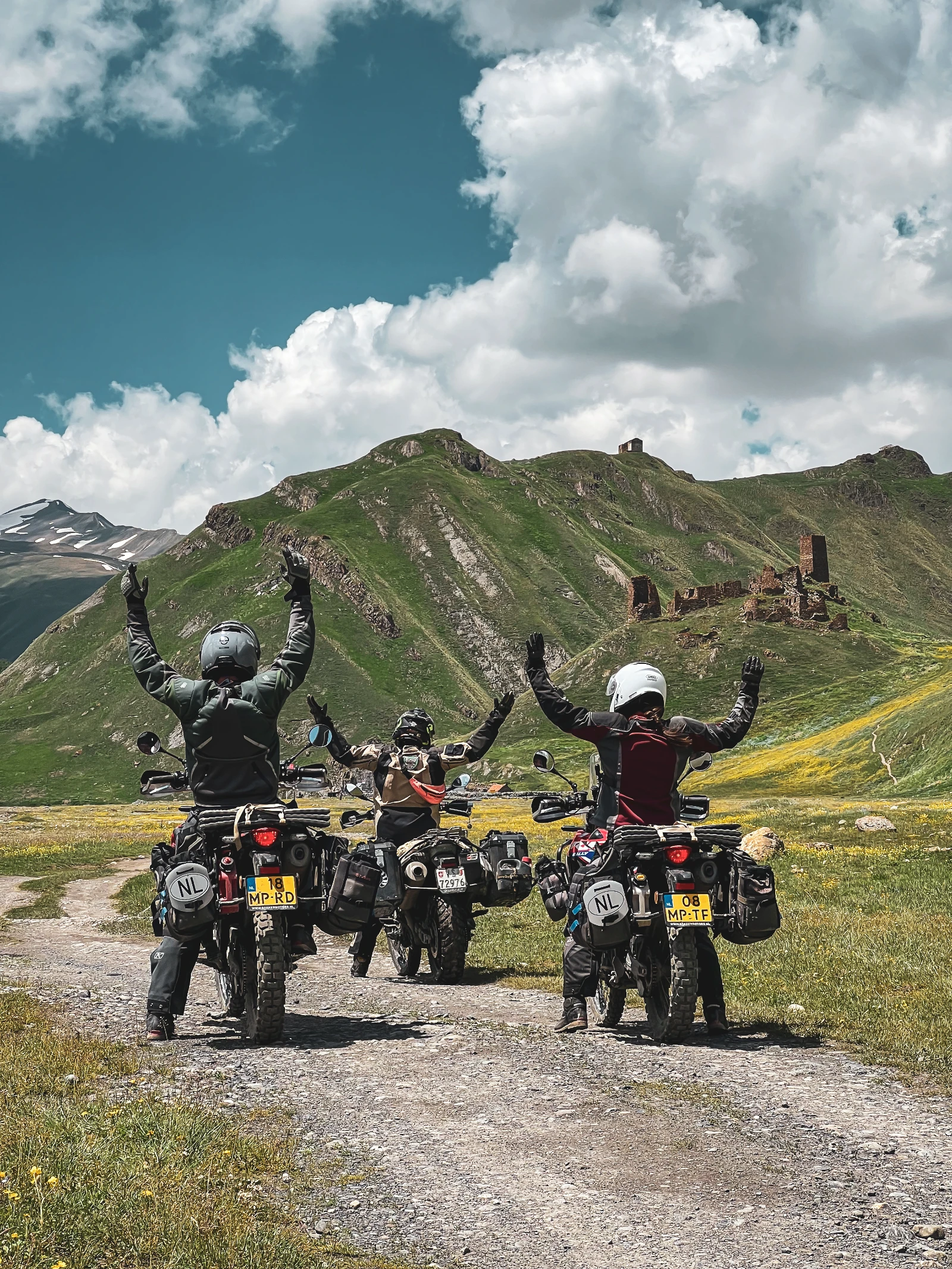
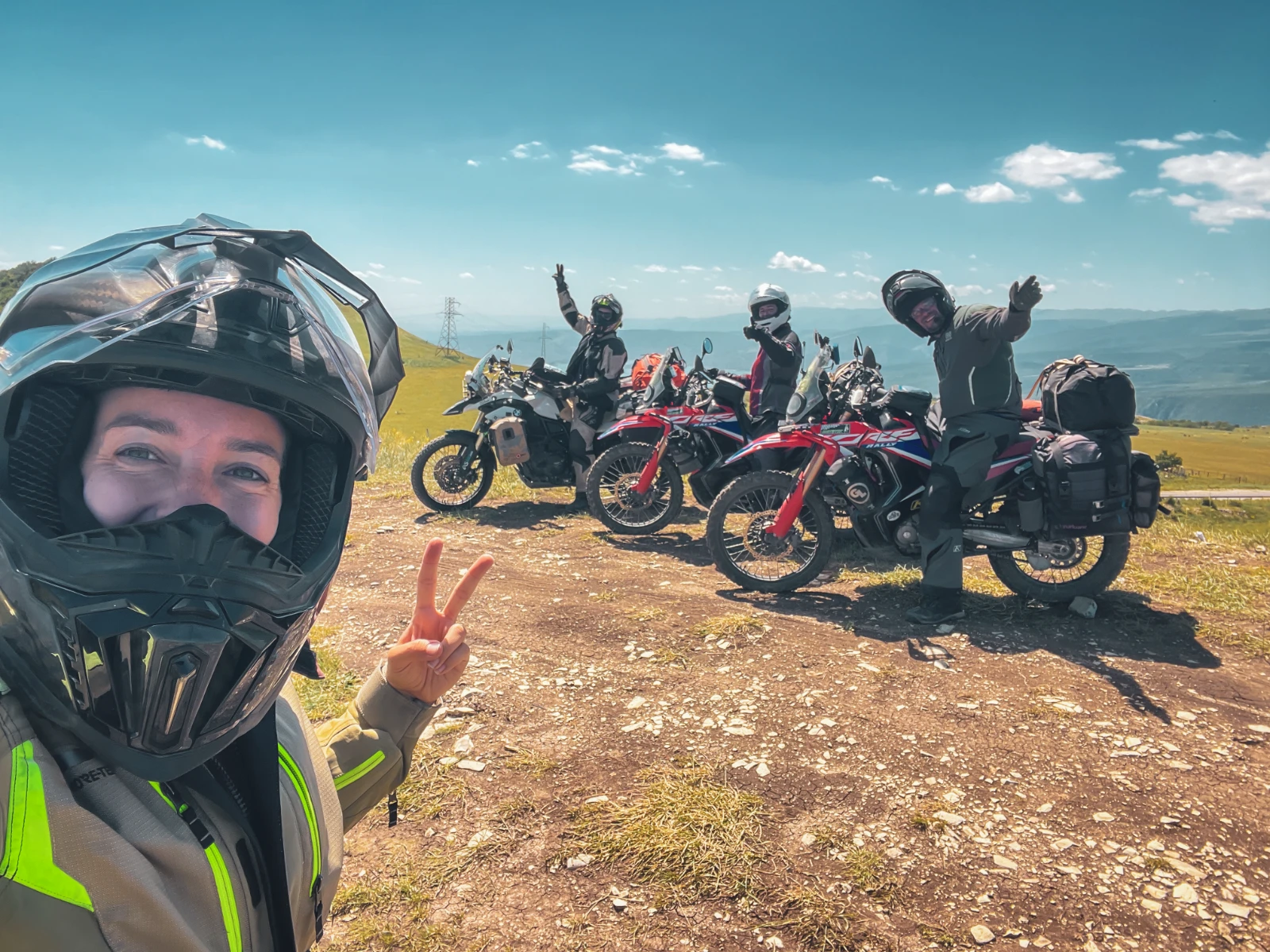
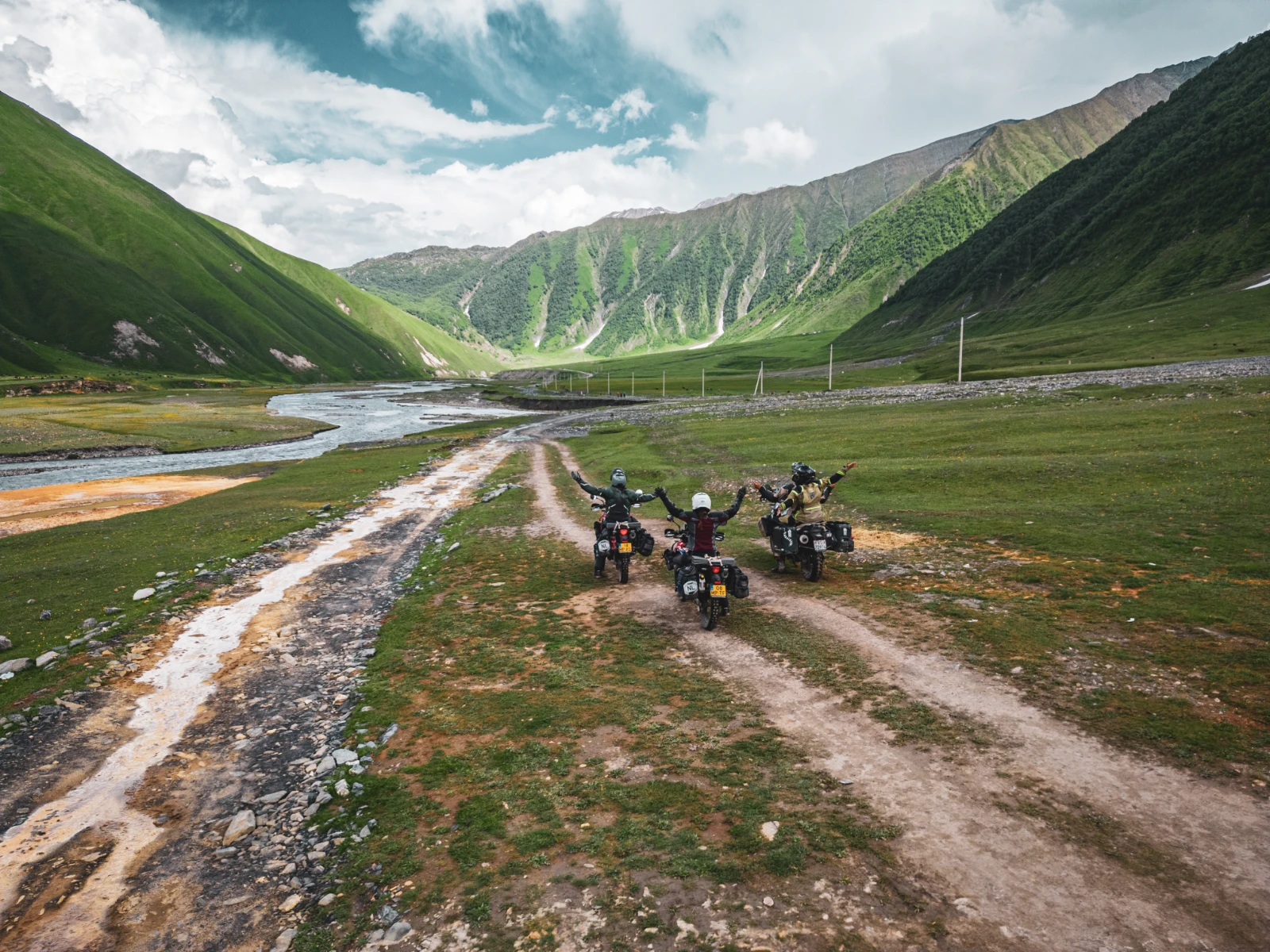
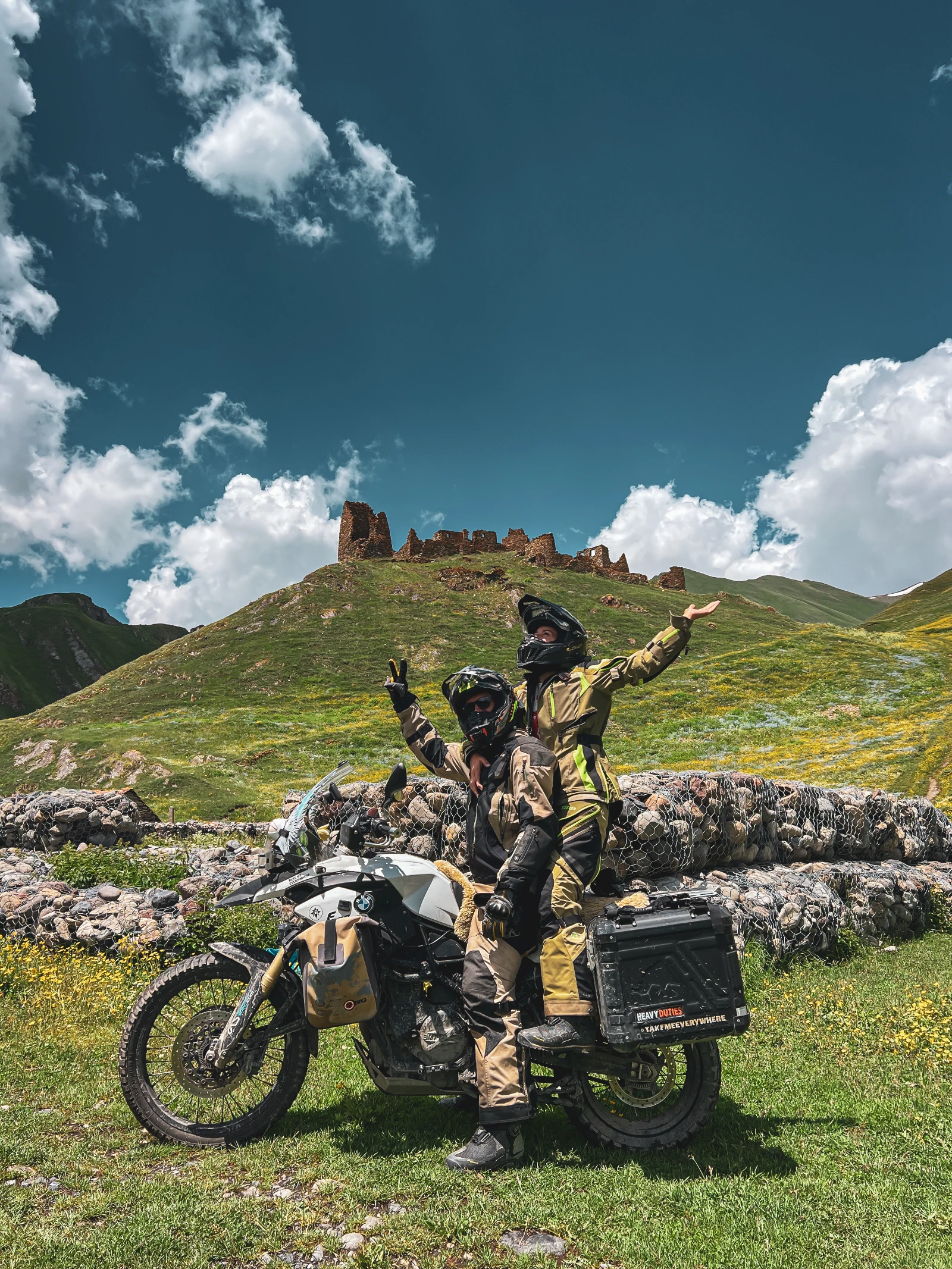
Our last stop before Russia was Kazbegi, a mountain village pressed against the border. There, we reunited with our friends Sander and Iris, a Dutch couple on two CRF 300 Rallys we’d first met at MotoCamp Bulgaria, then shared part of a Cretan winter with. Together we rode roughly 20km of the most beautiful off-road we’d found so far, ending at the Zakagori fortress in Truso Valley: so green and blooming it felt like the set of a film about paradise.
The Border: 4.5 Hours, Six Rewritten Forms and a Coffee Break
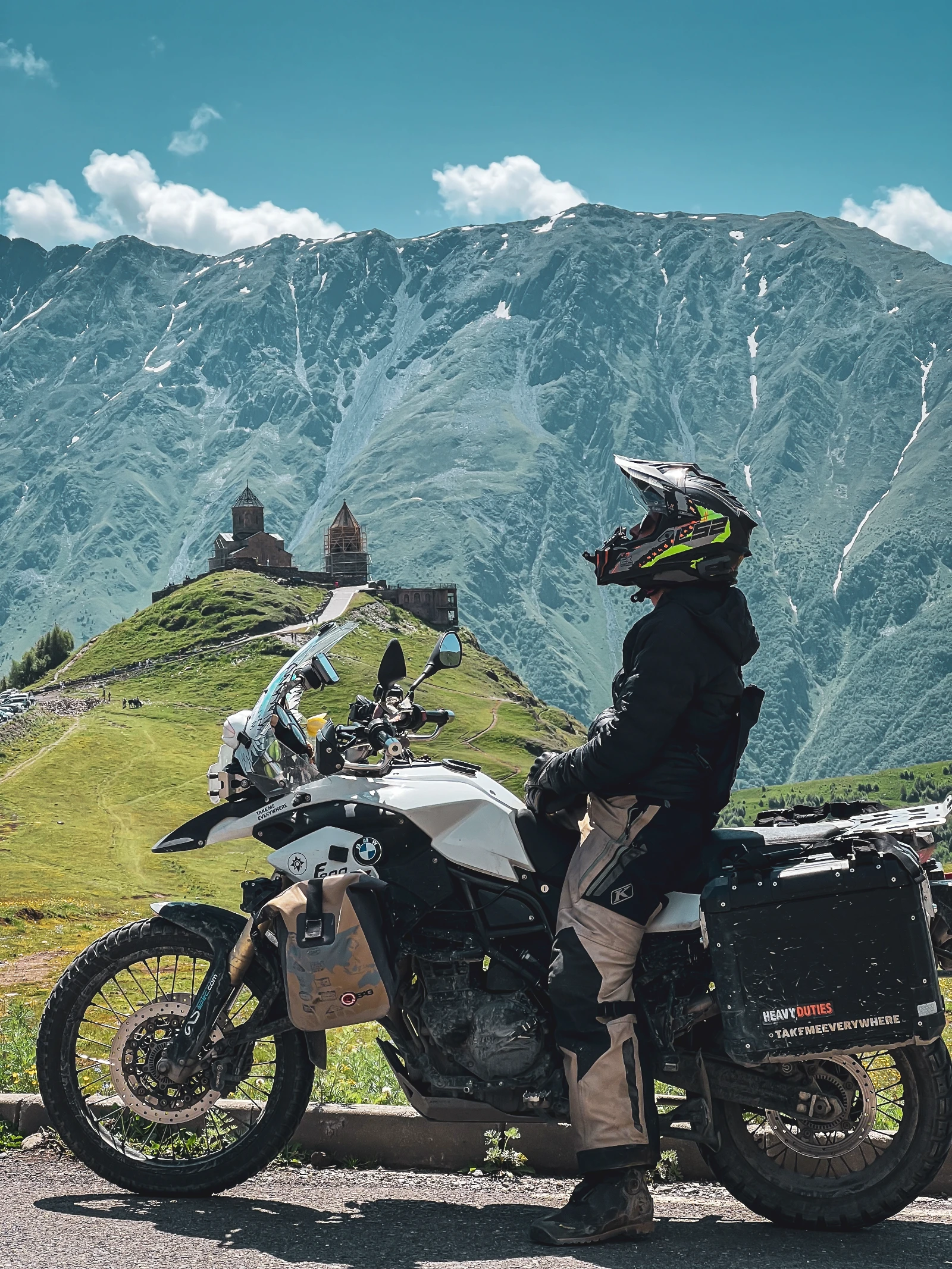
6:44am, hairpin road down to the frontier, rain from halfway down. We laughed our way through the tunnels we’d been warned about, the ones where trucks try to overtake each other and end up sideways across the lane. Lucky for us, no truck jam that morning.
On the Georgian side, Natha had to cross as a passenger, which took far longer than the vehicles, long enough for the other three to hold a full wet-suit contest waiting for her. Then came Mother Russia’s gate: roughly 2.5 hours filling in the same immigration papers six times, because something was always wrong with how we’d written them, despite help from another traveler and strangers on Facebook. At 8am, mid-form, an officer announced: « Coffee break, we come back in 1 hour. » We were soaked and cold. An hour and a half later he did come back, and Vins glued himself to the counter window so the six other travelers waiting wouldn’t cut the line.
The good surprise: the officers weren’t armed and were friendlier than we’d braced for. Falkor got searched twice, which at least gave Natha a chance to warm up a little. By 11:30am we had our passports and Falkor’s import papers, perfectly timed with the rain finally stopping. We were in Russia.
Grozny: Did We Just Land in the Gulf?
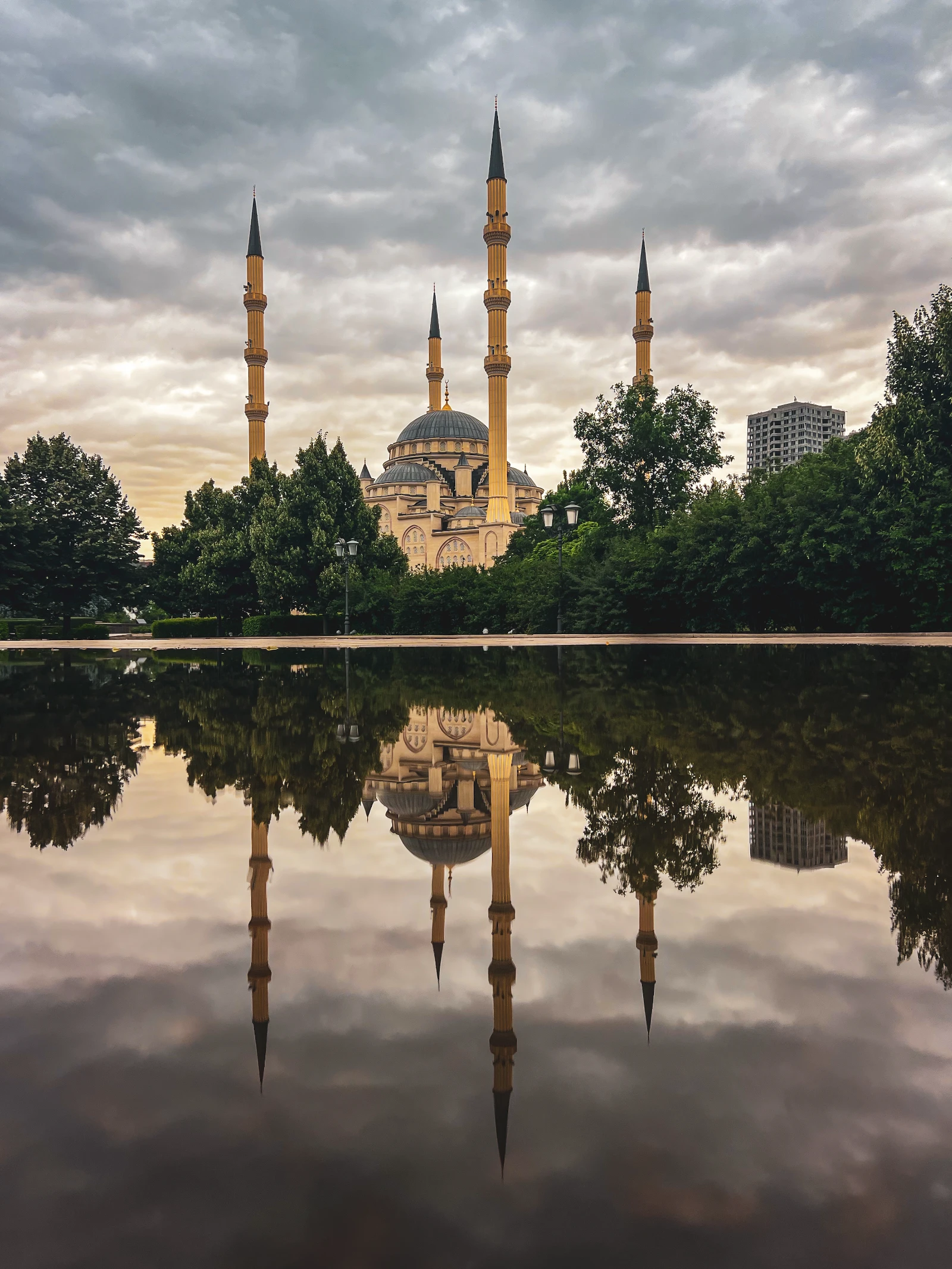
We’d built up our own idea of who we’d meet in Russia. Grozny broke it immediately. Every woman we saw wore a veil, every man a long beard, and the city, glossy new towers rising everywhere, felt closer to a Gulf capital than anything we’d associated with « Russia. » Our guesthouse made us take our shoes off before even seeing the rooms. Late that night we called a taxi; the driver looked at our dusty boots like we were too grubby for his spotless car. Everyone here dresses sharp. We, admittedly, were rumpled, just not dirty, we swear.
That evening, before falling asleep, Natha learned that a friend back home had passed away, only 34 years old. It was a quiet, heavy reminder of how fragile all of this is, and a reason to keep being grateful for every single day on the road.
Sulak Canyon: Europe’s Deepest Canyon, Dagestan’s Worst Reputation
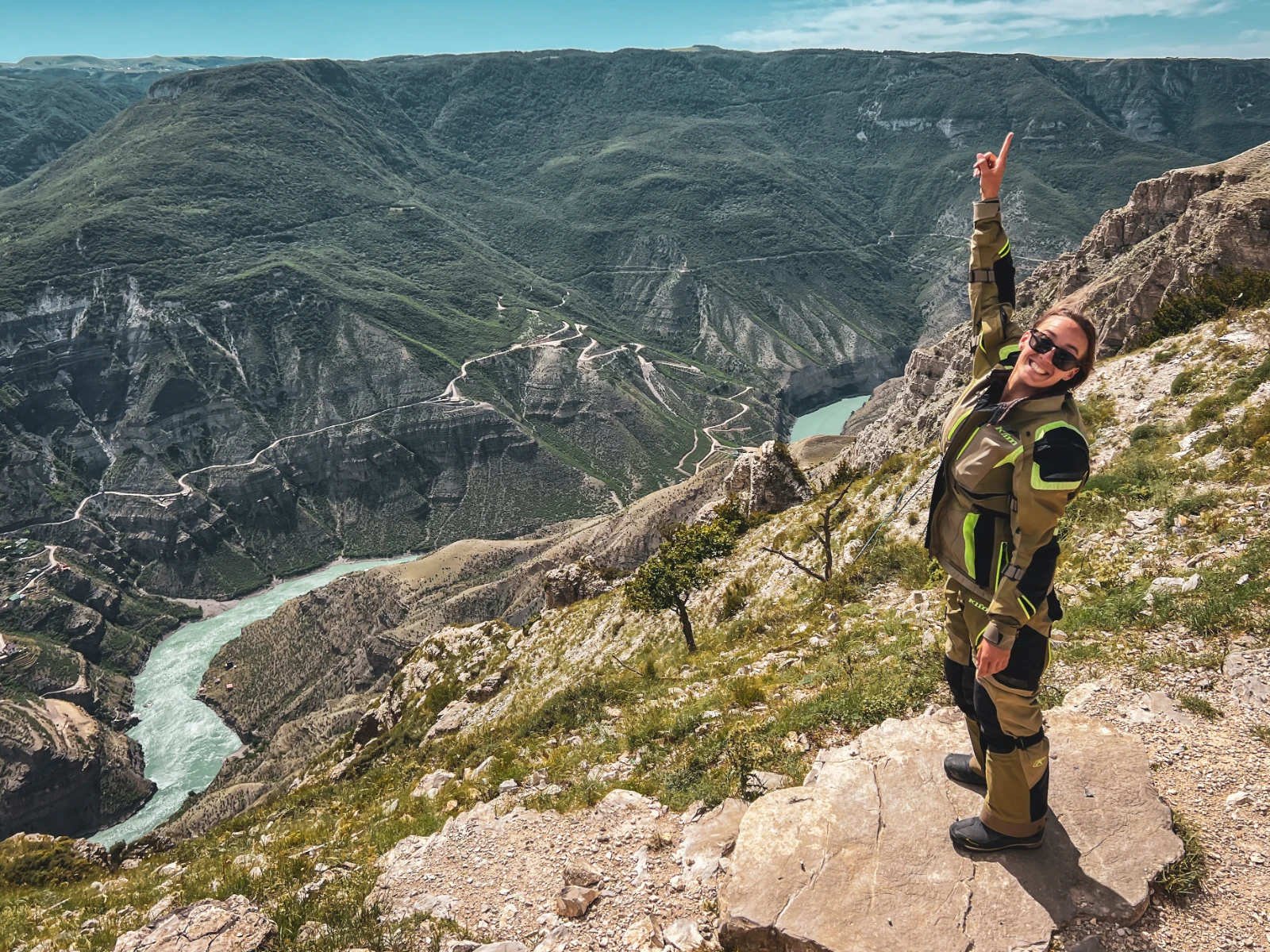
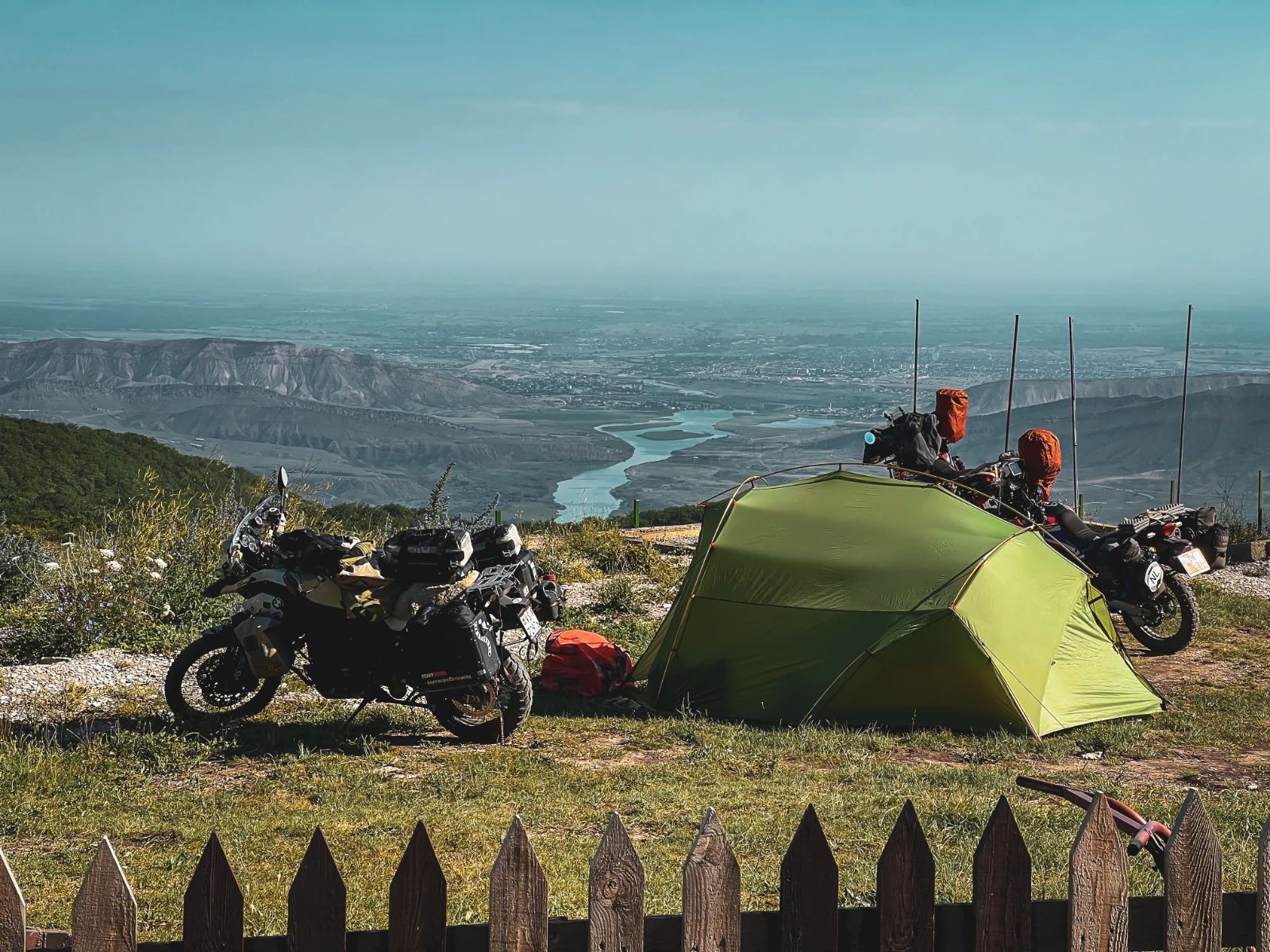
One hour out of Grozny we crossed the checkpoint into Dagestan, a republic that IOverlander’s community had flagged for police trouble. We waved at the officers, they waved back, and that was that. We wanted our transit to be more than just a transit, so we detoured south to Sulak Canyon, said to be the deepest in Europe. We camped that night at a small family-run site above the gorge, tent, café, restaurant, breathtaking view, and a bill of about 7€ for three motorcycles, two tents and four adults.
A sobering footnote: that same evening, 40km from where we were sitting with coffee and pancakes, a terrorist attack killed 20 people, news we only learned once we’d already left Dagestan. The BBC would later call it one of the most dangerous places in Europe. We share this not to alarm you, but because it’s part of an honest account of the region: real risk exists here, even if our own two days passed without incident.
Krainovka: Mad Max on the Caspian Sea
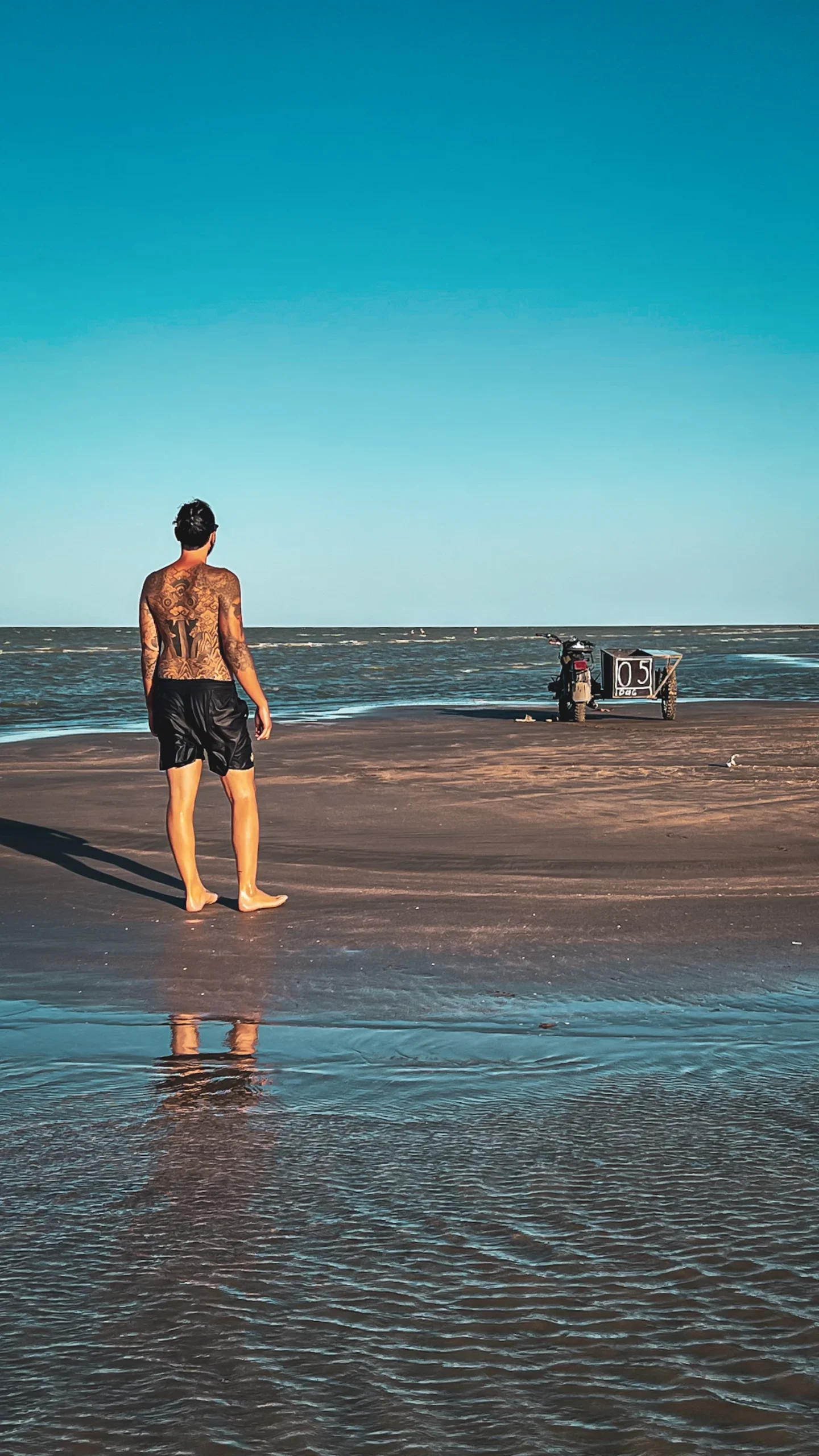
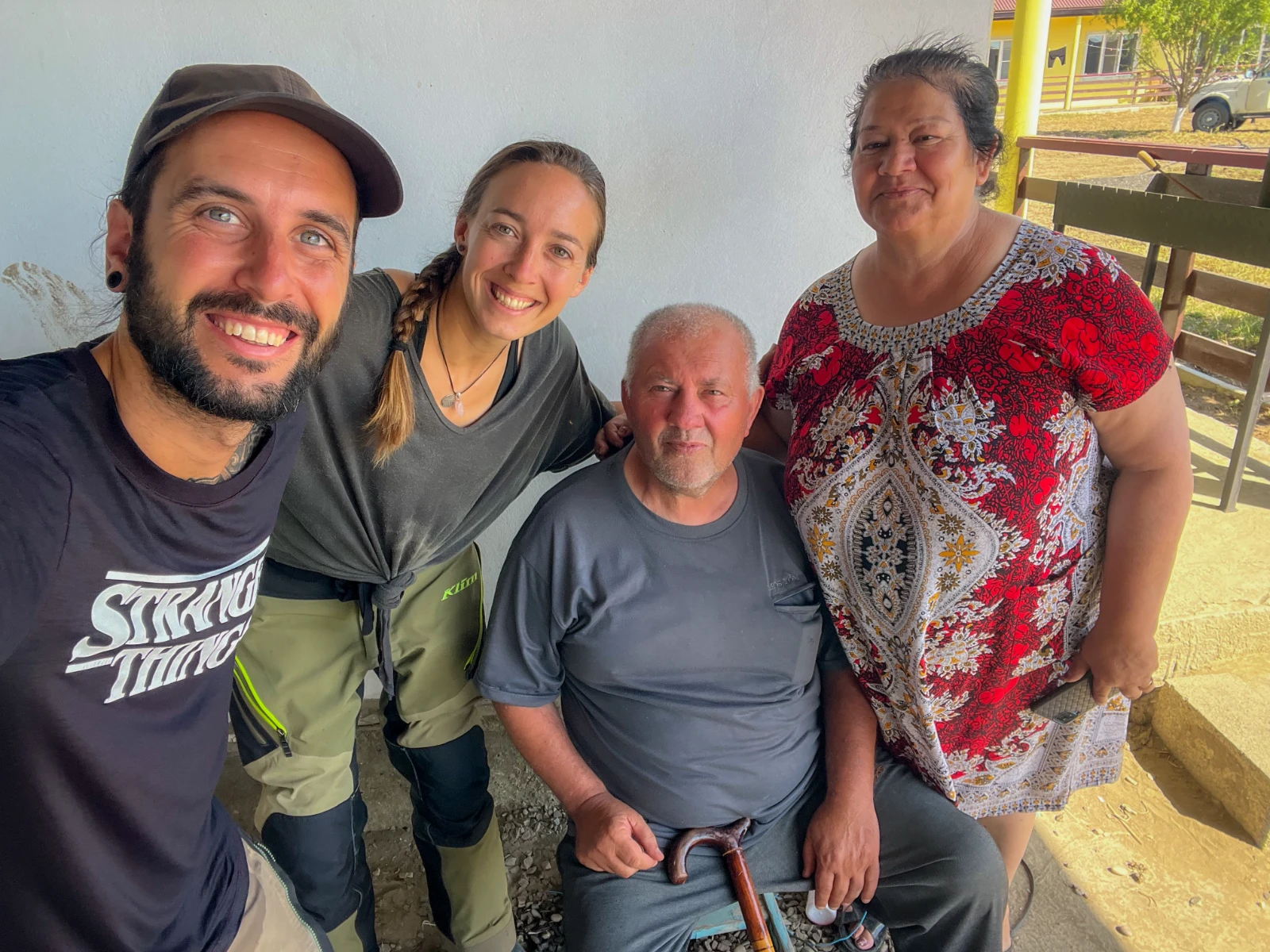
Instead of the direct road north, we cut diagonally toward the Caspian Sea, none of us had ever seen it. The tarmac dissolved into track almost immediately and we rode for hours in near-total solitude, the only encounters a group of locals waving us away from a road we were about to take, and two police officers who stepped out of a tiny Lada 4×4 in the middle of nowhere, just to chat. We knew some zones here were off-limits to tourists; these two turned out to be perfectly friendly.
Iris’s front tire had been slowly losing air all day, and we stopped repeatedly to top it up with their portable compressor plugged into the CRF’s cigarette lighter. 144km and nearly four hours later, we hit the coast, and landed somewhere between Mad Max and a spaghetti western: tumbleweed rolling across the road, an arid, stripped-back landscape none of us expected from « Russia. » The guesthouse owners were, to put it kindly, unusual. Sander and Iris spent the evening fixing the slow puncture while we duct-taped a cracked chain guard. None of us had ever seen the Caspian Sea; it turned out murky, warm, littered, and not something we’d send you out of your way for, Mad Max aesthetics aside.
Lagan: The Buddhist Town Nobody Would Host Us In
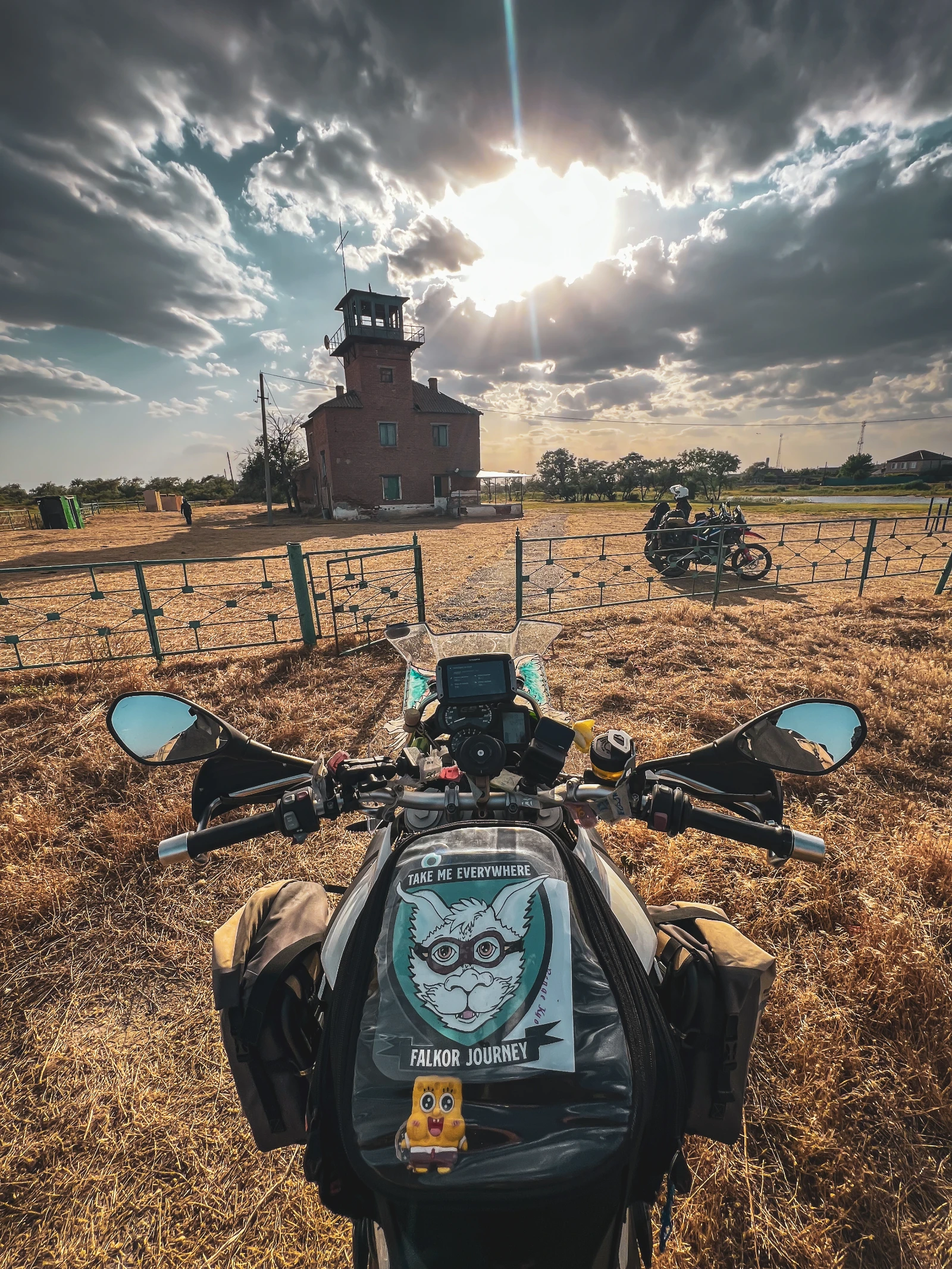
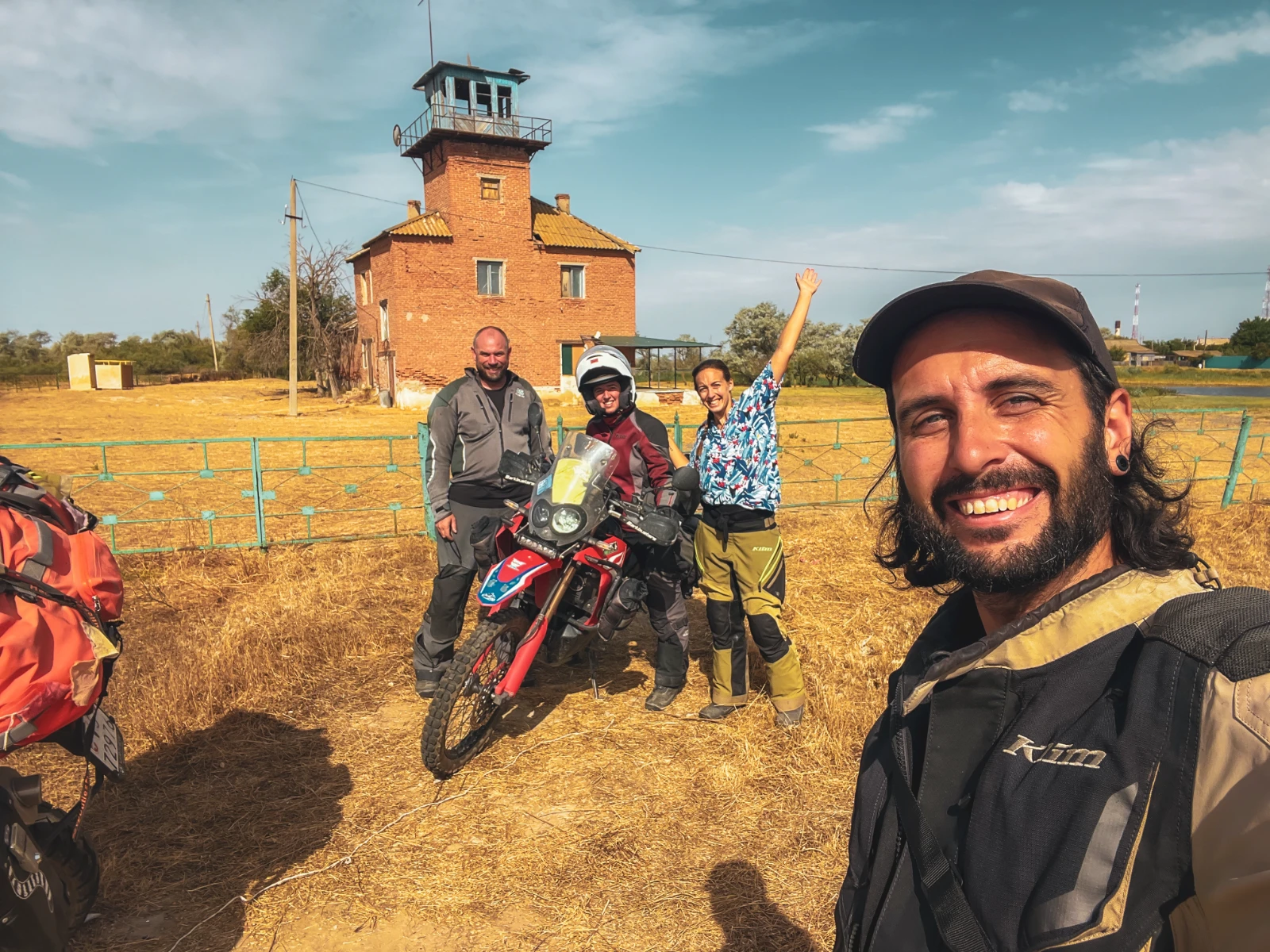
Riding into Lagan, pagoda-shaped bus shelters appeared out of nowhere, dropping us straight into an Asian silhouette we hadn’t expected in the middle of Russia. For Vins, reaching Asia on Falkor had been a long-held dream, this was the first real hint of it, and it hit harder than expected.
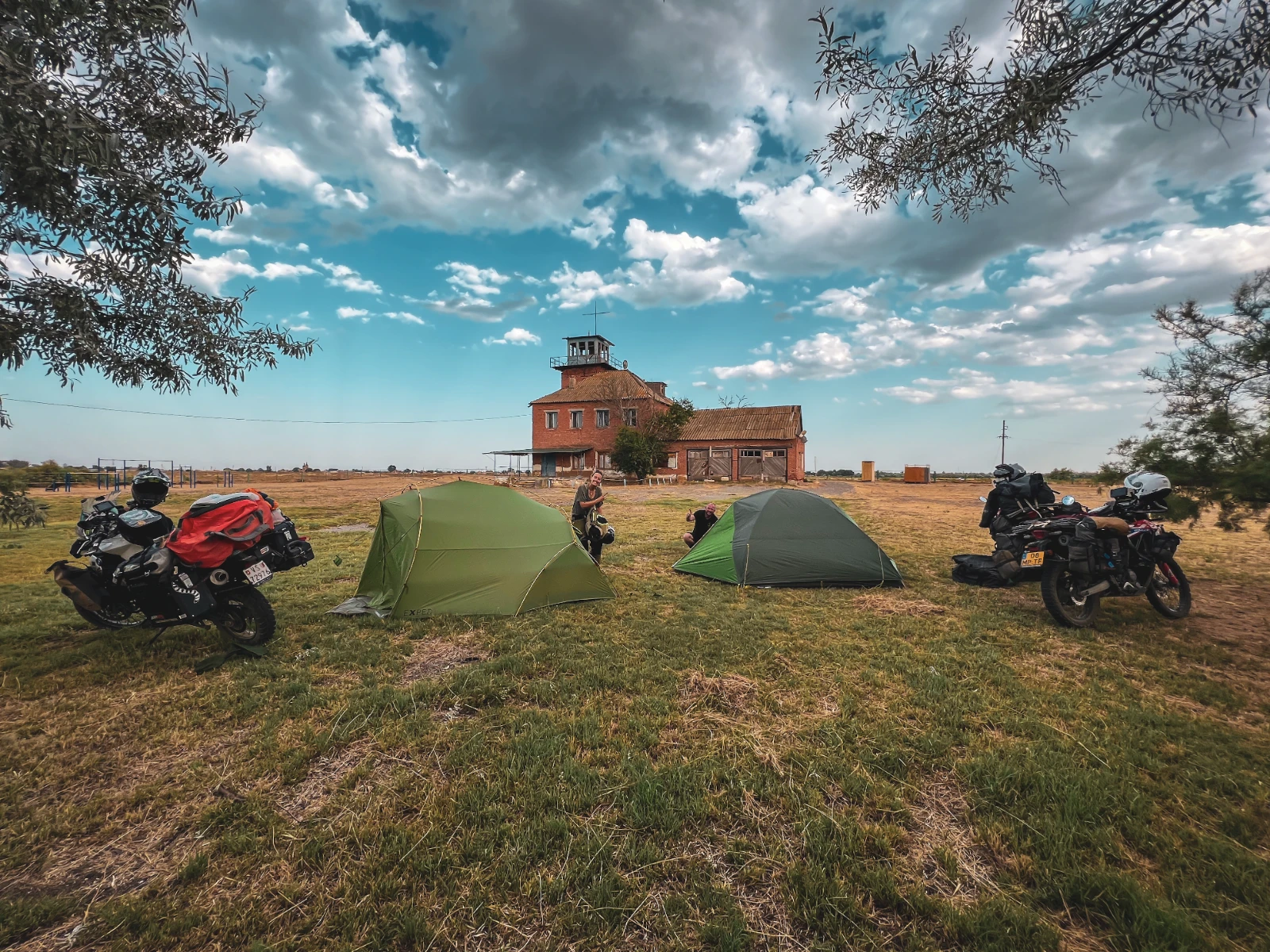
Three guesthouses on Google Maps, three refusals to host foreigners. A stranger named Dimitri stopped what he was doing, made a few calls, and led us in convoy to a fourth guesthouse. Same answer. Instead, he offered us his sister’s garden, promising the best view in Lagan, and led us five minutes down a track to an abandoned house on a riverbank. He even offered to unlock it so we could shower inside; we thanked him and pitched our tents by the river instead. Twenty kids showed up to swim, led by Alexei, a local karate teacher, and we cooked dinner on the porch of the abandoned house while losing a losing battle against the mosquitoes. The next morning we visited Lagan’s one attraction: a Buddhist temple and stupa, our first in Asia, walked slowly and full of feeling.
Astrakhan: Our First « Typically Russian » City
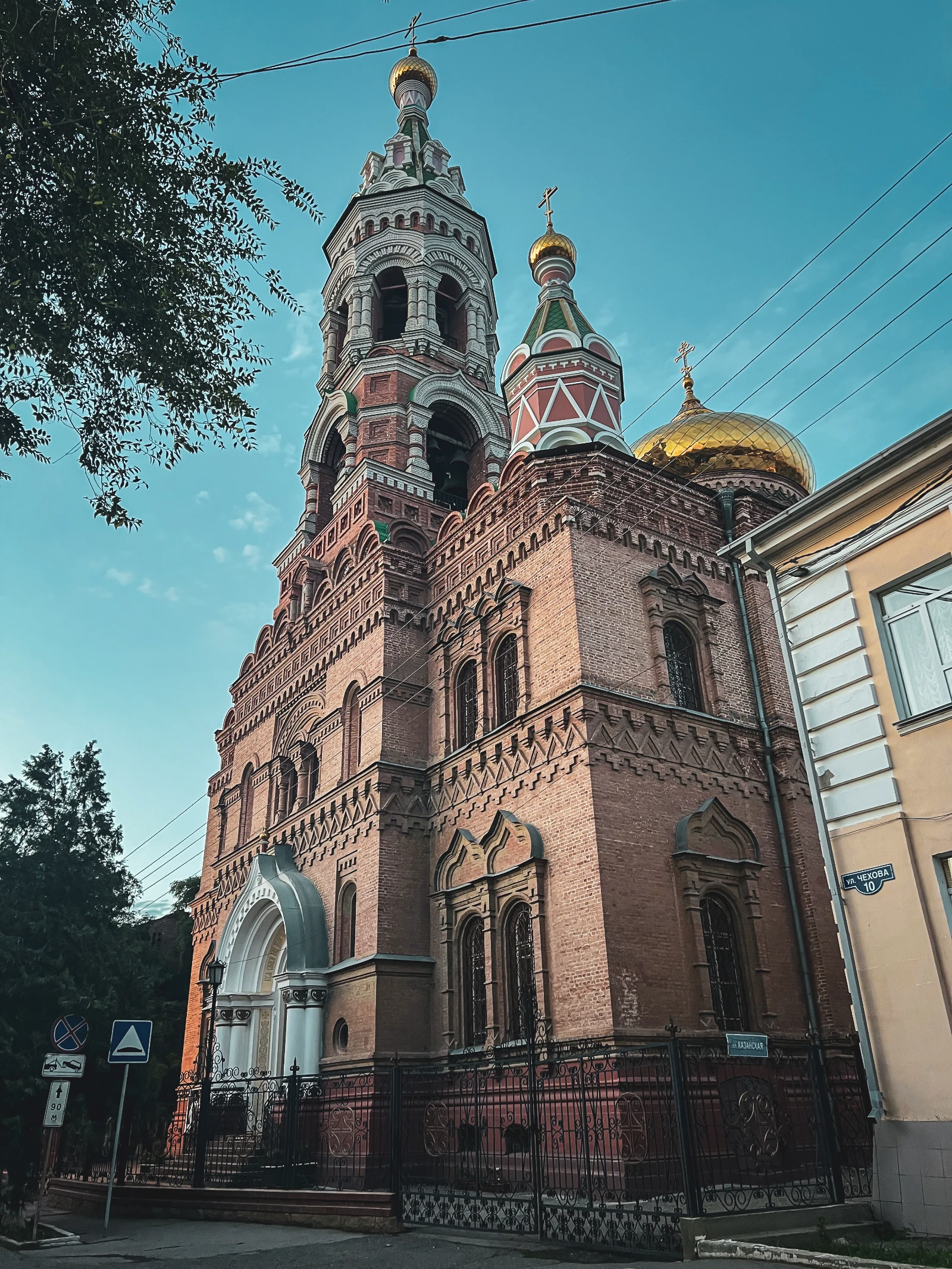
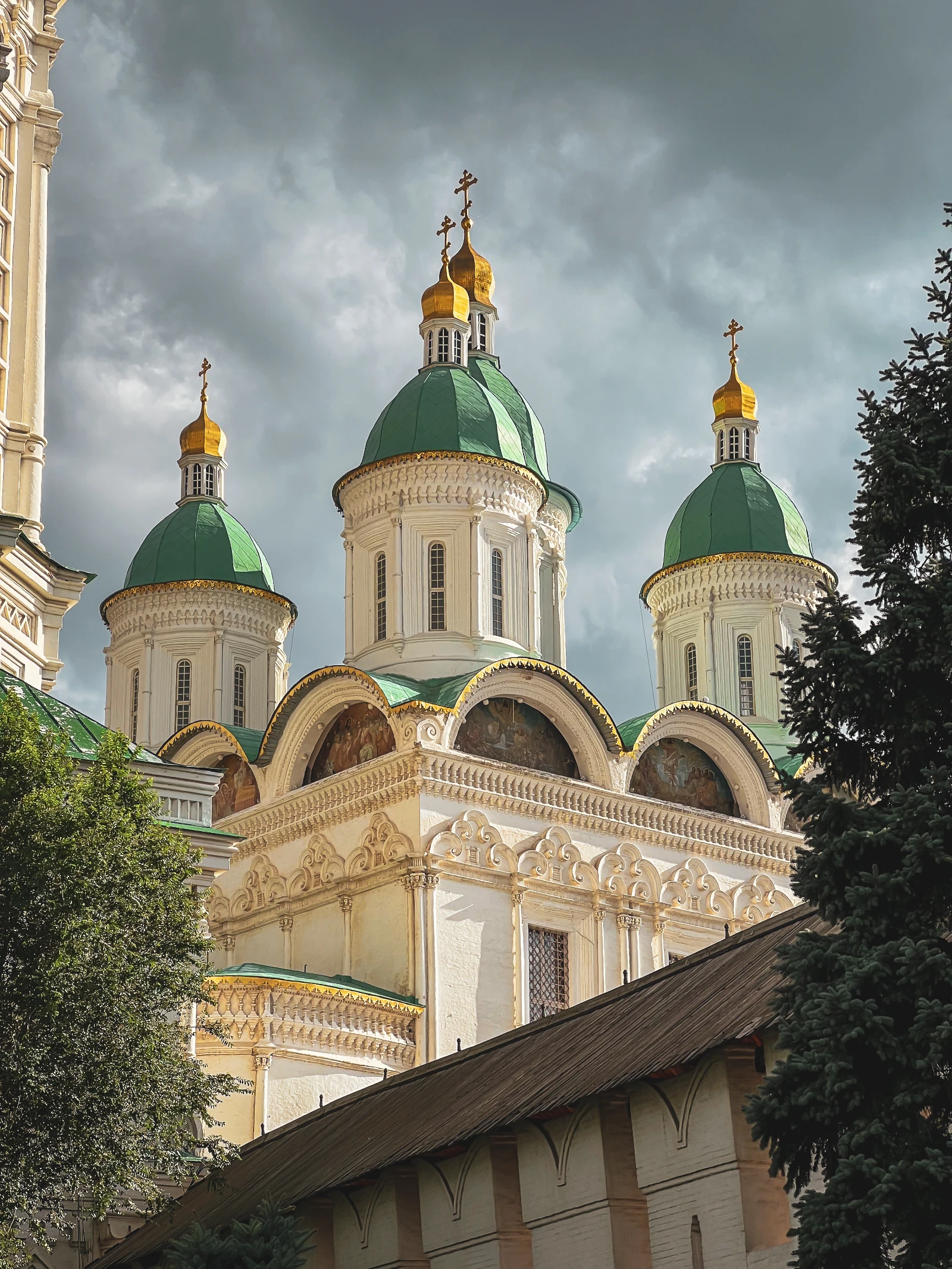
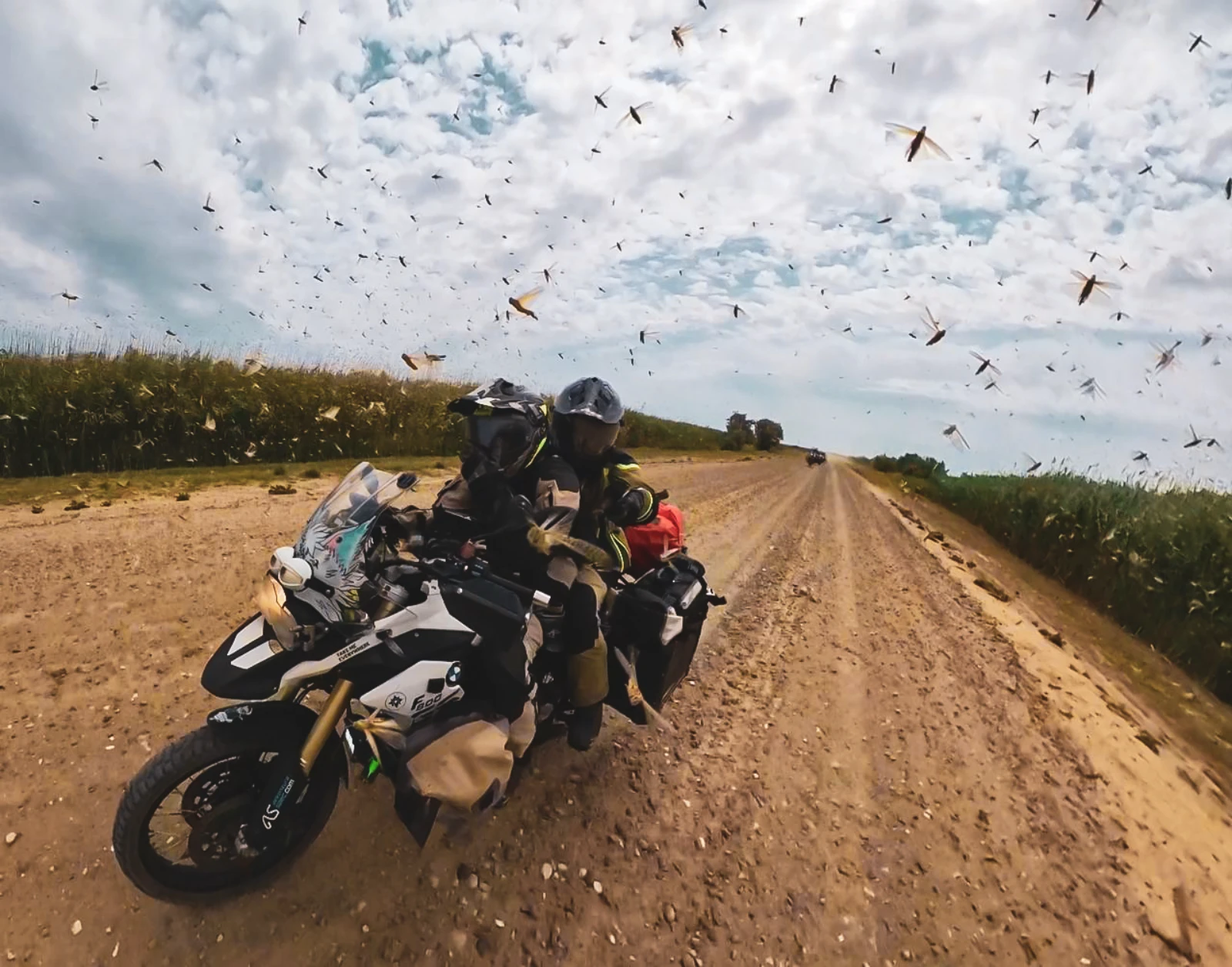
Getting there, we rode straight into a cloud of locusts swarming one of the only patches of tall grass we’d seen in days, pure Jurassic Park energy, and deeply unpleasant, with one insect wedging itself into Vins’s helmet (he survived). Then, finally, our first genuinely Orthodox Russian city: white stone, wide boulevards, a skyline of onion domes. A downpour hit the exact moment we rolled under our hotel’s awning, impeccable timing. Once the sky cleared, we walked the Kremlin, a beautifully restored fortress with a garden and a towering cathedral. Women covered their heads to enter; we watched one woman crying quietly in a corner, others pressing a kiss to icons of the saints. The incense was the one thing in the room that felt entirely calming.
We found a restaurant plastered in road-trip memorabilia and ordered, quite literally, everything vegetarian on the menu, riding always makes us hungry. Back at the hotel, a burst pipe meant no running water until we left the next morning. Comfortable bed, no complaints. Russia’s roads, we realized by then, had given us some of the straightest, emptiest, windiest kilometers of the whole trip, an adventure many people fear, but one that, in practice, felt remarkably smooth and welcoming. Police stopped us exactly once, for a routine check.
Kazakhstan: Day 1,066 and a Whole New Continent
Faces changed, camels appeared, and the feeling of Asia arrived all at once. The border crossing took about two hours, waiting for the gates, inspecting the bikes, arranging vehicle insurance. Sharing it again with Sander and Iris made it feel lighter. Soldiers stared at our passports in disbelief; a kid nearby was so busy staring at us he tripped and fell. We crossed under a gift of a day, just 25°C, and were too exhausted to camp, so we slept in the « Transit Hotel, » a motel built for truckers, with a restaurant serving our first Kazakh borsch, heavy on mutton, a flavor we’d need to get used to fast.
1,066 days after leaving Switzerland, Falkor had carried us into Kazakhstan. This transit through Russia became our gateway into Central Asia and, eventually, the Pamir Highway and the Mangystau desert, read the rest of that chapter of our Year 3 on the road.
How We Camped, Navigated and Filmed This Transit
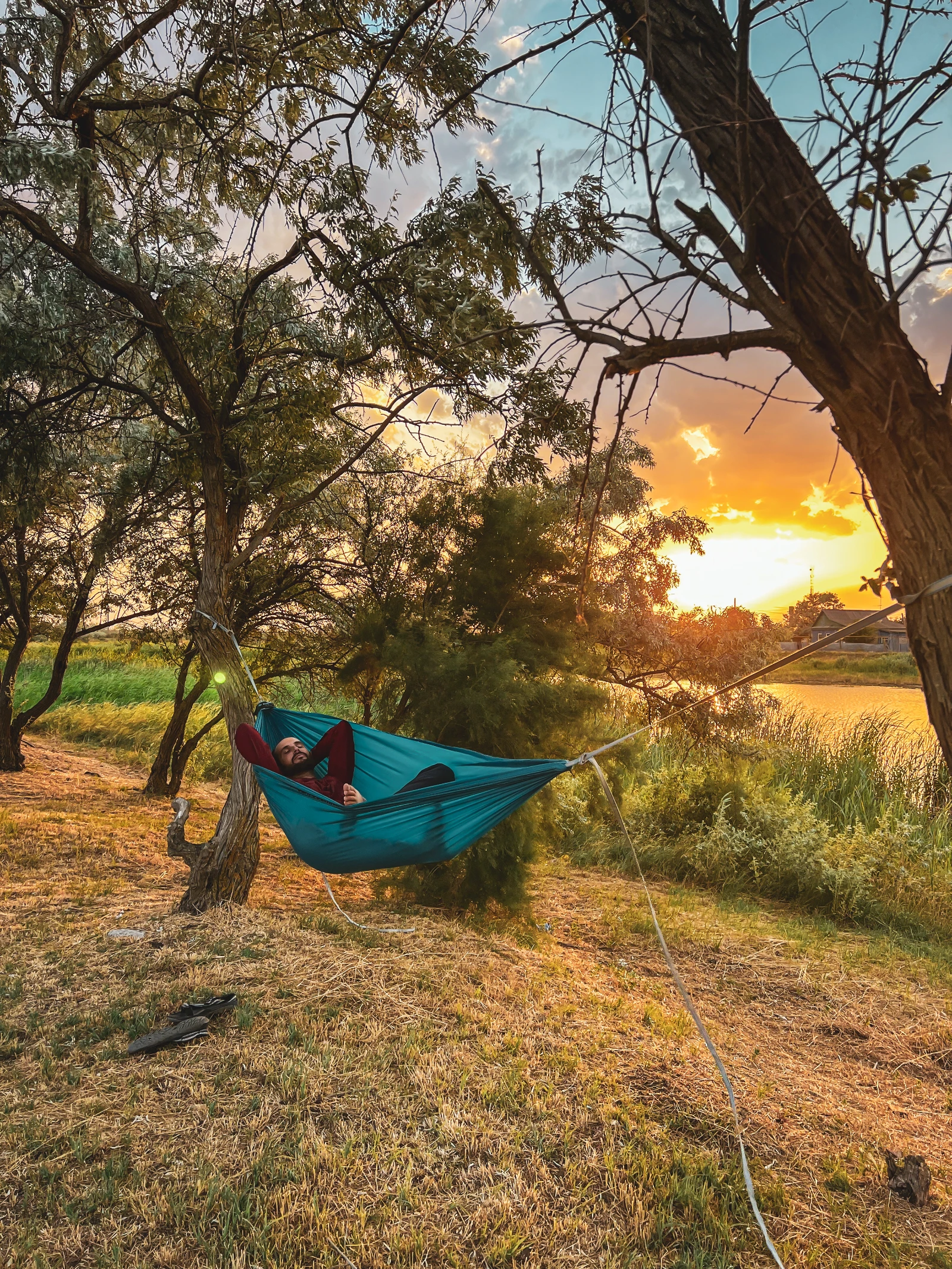
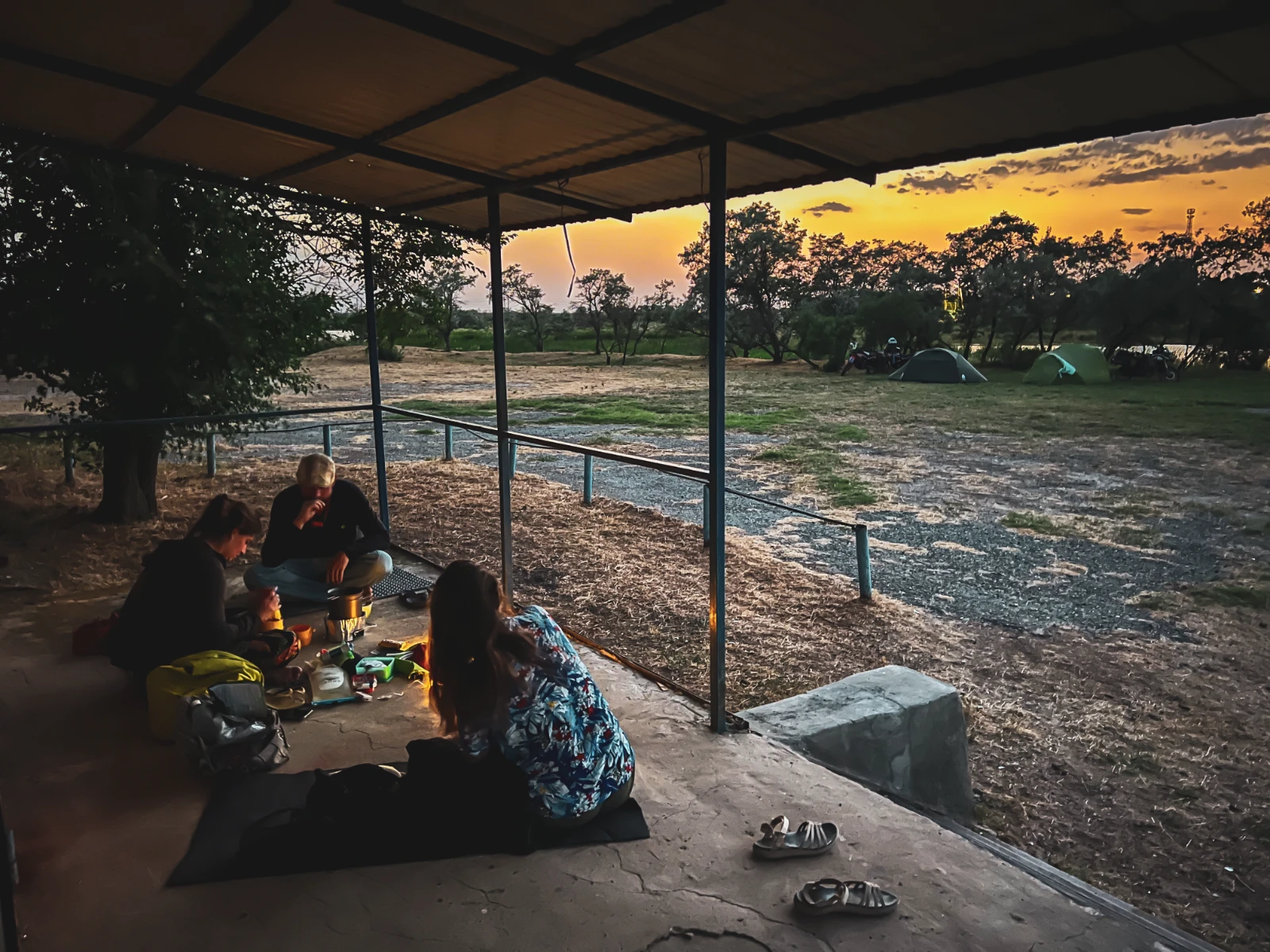
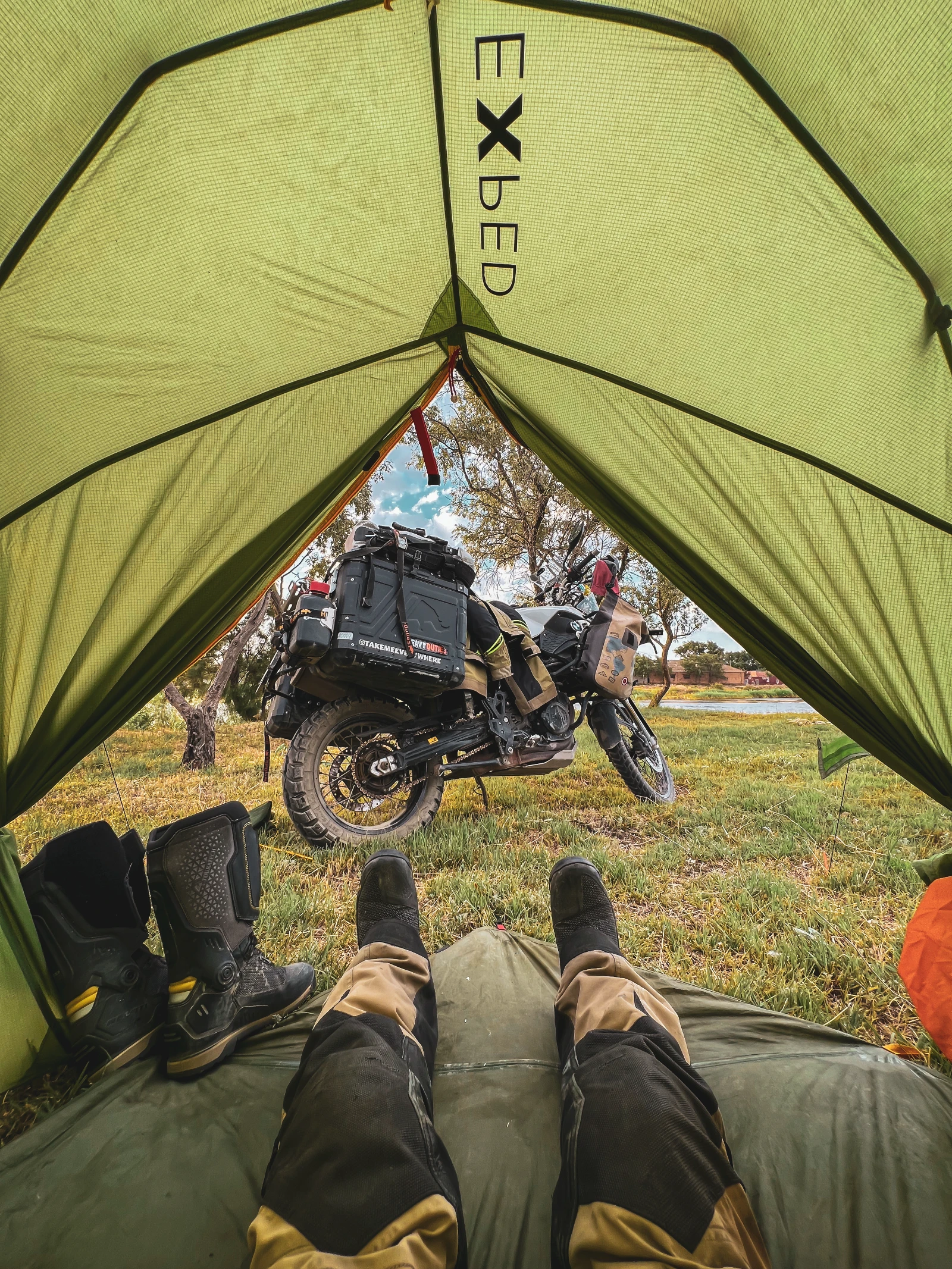
Six days, three time zones’ worth of terrain, and roads we’d never ridden before, this is exactly the kind of transit where our gear earns its keep. We filmed most of the swarm-of-insects chaos and the Truso Valley off-road with our Insta360, our official camera partner, because trying to hand-hold a phone through a locust cloud is not a fight you win. On the navigation side, the empty, arrow-straight stretches of Kalmykia and Dagestan are exactly where our Carpuride W702 Pro earns its keep, keeping GPS and CarPlay running on Falkor’s dash even hours from the next town.
Border crossings and long transit days are the exception on our trip, not the rule. Most of our time is spent slow-traveling through Workaway exchanges and TrustedHouseSitters stays, swapping a few hours of help each day for a bed, a kitchen, and time to actually get to know a place.
What This Transit Cost Us (Approximate, 2024)
Costs are approximate and reflect our 2024 crossing, visa fees, fuel prices and border insurance change often, so treat these as a general sense of scale rather than a quote.
What Was Actually Hard
Six forms, one form
2.5 hours filling the same immigration paperwork over and over, soaked and cold, with a coffee break thrown in for good measure.
A slow puncture, hours from anywhere
Iris’s front tire leaked air all day across the desert track to the Caspian Sea, solved with a portable compressor and a lot of patience.
Three guesthouses, three refusals
In Lagan, no accommodation would host foreigners, until a stranger simply refused to let us sleep outside without a plan.
News from home, far from home
Learning of a friend’s passing while alone in a guesthouse in Grozny, a quiet reminder of how fragile all of this is.
What We’ll Remember
Truso Valley’s send-off
Twenty kilometers of the best off-road we’d ridden yet, ending at a fortress that looked like a film set for paradise.
Dimitri’s stubborn kindness
A stranger in Lagan who wouldn’t stop calling around until he’d found us somewhere, anywhere, to sleep.
Our first stupa in Asia
A small Buddhist temple in the middle of Russia, the first real proof that Falkor had truly reached Asia.
Sharing it with Sander & Iris
Our third reunion with our Dutch friends, and the best possible company for a border everyone told us to fear.
Lessons From the Transit
A government is not its people
Every person we met, from Chechnya to Kalmykia, was kind, curious, and, when it came up, against the war.
One country, five different worlds
A Muslim city, a Mad Max coastline, a Buddhist village and an Orthodox cathedral, all within one week and one country.
Kindness shows up uninvited
Dimitri didn’t have to help us. He just decided we weren’t sleeping outside without a plan, and that was that.
Plans can bend
What could have been a straight, joyless transit became a canyon, a sea, a stupa and a fortress, because we let it.
This Transit, In Motion
More From the Road
Should you cross Russia by motorcycle right now?
- If you’re heading from the Caucasus toward Central Asia, it’s a faster and cheaper alternative to shipping your bike across the Caspian Sea by ferry.
- The transit visa route through Yerevan worked for us in 2024, always double-check current embassy rules before committing your route to it.
- Expect thorough but respectful border checks, straight empty roads, and a country far more culturally diverse than its headlines suggest.
- Budget your days tightly, a transit visa gives you a fixed window, and ours meant 6 days to cross from Georgia to Kazakhstan.
- Decide for yourself where you stand on visiting Russia right now, we can only tell you what we experienced, person to person.
We fund most of our nomadic life through Workaway exchanges and TrustedHouseSitters stays, it’s how we afford to travel slowly, for years, without burning through savings.
🎁 Get 3 Free Months on Workaway →Six Days, Five Worlds, One Russia Overland Transit
We rode into Russia braced for tension and left with nothing but gratitude for the strangers who fed us, hosted us, waved us past, and made this overland transit feel like a real journey rather than a border to survive. It was, without question, one of the most culturally layered stretches of road we’ve ridden, a Muslim capital, a canyon, a desert coastline, a Buddhist village, and an Orthodox cathedral, in that order, in one week. We’re not telling you what to think about crossing Russia right now. We’re telling you what we saw, so you can decide for yourself.
Curious what came next? We rode straight into Kazakhstan’s Mangystau desert, then onto the Pamir Highway, both part of our third year on the road.
1,066 Days Down, No End in Sight
We share the full story, the beautiful and the hard, across Instagram, YouTube, Polarsteps and this blog.